By SGN | Updated 13 Oct 2026
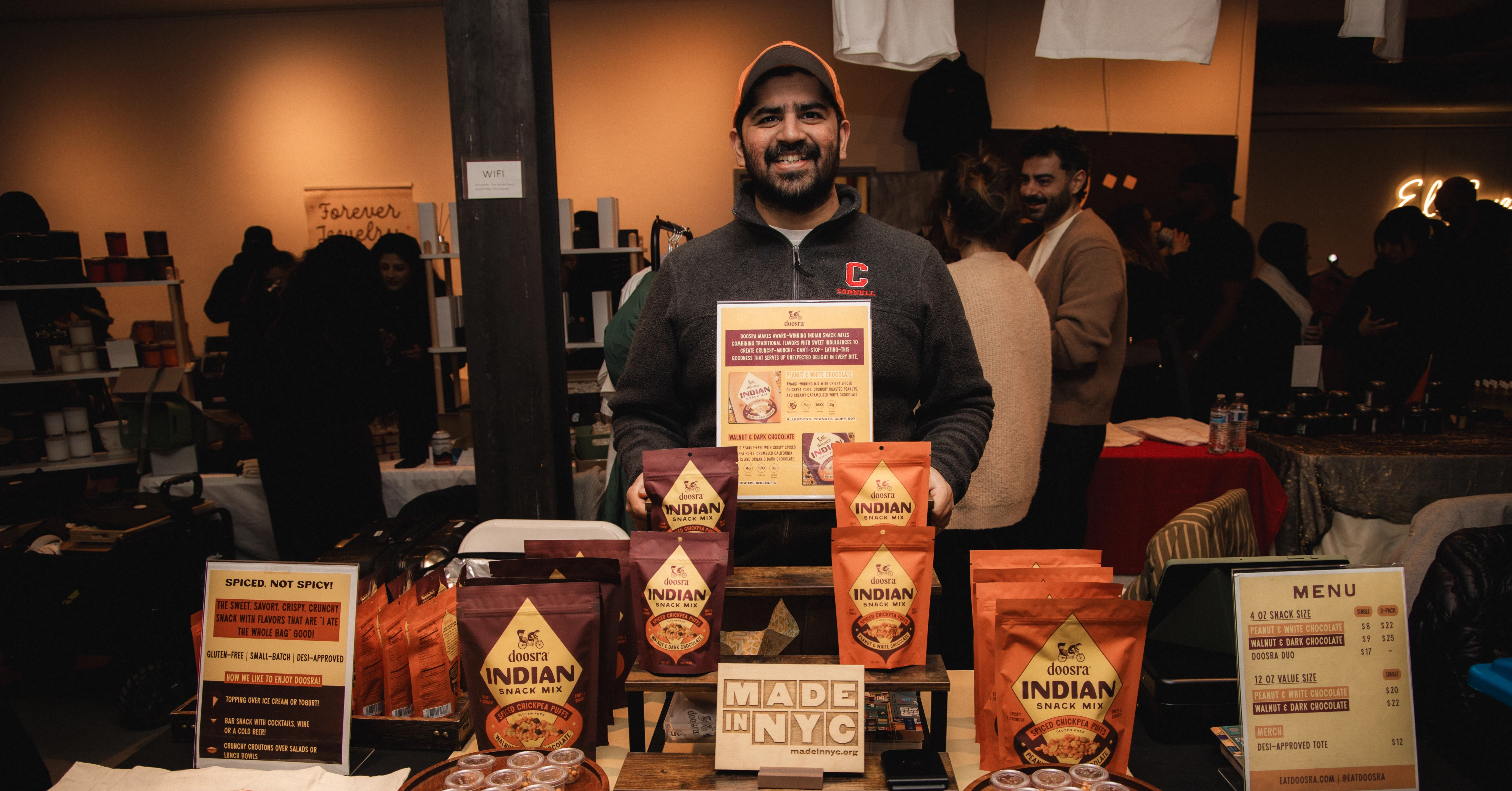
Kartik traded a lucrative corporate trajectory for the unpredictability of the culinary world.
Today, with his snack brand, Doosra, he is on a mission to prove that Indian food is anything but a monolith in the US.
A multicultural education that shaped his worldview
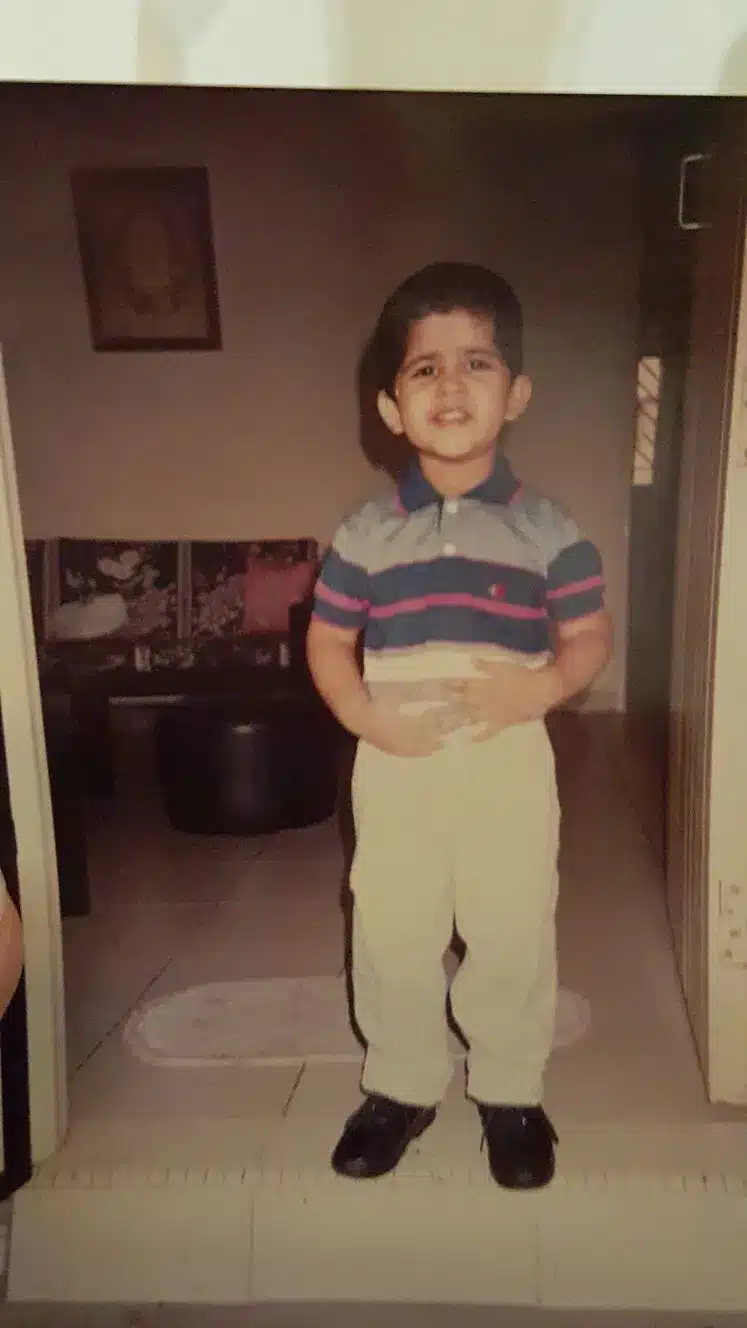
Born in Chennai, Kartik moved to Singapore with his family when he was just three years old after his father scored an engineering role at Seagate.
Although he left India before he was old enough to remember much of it, annual family trips back to Chennai and Kerala became an important part of his childhood. Those visits helped him appreciate everything Singapore had to offer: the education system, stability and opportunities.
“I got lucky, and now I have a different life, all because of one decision my parents made,” he reflects. “I would not be who I am, if not for our education system.”
Growing up as a Malayali child who spoke English and Tamil at home, fitting in wasn’t always straightforward.
“I didn’t really fit in with the local kids because Tamil wasn’t my second language in school, but I was also ‘too Singaporean’ for the expat kids arriving from India,” he reflects. “So, I became the one Indian kid in groups where all my friends were Chinese or Malay.”
Kartik enjoyed this configuration of his social circle, because early on, he became their passport to understanding Indian food and culture.
He flourished in Singapore’s rigorous academic climate, becoming part of the pioneer batch of the Integrated Programme. He went on to attend Raffles Institution (RI), an experience he credits with keeping his feet firmly planted on the ground.
His Singapore upbringing also exposed him to something else that would later influence his business: culinary diversity. He remembers moving effortlessly between hawker centres, where Indian, Chinese and Malay cuisines sat side by side, and discovering early on that food didn’t have to exist within rigid boundaries.
“Hawker culture is very important, because it’s one of the few places where different cultures and cuisines can co-exist,” he shares.
This perspective continues to shape how he thinks about food today.
Going down an unconventional path
Kartik’s non-traditional streak manifested early. During his A-level examinations, despite having a strong foundation in advanced chemistry, biology, and physics, he dropped the sciences, entirely to study history, literature, and economics – purely because he enjoyed the latter subjects.
He eventually left Singapore to study at Cornell University. Needing a visa to stay in the US post-graduation, he followed a corporate route, working in investment banking and operations, holding positions at high-profile firms like Bridgewater.
But the entrepreneurial itch, inspired by his maternal grandfather who had once walked away from a prestigious corporate job in India to build his own wealth, never truly faded. “My grandfather said that if I really wanted to take care of my family, and build wealth I was in complete control of, I would need to work for myself,” he reveals.
Now faced with a ‘golden handcuffs’ situation, he realised it was now or never. “If I don’t take a bet on myself now, when will I ever do so?”
Kartik found himself gravitating back towards food. Driven by a desire to tell cultural stories through food, he made an audacious pivot: he enrolled in culinary school in 2020, smack in the middle of the COVID-19 pandemic.
His decision to switch careers was also heavily influenced by the social climate around him. At the time, America was experiencing significant political flux.
“The most effective way to truly understand a person or a culture was to find common ground, and food offered the most authentic avenue for that connection,” he reflects.
Driven by a desire to tell these cultural food stories, he knew he first needed to respect the grueling mechanics of the trade.
“Most people don’t know how incredibly difficult it is to be behind the stove for eight to ten hours a day,” he notes. “There is a massive difference between cooking at home, and cooking professionally in a restaurant. I knew I had to completely understand what that life was like, if I wanted to tell food stories with integrity.”
Culinary school in the throes of the pandemic turned out to be an unconventional and highly restricted experience. Because of health regulations, there were only three students in his class; teachers couldn’t taste the students’ food, and neither could the students experience their teachers’ creations.
“Initially, I wondered why I was even paying money for this,” he admits. “But then I came to appreciate all the other senses that come into play when preparing a dish: listening to the way meat sizzles when it hits the pan, recognising the smells that come off a dish when certain ingredients are added, and visually ascertaing if a dish has been cooked right.”
Over time, Kartiik had to learn how to trust his own palette.
Challenging pre-conceived notions of Indian snacks
Following a culinary stint at Kricket, a modern Indian tapas restaurant in London, Kartik returned to the US to launch his own food venture. When asked what his personal food story was, he’d always talk about Indian snacks.
Every year, Kartik and his family would visit their hometown in Kerala. And between 4PM and 5PM in the evening, the world would stop in its tracks, and people would come together to enjoy food and snacks. These consisted of crunchy peanuts, spicy curry leaves, and balanced by a side of sweets.
“I used to be that weird kid who would break the sweets apart, and mix them with the spicy tidbits, because I loved this combination of sweet and savoury,” he laughs. “People should try it, it’s fantastic.”
Besides getting to experiment with oddball flavour profiles, Kartik loved how the community came together to bond over food. After all, snacks held a sacred place in hospitality.
“When you visit family in India, they usually get upset if you don’t eat something at their houses,” he reveals. “You might sit down for a full meal later, but a crunchy, salty snack, alongside a drink, is how a household welcomes you.”
When Kartik visited his family’s hometown in Kerala, the people there would prepare snacks entirely from scratch. “It felt like they were offering me a piece of themselves.”
These memories inspired the creation of Doosra, in mid-2022. Named after the Hindi word meaning “different” or “other,” the brand was built to intentionally shun traditional expectations of flavours.
Rather than recreating traditional Indian snacks exactly as they existed, Kartik wanted to reinterpret them through his own lens, thus preserving familiar spice profiles, while introducing flavour combinations that would surprise people.
Instead of overwhelming consumers with aisles of endless choices, Doosra focuses on a meticulously crafted sweet-and-savoury experience, reflecting Kartik’s childhood experimentations.
His secret weapon is a custom spice blend paired with a highly unusual combination: chickpea puffs (boondi), chaat textures, and sweet (caramelised white chocolate, dark chocolate, and walnuts).
Getting Doosra off the ground
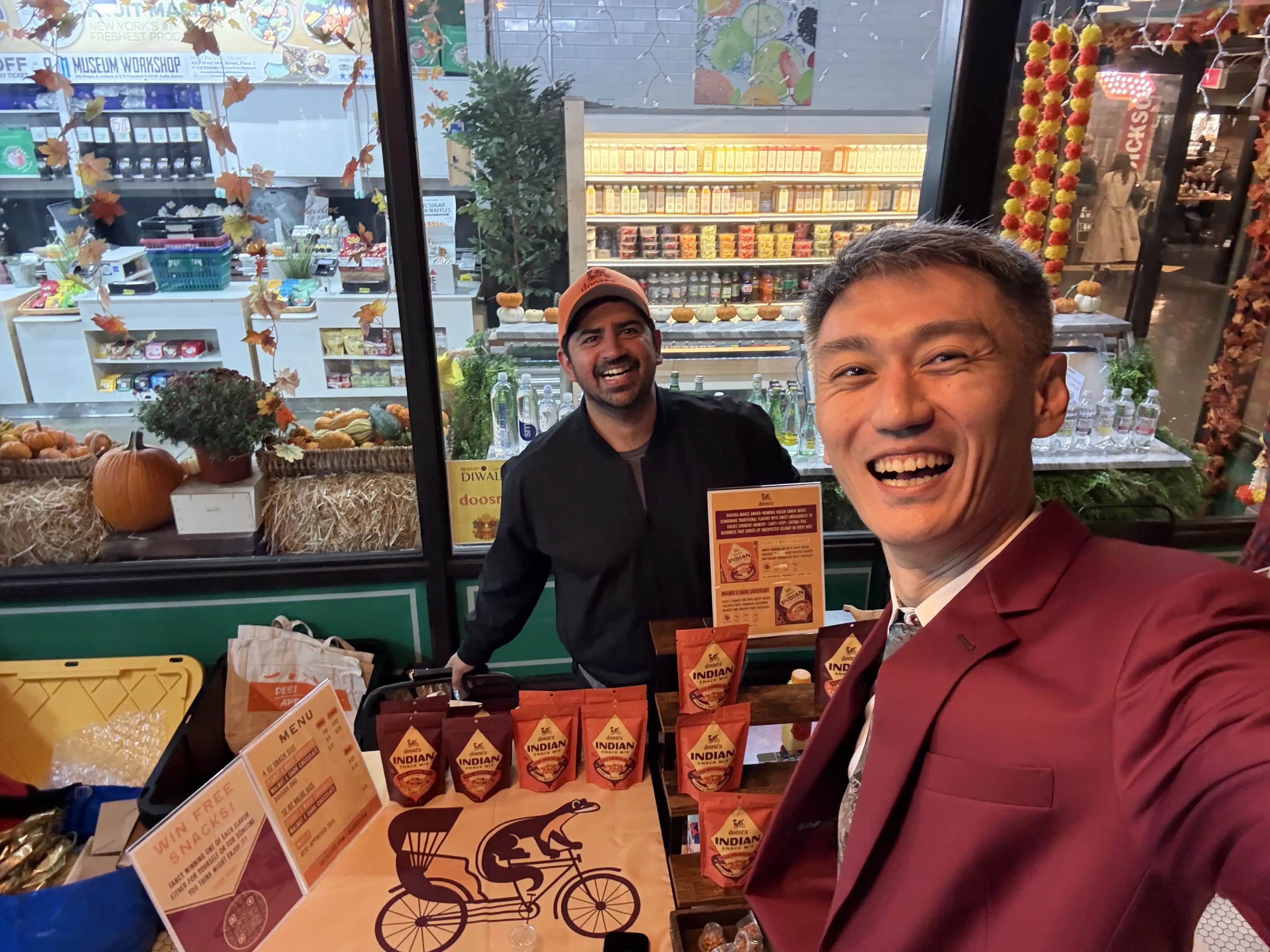
Before building the Doosra brand, Kartik wanted confirmation that people would like the product itself. In 2022, he attended a farmer’s market as a vendor, just to see if the snacks would sell. “People told us that they’d never eaten anything like that before, and that it was really tasty,” he shares.
Encouraged by their feedback, Kartik started sending out little portions of Doosra snacks to friends, family, and chefs, repeatedly iterating the flavours until he had arrived at the winning combination of flavours.
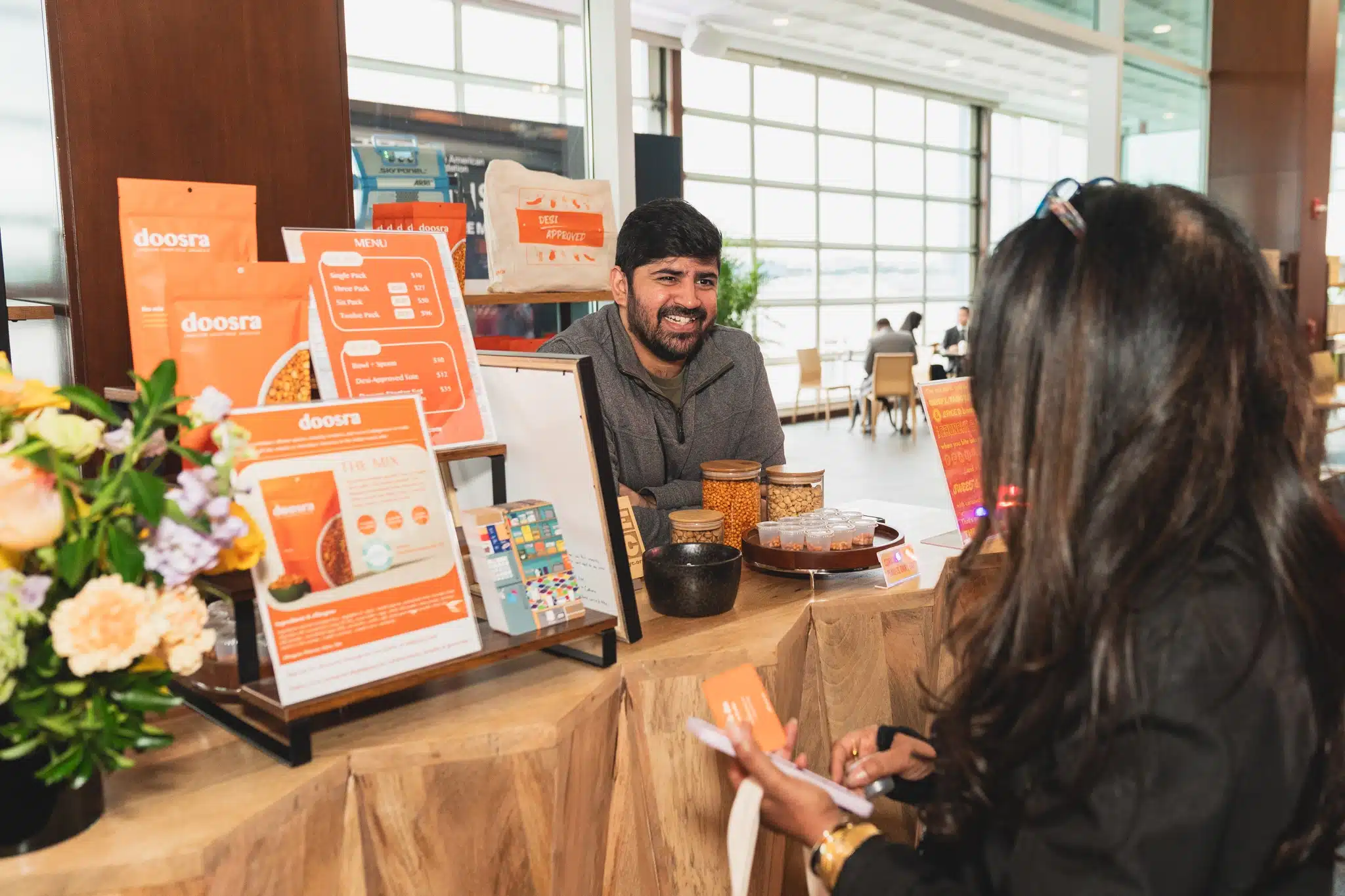
Instead of trying to convince people through marketing alone, Kartik focuses on creating experiences. At farmers’ markets, he personally curates samples for every visitor, in a shot cup, walking them through how the flavours evolve with every bite.
His involvement with Doosra lends a whole new meaning to the term ‘hands-on’.
“To this day, I’m involved in making all the snacks, and there is not a single bag, in the 15,000 that we’ve sold so far, that I have not packed personally,” he shares.
He operates as a solo entrepreneur, and has chosen intentionally not to raise venture capital, leaning instead on the logistical and financial discipline he learned from his days in banking.
“We’ve stayed small and nimble, and have taken on opportunities that make sense for the brand,” he says.
Future plans for the brand

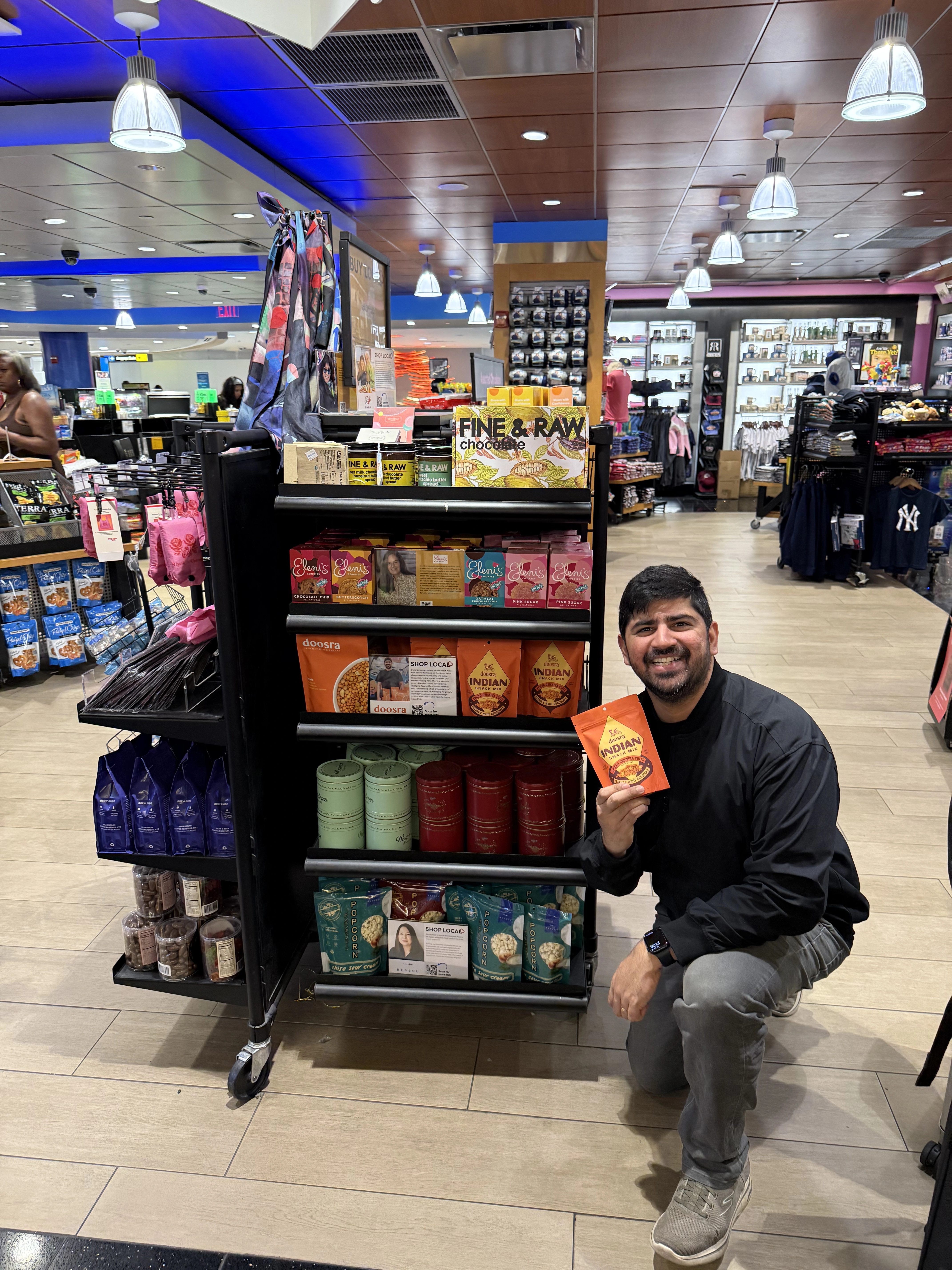
Today, Doosra is stocked in independent retailers across the United States, including terminals at New York’s JFK Airport, while continuing to expand into new channels such as corporate offices, hospitality and gifting.
“The flavour has landed really well,” Kartik says. “Now it’s about figuring out the right channels and where we grow.”
That spirit of experimentation extends beyond the business itself.
While food has always helped Kartik connect with others, he’s also found a growing sense of community among fellow South Asian founders in the US. Having grown up in Singapore without many Indian friends, he says he never actively sought out South Asian communities.
Today, however, he finds himself drawn to spaces where entrepreneurs openly share advice, champion one another, and celebrate each other’s successes.
“I want to be part of communities where people genuinely care about and support each other,” he says.
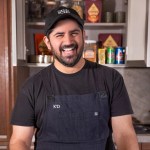
About Kartik
Based in New York, Singaporean food entrepreneur Kartik Das is the founder of Doosra, a snack company introducing modern Indian-inspired snacks to American shoppers.
Connect with him here.