By SGN | 2 Oct 2026

A lot of globally mobile jobseekers are quietly Googling: if AI is now handling the majority of the heavy lifting that comes with the application process, what’s left to differentiate one candidate from another?
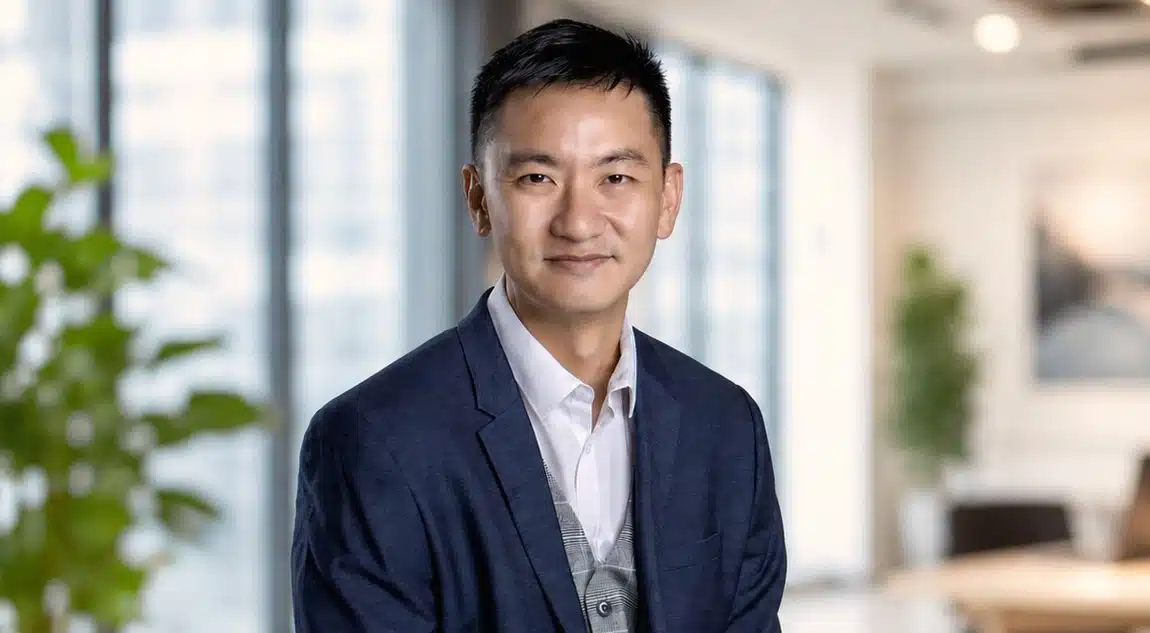
Drawing on more than a decade of experience at LinkedIn, including as the former Head of Talent Solutions for Singapore and Malaysia, Elsie Ng shares her perspective on Singapore’s talent landscape, informed by her work with Institutes of Higher Learning and initiatives under the Ministry of Manpower.
Is AI screening really why I'm not getting interview callbacks?
It’s easy to assume that AI hiring tools or applicant tracking systems (ATS) are quietly filtering out your job applications based on keywords. That can lead jobseekers to spend hours trying to “beat” the algorithm, instead of strengthening their application.
The reality is more nuanced. Hiring technology is increasingly able to look beyond exact keyword matches and consider the context behind a candidate’s skills and experience. AI may influence which candidates are surfaced to recruiters, but people still play a critical role in setting the hiring criteria and deciding who moves forward. Evaluation of candidates has also shifted from credentials to evidence of impact and adaptability.
What’s also missing from this picture is the wider context. The job market itself has become more competitive, and recruiters are dealing with a much higher volume of applications than before. That alone explains a lot of the rejections jobseekers are experiencing.
It’s not always about being filtered out by AI, it’s often simply about more people chasing fewer roles. Understanding that can help jobseekers feel less discouraged.
So rather than trying to make your CV look “AI-compatible”, focus on making your value clear to the person who will ultimately read it.
Focus on demonstrating that you can create outsized human impact and value in an AI-enabled workplace, by showcasing your soft skills, capabilities and experience. AI can help you in the job application process, but it’s your voice recruiters and hiring managers want to hear. Make sure you’re in the driver’s seat the entire time.
What skills should I build to stay relevant in an AI-driven job market?
There are plenty, but I’ll focus on three.
AI fluency
This is no longer a nice-to-have. Increasingly, it's a business skill, and arguably a leadership skill, even for people who aren't in leadership positions.
Increasingly, employers will look for people who can use AI to improve productivity, make better decisions and deliver stronger business outcomes.
Problem-solving
As AI takes on more routine tasks, the ability to identify the right problem becomes even more valuable. Strong problem-solvers can understand the underlying business challenge, ask better questions and decide where AI should, and should not, be part of the solution.
The value is not simply in knowing how to use AI tools, but in knowing what problem is worth solving in the first place.
Learning agility and adaptability
AI is changing what jobs look like, and many employers may not know what a role will look like in the next 12 or 24 months. Job titles may stay the same, but the job design and skills requirements for the same role will look different.
That makes learning agility increasingly important. Focus on continuously building new skills, taking on unfamiliar challenges and stretching beyond your current capabilities. The goal is not to predict exactly how your role will change, but to become someone who can keep growing as it does.
If everyone's using AI to polish their resume, how can jobseekers try to stand out?
It’s true that resumes can be optimised by AI, and jobseekers can prepare for interviews with the help of AI. But as more candidates use the same tools, a polished application alone is becoming less distinctive. What increasingly sets strong candidates apart is evidence of impact.
Instead of simply listing a skill, show where you used it, what problem you were trying to solve and what changed as a result. I suggest using the STAR framework: Situation, Task, Action, Result.
The same principle applies in interviews. AI can now help with interview preparation, so answers read off notes become less valuable. High-performing candidates shine during spontaneous, scenario-based discussions where they can defend their reasoning in real time and think on their feet. Practice with different questions before going into any interview. AI can help with this too.
Aside from the above, here are three more ways of standing out.
Show proof, not just proficiency
Beyond that, a strong profile provides specific metrics, public proof of work, and personal ownership. Instead of listing high-level domain familiarity, provide a nuanced understanding of the industry.
For example, instead of simply listing "AI strategy" or "generative AI" as a skill, describe a specific situation where you identified a process consuming significant employee time, introduced an AI-enabled workflow, and measured the impact, not just on productivity, but on how the team's roles and the customer experience changed.
This example combines technology fluency, business judgment, and evidence of impact. It shows a hiring manager where you understood how AI could create value, and where human judgment was still required.
Make your thinking visible
Your resume tells employers what you have done. It does not always show them how you think, what perspectives you bring or what you could contribute next.
That is why it can be useful to share thoughtful perspectives, lessons or examples of your work publicly, whether through LinkedIn, industry communities, talks, portfolios or other professional platforms. Giving people a clearer sense of how you think can make you more memorable before you even apply.
Build relationships before you need them
Given AI-generated content is everywhere, relationships carry a kind of credibility AI simply can't manufacture. An application can tell an employer what you've done, but it takes a person they trust to vouch for who you are.
A warm introduction or referral carries weight precisely because it comes from a human, not a machine. If you haven’t attended any networking events, joining Singapore Global Network is a good first step.
How should I position my experience when applying for roles in Singapore?
It’s important to understand regional context. Singapore serves as the APAC regional hub for major multinationals, tech firms, and financial institutions. For many regional roles in Singapore, employers aren’t just looking for someone who understands one market — they’re looking for someone who can operate across markets, influence stakeholders across cultures, and translate regional strategy into local execution.
I’d suggest reframing your experience around regional execution. Highlight your regional experience and remember to demonstrate cultural sensitivity and agility. And once again, get to know hiring managers or recruiters in Singapore. Try reaching out to them even before a role is available.
What skills should I build at the start of my career if AI can already do entry-level tasks?
AI has made information instant and processes more efficient, so what makes you stand out is no longer what you know; it’s how you think. Human judgment is the one thing AI cannot replicate. That means framing a problem correctly, understanding what’s at stake, and asking the right questions to solve it.
AI can generate an answer in seconds, but it can’t tell you which question was worth asking, or whether that answer makes sense for your situation. That takes critical thinking, applied with real judgment.
Judgment on its own isn’t enough. Having communication skills allows you to articulate how you got there and why it’s right. Interpersonal skills get people to move with you towards an outcome you think would work best. So, if I had to tell someone starting out today what’s worth learning: build the judgment to ask good questions, and the communication and interpersonal skills to bring that judgment to life in a room full of people.
As AI changes Singapore’s job market, where do you see the biggest opportunities for jobseekers?
I believe the biggest opportunities will be for people who can combine AI fluency with deep expertise in their own field.
Singapore’s job market is already adapting quickly to AI. According to ManpowerGroup’s Employment Outlook Survey, 82% of employers in Singapore are using AI across areas such as recruitment, onboarding or training, slightly ahead of the Asia-Pacific average of 81% and well above the global average of 67%.
This shift is also being supported at a national level. Through the National AI Impact Programme, Singapore aims to help up to 10,000 enterprises adopt AI and equip 100,000 workers to become “AI bilingual”, meaning they can combine AI capabilities with expertise in their own domain.
For jobseekers, that creates opportunities far beyond traditional AI or technology roles. We are likely to see growing demand for people who understand fields such as finance, healthcare, sales, marketing, HR, law or operations, and can use AI to rethink how work gets done in those functions.
Increasingly, employers may not just ask, “Do you have experience in this function?” They will also want to know, “Can you use AI to make this function work better?”
That means you do not necessarily need to become an AI specialist. The opportunity is to understand where AI can create value in your field, develop enough fluency to use it effectively, and bring the judgement and domain expertise needed to apply it well.
Examples include a salesperson using AI to change how they prospect and engage customers, an HR leader using AI while also managing workforce adoption and change, or a finance professional using AI to improve decision-making rather than simply automate reporting.
My advice to jobseekers in Singapore: don’t just learn AI as a standalone skill for a standalone task. Learn how AI can transform your profession.

About Elsie
Elsie Ng spent 10 years leading Talent Solutions for Singapore and Malaysia at LinkedIn, working across hiring data, workforce policy and career strategy. She also served as APAC sponsor for LinkedIn Talent Insights and Hiring Assistant, and contributed to advisory initiatives with Singapore’s Institutes of Higher Learning and the Ministry of Manpower.
Connect with Elsie here.