
By SGN | Updated 19 Aug 2026

Growing up in Dehradun, India – a military town in the foothills of the Himalayas – studying abroad was unimaginable for Vidit. “My family didn’t have the means,” he shares.
When a friend told him about scholarships at the National University of Singapore (NUS), they both applied, and Vidit was selected. Getting in was a gamechanger. Vidit flew to Singapore, read mechanical engineering and was able to see the world – including on a yearlong entrepreneurship programme in Silicon Valley.
“I had the best grades, but I thought these opportunities were for the rich,” he says. “Singapore made it possible.”
Becoming Uber’s first employee in Asia
Through the NUS Overseas Colleges programme, Vidit spent a year in San Francisco working for a GPS navigation startup called Space Machine – unfortunately wiped out later by Google Maps – while taking classes at Stanford University.
Through the recommendation of a mentor at Stanford, Vidit reached out to Travis Kalanick for career advice. This was before the stratospheric rise of Uber and Kalanick’s reputation in the tech world.
“He was extremely inspiring, in the energy he brought, in the way he structured his thought process,” Vidit recalls.
The connection proved valuable. After graduating, Vidit worked in investment banking at UBS for a couple of years, then reached out to Uber just as it was expanding to Asia. “I was joining a startup nobody had heard of,” he says. “My parents thought I was crazy to leave a Swiss bank and work for a company that manages taxi drivers.”
As operations manager and Uber’s first hire in Asia, Vidit was thrown in at the deep end and given a blank cheque to build the business from ground up. He took on a lot of responsibility: managing the supply of drivers and cars, thinking about regulations and new products.
“I was working 16 hours a day, seven days a week,” he says. “Every day I faced problems I never knew I was capable of solving.”
Missing a taste of home? Our Global Food Map helps you discover Singaporean and Asian food around the world. Explore a growing collection of hawker favourites, local eateries, and Asian restaurants recommended by the community, no matter where you are.

Impacting a million workers in Indonesia
After subsequent stints at Carro and Stripe, Vidit felt ready to strike out on his own.
Together with his wife and cofounder Martyna Malinowska, he tested a few ideas and landed on wage access. “We wanted to create a business that has impact on blue-collar workers, the underprivileged of society,” he explains.
Having spent a lot of time in Indonesia while he was with Uber, Carro and Stripe, Vidit knew he wanted to base the company there. He was familiar with the market and had built a strong network – a must-have in its relationship-led business culture. “Often it comes down to who you know and how well you know them,” he says.
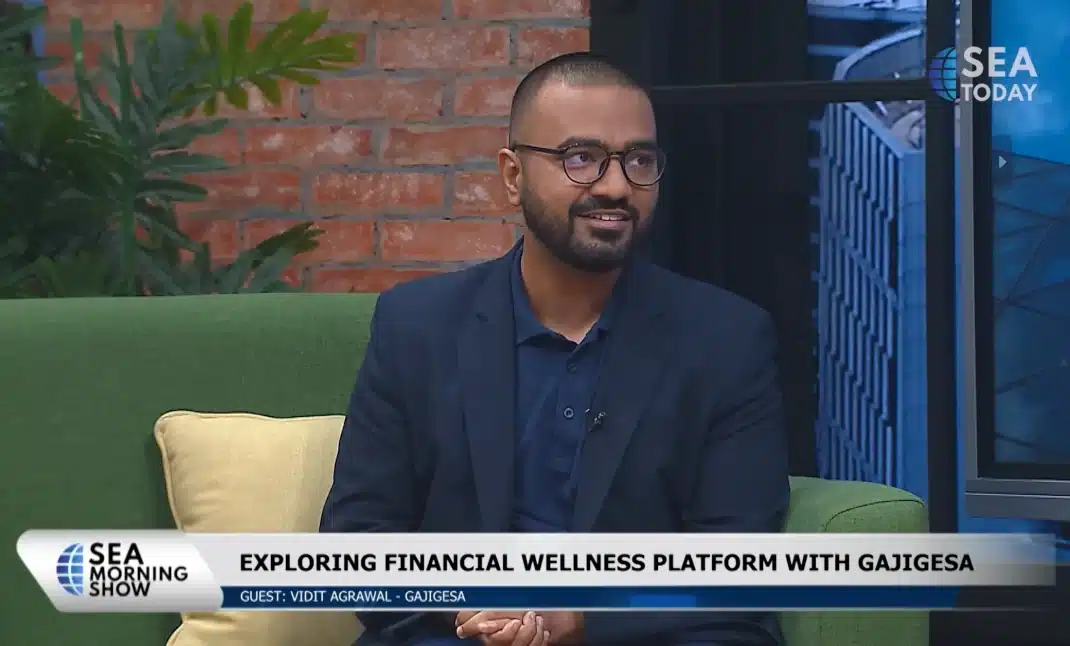
Their startup, GajiGesa, allows Indonesia’s vast population of low-wage workers – in industries such as retail, delivery, cleaning and manufacturing – to withdraw a partial salary in advance, at a small fee, based on the days they’ve already worked. “Our idea was: Let’s think of salary as a daily cycle instead of a monthly cycle,” Vidit explains.
For a worker short on cash, the platform means not having to turn to a predatory loan shark. The service is an employee benefit that improves retention at no cost to the employer, plus it saves them the trouble of accounting for salary advances.
Vidit jokes that founding GajiGesa in 2020 was his act of YOLO during the pandemic. He and Martyna bought one-way tickets to Jakarta and were the only two passengers aboard. Once COVID restrictions were lifted, the couple moved back to Singapore, where they are permanent residents.
Acquired by Kredivo Group in 2025, the startup has impacted over a million workers and close to 700 businesses. “Even today when I go into some shops, the staff get excited when they see my GajiGesa T-shirt and might offer me a free ice cream, just because they are thankful for the product,” Vidit shares. “That makes my heart swell up.”
Nurturing the next generation of founders
A believer in paying it forward, Vidit volunteers with the NUS Uplift Mentorship Programme, which connects him with students from humble backgrounds that are interested in tech or starting a business. “It’s so much fun to talk to youth and learn about their ambition,” he says. “They think I am contributing to their career, but I feel they are showing me how their generation thinks about the world.”
Besides supporting regional startups as an angel investor and advising firms such as Locofy, Motorist and Shohoz, Vidit also enjoys informal mentoring sessions with founders. “We grab a coffee and I share my battle scars,” he says. “I’ve made a lot of mistakes and I don’t want others to repeat them.”
Often, his advice is to keep setups as lean as possible. Five years ago, there was a lot more capital to go around. “You raise your hand, and suddenly you have a few million dollars in the bank,” he quips. These days, founders need to be strategic about exactly how much funds they need and avoid raising if they can. “A lot of young founders just want to raise a lot of money. But fundraising is a liability because you are taking somebody else’s capital.”
And with AI agents and automation, teams can be kept small. Vidit says founders should practise being very hands-on for at least the first 3 years. “I always joke that it’s a red flag if someone gets a PA at the start of the business.”

Why Southeast Asia is home
Having left India at 17 and spent his entire adult life in Singapore and Jakarta, Vidit feels “more Southeast Asian than Indian”. It’s a source of great joy that he and Martyna have a large extended family living in Singapore, including Vidit’s younger brother. Late last year, the couple welcomed the latest addition to the clan: their firstborn daughter.
Since leaving GajiGesa, Vidit has joined the Singapore office of Circle – the firm that issues the USDC stablecoin, a cryptocurrency pegged to the US dollar – as vice president of partnerships and business development in APAC.
“People may have different opinions about Singapore. For me, it’s the best place to live in the world,” he says. “It’s where opportunities in Asia-Pacific are, and you can’t beat the quality of life, the safety and cleanliness. This is home.”
Interested in working in Singapore?
Learn about our Work Holiday Pass and how to get started.

About Vidit
Vidit cofounded GajiGesa, a wage access platform impacting over a million workers in Indonesia that was acquired by Kredivo Group. He is currently Vice President of Partnerships & Business Development in APAC at Circle.
Connect with him here.