By Jameson Wong | 3 Aug 2026
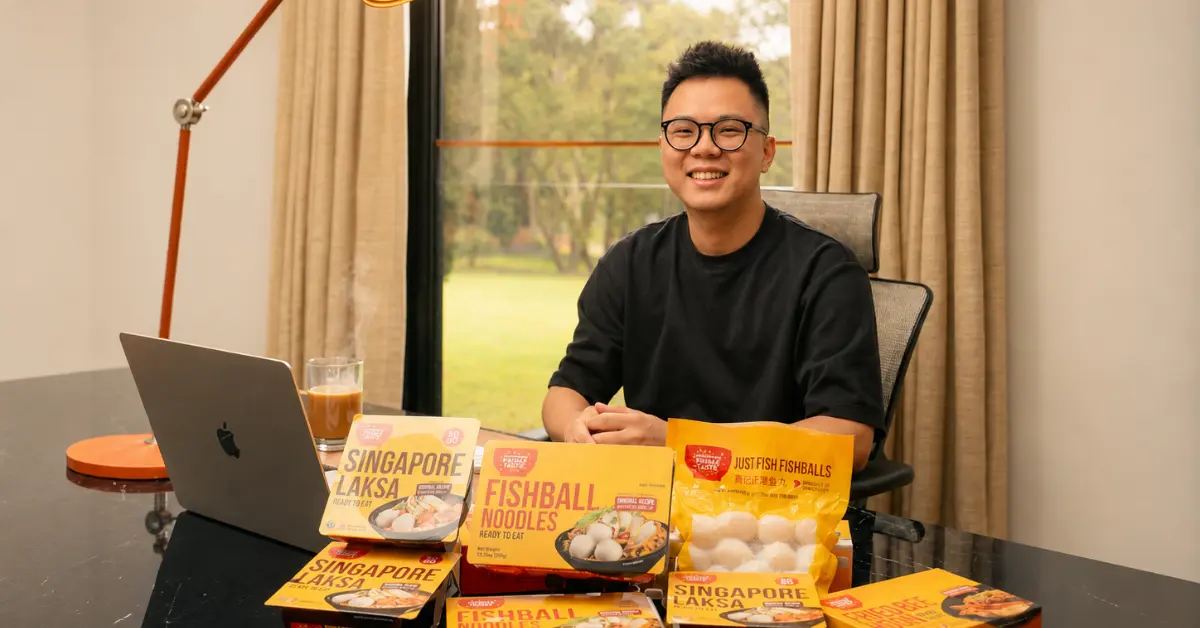
If you’d told me five years ago that I’d be shipping laksa and otah across the world, I’d have laughed. At the time, I was working in travel, a world away from food manufacturing.
But life has a funny way of steering you back to what truly matters.
Raised by Singaporean hawker culture

My parents still laugh about how, as a kid, I seemed to have only one answer to every question.
What did I want for lunch? Hokkien mee.
What did I want for dinner? Hokkien mee.
What did I want tomorrow? Hokkien mee.
Those were among my earliest memories of hawker centres, and hawker centre food in Singapore. An unobtrusive part of life in Singapore, hawker centres existed simply to feed people by the thousands, daily.
Now that I’ve moved overseas, and no longer have access to them daily, I’ve realised how vital of a cultural institution they were.
Choosing a different childhood for my childhood
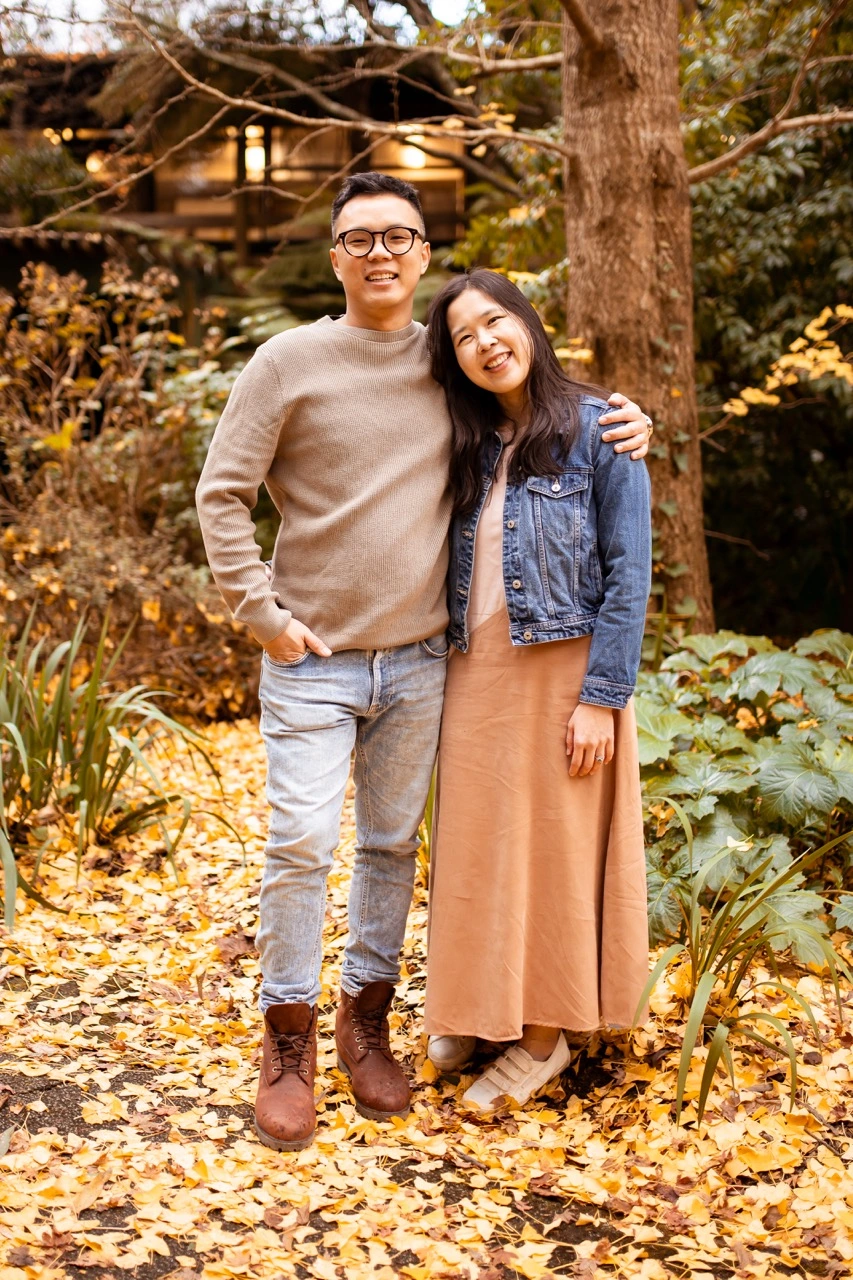
Years before relocating the entire family, I spent two carefree years in Australia with my then-girlfriend (now wife). I observed how Australians regularly thought outside the box, and had more space to be creative.
When my wife and I decided to move our family to Melbourne in late 2022, I felt a trudging sense of uncertainty – not about wanting to move, but about whether or not the desire itself was a strong enough reason.
After all, we weren’t running away from Singapore.
But, we wanted something different for our children: a chance to grow up surrounded by nature, flourish holistically, and engage in experiences that encouraged creativity in ways we felt were harder to find back home.
It was part-excitement, and part-“what are we getting ourselves into?”
When it came to the physical move, I was exceptionally lucky. Obtaining legal residency is by far the biggest hurdle for most Singaporeans, but our visa process went smoothly. From there, it was just solving the logistical puzzle of flights, shipping, furniture, and finding a place to live.
But leaving Singapore also meant asking ourselves difficult questions, like what our children would stand to lose by growing up away from Singapore.
We wanted to ensure our kids grew up with a wholesome, balanced mindset while staying deeply tied to their family, both in Australia and Singapore, and preserving their Singaporean identity.
Would they still know their grandparents the way we did? Would they grow up feeling connected to their extended family? Would Singapore still feel like home to them?
Raising Singaporean children overseas is a tug-of-war.
Our kids go to school for six hours a day, surrounded by Australian peers, and inevitably come home speaking with thick Aussie accents, much to our amusement, and at times, annoyance. My wife and I find ourselves constantly making occasional, cheeky corrections at the dinner table —“It’s water, not wuu-ter!”
Technology has helped enormously. FaceTime has made distance feel less permanent. Our guest rooms in Melbourne are constantly occupied by visiting family.
But family connection is still the thing you have to work the hardest to preserve when you live overseas.
What I learned from distance
Assimilating culturally in Australia wasn’t overly difficult, because as a Singaporean, I grew up with multiculturalism and racial harmony as a baseline. But when living abroad crystallised my national identity into a general “Asian” or “Chinese” bucket, identifying as “Singaporean” became a point of pride.
I found myself becoming intentional about saying, “I’m Singaporean.” Distance has a funny way of sharpening your sense of identity.
Living overseas has also made me examine my assumptions about how the rest of the world runs.
I assumed that safety, efficiency, and being able to walk home late at night was normal. The same way I assumed that living alongside people of different cultures and races is how every country functioned. Only after leaving did I realise how unique Singapore is, and how fortunate we are to have been raised in a functioning, properly governed country.
Turning homesickness into a business

However, the biggest adjustment I have had to make wasn’t language, or customs, or even lifestyle. It was food.
Because for Singaporeans overseas, food is never just sustenance. It is emotional and cultural connection. It is memory.
I often joke about how I have a very low quota for Western food. I can eat a burger once a month, and then I start thinking about chicken rice.
The business that now occupies so much of my life started because I was cold, hungry, and craving mee pok on one fateful winter night in Melbourne. I could have slept it off, but this hunger was different, and it demanded to be fed.
At first, I thought about cooking instant noodles, but felt too lazy. Ordering UberEats was another option, but the thought of racking up a 30-dollar bill felt excessive, and it wouldn’t satisfy my specific craving either.
So, I opened up my laptop. I wanted to figure out whether it was possible to import authentic Singaporean hawker food to Australia for myself.
I looked at what it would cost to purchase the food made in Singapore, and have it shipped to Australia. I then compared these costs against what people were already paying for meals here.
To my surprise, the numbers made sense. In twenty minutes, I had worked out the costings for a viable business plan.
That’s how I started Singapore Hawker Haven. My goal was simple: to import frozen Singaporean hawker food, namely, laksa, mee pok, and fishballs into Australia, and to sell them as ready-to-eat meals.
Protecting the legacy of hawkers

The first year was absolute chaos. I was doing everything myself: testing products, arranging packaging, finding freight forwarders, figuring out regulations, handling paperwork, making deliveries, and talking to shop owners.
Australia’s food import regulations are strict, and rightly so. Fish, spices, sauces, seasonings — each one had its own requirements. There were nights spent combing through government documents, ingredient by ingredient.
Early on in life, I had realised that life is too short to entertain mediocre or transactional business relationships. When I started building Singapore Hawker Haven, I took this insight to heart.
The food at Singapore Hawker Haven is prepared by multi-generational hawker families in Singapore – true masters of their craft. These families have been making hawker dishes like otah, fishballs, and traditional soups for decades, with each new generation inheriting the craft.
While we leave the cooking to the experts, our job is to bridge the technical and logistical gaps. We help them adapt their products for export— altering pack sizes, tweaking freezing techniques for reheating, adjusting portions, and conducting rigorous R&D to ensure the food reheats perfectly without losing its original texture.
One of our otah suppliers kept iterating, because the texture of the food changed after freezing and reheating. Months later, they let me know that the tweaks had also helped their Singapore business.
That moment meant a lot to me, because it confirmed that the partnership wasn’t one-sided. We were learning from each other, and these families trusted me to change their recipes for the better. They were willing to push boundaries, and follow me into the unknown for our collective strive for excellence.
These partnerships have also organically grown into deep family bonds. During Chinese New Year, when I fly back to Singapore, I host a dinner for all our hawker suppliers. In the corporate world, typically the suppliers buy the clients dinner, but I insist on the reverse, as I deeply appreciate their hard work.
Bringing National Day to the dinner table

Three months after Singapore Hawker Haven hit grocery shelves in Melbourne, we went viral. At first, I received standard warm-and-fuzzy feedback: “This tastes like home,” “It brings back so many memories”.
While these messages were affirming, the ones that stayed with me the most were from young parents. They told me their children, who had never lived in Singapore, were finally tasting the food they themselves grew up eating.
Some customers even told me that opening a packet and smelling the food brought tears to their eyes. Under normal circumstances, I might have thought they were exaggerating.
But when the first container arrived at my house in Melbourne, I heated up the food, smelt it, and had the same emotional reaction.
That was the moment I realised we weren’t just selling convenience meals. We were solving diaspora hunger.I’ve had customers travel two hours by train into the city, just to purchase our products.
One of my favourite customer stories is also one of the funniest. I once added a carton of 24 fishball noodle packs to the Singapore Hawker Haven website, not expecting anyone to buy them. But Singaporeans bought them repeatedly.
All these interactions confirmed that I was indeed on the right track with this business.
Our community’s habits are also evolving. Unlike Singapore, where grabbing a quick, affordable lunch downstairs is the norm, Australian work culture revolves around bringing lunchboxes from home to avoid $25 café prices. Singaporeans are now bringing our meals into the office to treat their international colleagues.
Singapore Hawker Haven has also recently begun expanding into Middle Eastern grocers and local health food stores. To my absolute surprise, I discovered that Lebanese customers have fallen in love with our laksa because of its rich coconut and seafood profile, while South American customers prefer our fried bee hoon, because the vermicelli is reminiscent of one of their local dishes.
However, as meaningful as the mission was, I had to confront a practical reality. Singapore’s overseas community, while incredibly connected, is relatively small. Investors could see the emotional appeal of bringing authentic hawker food to Singaporeans abroad, but many struggled to see the commercial scale.
I understood their hesitation. There are only so many Singaporeans living overseas, and if Singapore Hawker Haven existed solely to serve our diaspora, there would always be a ceiling to how much it could grow.
That realisation helped me scale my thinking. Rather than treating Singapore Hawker Haven as the destination, I started viewing it as the first chapter of something larger.
That’s how Everybody Eat was born; as a cultural platform dedicated to sharing authentic Asian cuisines with the world. Singapore Hawker Haven remains the foundation, and we’re now preparing to introduce other Southeast Asian cuisines under this umbrella.
Carrying morsels of home with me
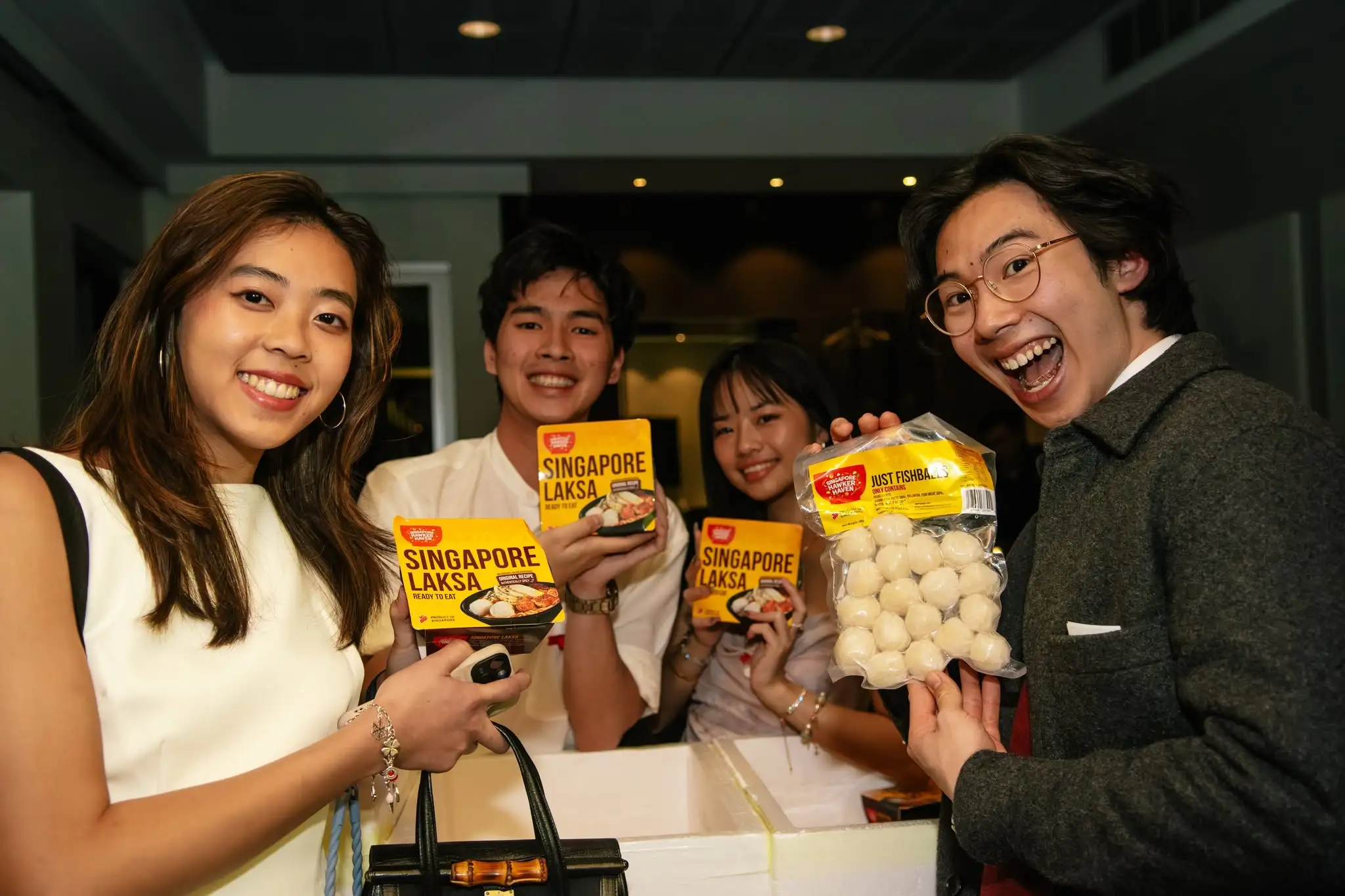
Closer to home, one of the most meaningful initiatives we’ve built is our Tapau From Home campaign.
In 2024, Singaporean student groups from Monash University and Melbourne University reached out asking if Singapore Hawker Haven could support their National Day celebrations with food.
I said yes, and distributed hundreds of portions of food to these students. I just wanted people to enjoy the food, so I didn’t ask about any publicity in return.
I reasoned that there would more groups celebrating National Day overseas. thought – why not invite all them all to a gathering, where they could enjoy food from Singapore Hawker Haven, and watch the National Day Parade.
When I shared the idea with Singapore Global Network’s Oceania chapter, they immediate recognised how this initiative was aligned with their own vision of uniting and connecting Singaporeans overseas.
With support from SGN, Tapau From Home took shape.
Together, we supported around 1,200 meal portions, and by combining that with our own National Day contribution, we were able to provide close to 1,900 portions of Singaporean food across Australia.
Keeping home in sight
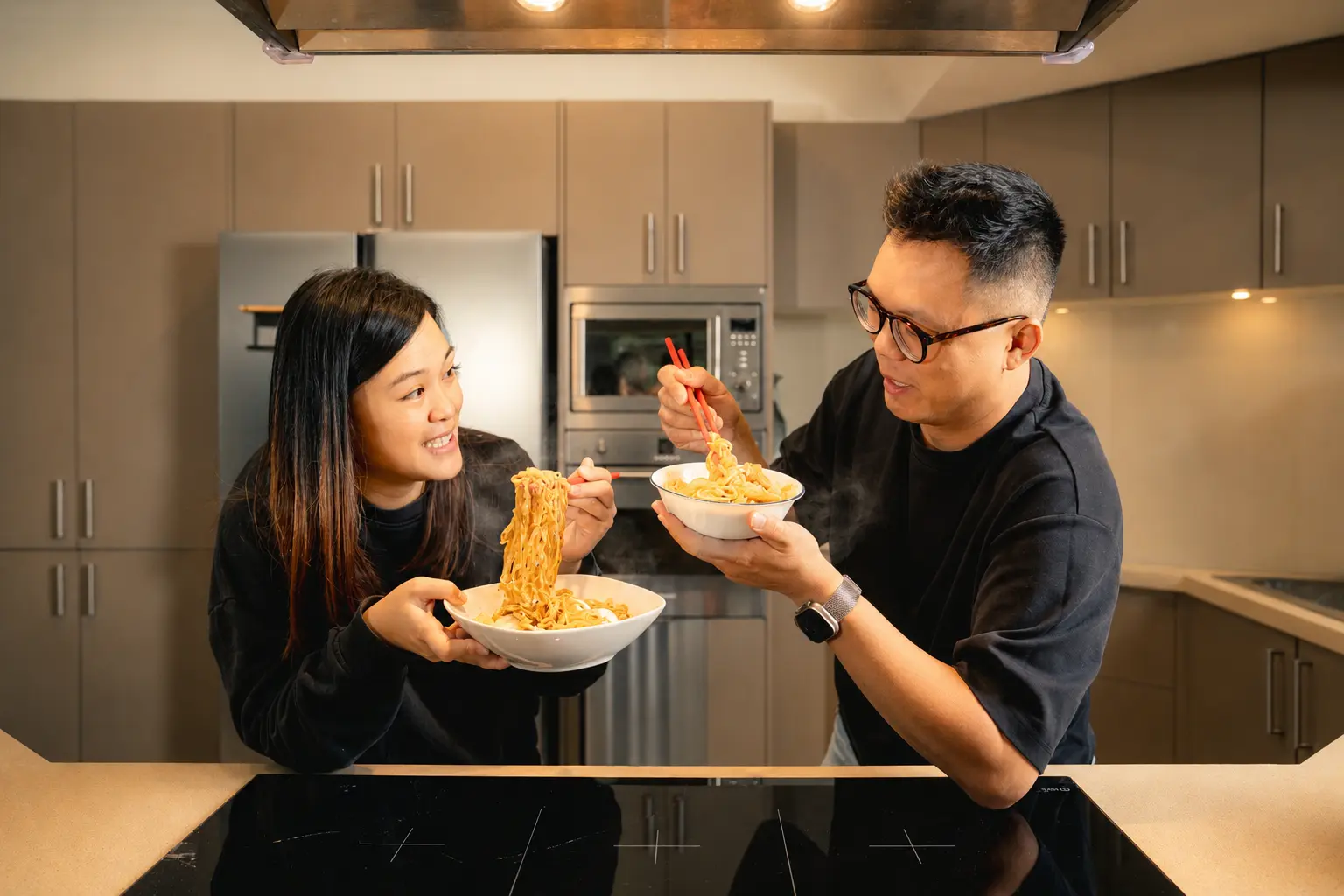
Looking back, moving to Australia was never about leaving Singapore behind. Even before we packed our bags, my wife and I had always seen it as one chapter of our family’s journey, not the final destination.
The intention has always been to return home to Singapore.
Of course, life has a way of changing the plans we so carefully make. I don’t know exactly when we’ll be back, or what that will mean for the business we’ve built. Those are questions we’ll answer when the time comes. Businesses adapt to circumstances. Family comes first.
Living overseas hasn’t made me feel any less Singaporean. If anything, it has made me appreciate just how deeply Singapore has shaped who I am. Home, I’ve come to realise, isn’t just a place you return to. It’s something you preserve in the values you pass on, the community you build, and the meals you gather around.

About Jameson Wong
Melbourne-based food entrepreneur Jameson Wong launched Singapore Hawker Haven in 2024 after a midnight craving for local Singaporean food. He is also an active investor, with a focus on technology and businesses that reshaping how people eat, live, and connect.
Connect with him here.