By SGN | 23 Feb 2024

As a high schooler in 1990s Toronto, Jari would spend hours at the university library poring over computer science textbooks, picking up Linux, C programming and TCP/IP networking. “I taught myself everything I could about computers,” he shares. By age 17, he had launched a company and started his first professional job at a local internet service provider.
Skipping college, he worked for Canadian tech companies, before moving to London at 27. Later, he entered the financial industry, where he engineered high-performance trading systems and built a network of atomic clocks that correlated global events down to the nanosecond.
Along the way, he learned from accomplished engineers and top computer scientists. At one hedge fund, he was surrounded by colleagues with PhDs in mathematics or physics. “I was the first non-degree hire they had made,” he says.
Joining the big leagues
During a globetrotting sabbatical, Jari joined the Recurse Center in New York City to study Go programming and cryptography. This knowledge would help him grow as a software engineer and further specialise in cybersecurity.
After a couple of years at Canadian startup ecobee, where he led a reliability and security team, Jari wanted to join the big leagues. “Meta was at the top of my list, and I’m so grateful to have been hired there,” he says.
In 2017, he started work at the tech giant as a production engineer, a role he describes as a software engineer with expertise in reliability, scalability and systems. “As a generalist, I’ve always found these domains all kind of fit together,” he remarks.
Jari joined Meta in 2017 as a production engineer.
As part of the infrastructure security team, he assessed the threat landscape and found the widespread use of cryptographic keys and certificates to be an Achilles heel. They were vulnerable to hard-to-detect exfiltration attacks, where bad actors could obtain keys and impersonate users even while they are offline. He founded a team to tackle access and authentication risks, leveraging recent developments like secure enclaves and hardware security modules.
As phishing threats emerged, Jari spearheaded the adoption of advanced technologies like FIDO2 and passkeys. “FIDO2 and passkeys are especially important technologies,” he says, “because they enable things like passwordless authentication in a simpler way that is secure and phishing-resistant. Passkeys are the future of online authentication.”
This work led him to become a member of the FIDO Alliance, eventually representing Meta at the board level, where important decisions on authentication standards are voted on by the major tech companies.

A surprise stint in Singapore
After five years at Meta, Jari felt it was time for a change. “In the spring of 2023, I visited friends in Singapore, and one brief conversation led unexpectedly to a series of meetings,” he shares. “A few of these people suggested that I come and consult for the government.”
By midsummer, the dual Canadian and Finnish citizen obtained a ONE Pass and found himself living in Singapore. Brought in by GovTech for three months, Jari oversaw a working group charting the future of digital identity in Singapore, reporting directly to the chief executive and a steering committee consisting of permanent secretaries.
“I think I was in the right place at the right time,” he says, alluding to the alarming rise of online fraud and scams – victims in Singapore lost a total of $490 million in 2022. “Everyone recognised that more had to be done to get ahead of these issues, and I had the relevant industry experience, especially with my work on passkeys. I appreciate that Singapore is so forward-looking, that they’re willing to explore and adopt these technologies, generally far earlier than other countries.”
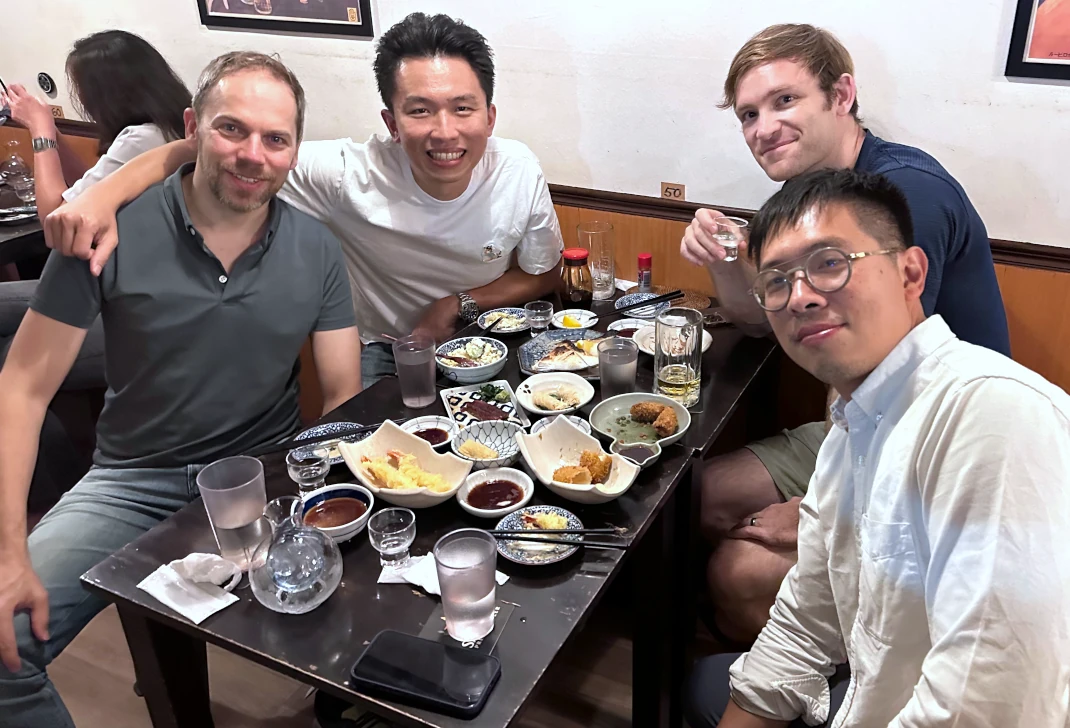
Impressions of local culture
One cultural difference he’s observed in the local tech scene relates to attitudes towards authority. “In Singapore and Asia, there is a deference to authority,” he says. “This can lead to situations where ideas are not challenged or debated robustly enough, and therefore the best ideas do not necessarily emerge as the winners.
“In Silicon Valley, authority is not conferred but earned through the influence you gain through successes and accomplishments. Furthermore, at some companies, like Meta, career levels are secret, such that you won’t necessarily know if an engineer is a new hire, or equivalent to a director. This leads to a healthy debate and environment where useful ideas can come from anywhere.”
On the other hand, he’s struck by how Singaporeans have a remarkably cosmopolitan outlook on the world. “Singaporeans are well travelled, they understand the world well, and they’re often first movers or early adopters of technology. This is one thing that makes this city-state a great place to be,” he notes.
“Singapore’s digital identity system is one of the most advanced in the world, and I was surprised how clued-up the government is about tech trends. I’ve met many people here who are well connected not only to Silicon Valley, but across the world.”
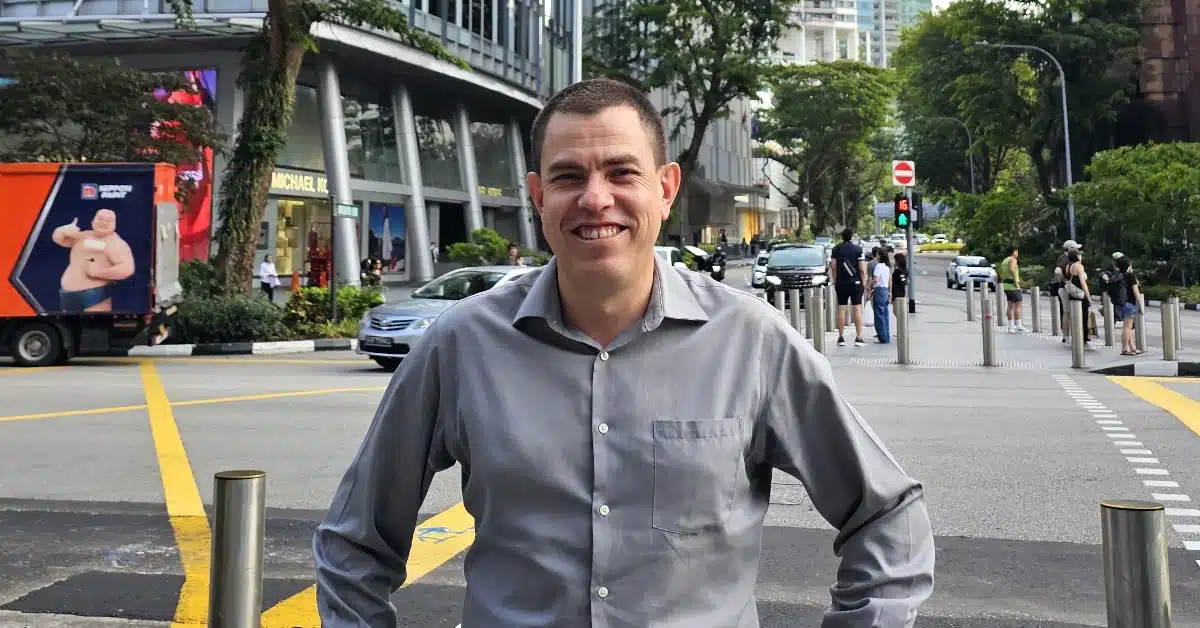
“I’ve met many people here who are well-connected not only to Silicon Valley, but across the world,” Jari says.
Opportunities for impact
While a computer science degree is a clear advantage, Jari points out that there are a lot more non-degree holders in the tech industry than most people realise. “Thankfully, these days a lot can be learned from online materials and tinkering at home,” he says.
For mid-career switchers without the experience or credentials, he recommends looking into programmes that hire candidates with atypical backgrounds. “Some of my peers at Meta were former air force pilots, surgeons, nightclub bouncers, mixed in with the odd high school dropout,” he recalls.
In 2024, Jari is continuing to explore opportunities in Singapore and the Bay Area, speaking with nascent startups in cybersecurity, AI, and machine learning.
“I’ve done a lot of work in scalability and reliability, but one of my primary interests remains in cybersecurity and protecting people on the internet,” he says.
“A big challenge we face today is in threading the needle between a robust digital identity and respecting personal information privacy. If we don’t solve these problems, then AI-generated content will become indistinguishable from human creations, deepening the problems of online fraud.”
Organisational leadership is another area that he has been exploring. “Oftentimes, the issues underlying these problems are organisational and cultural, not technical, so I’m looking for opportunities to share my experience in this area,” he says.
“I’d like to continue to contribute in a way that makes people’s lives better, but also in a way that has a clear impact on the strategic direction of a business.”
Interested in working in Singapore or starting a business here?
Find out more about the new Overseas Networks & Expertise (ONE) Pass as well as other work passes that may suit you.

Meet Jari
Jari is a tech leader and advisor skilled in organisational development and solving engineering problems. At Meta, he was a production engineer in infrastructure security who founded a team focused on solving authentication problems. In 2023, he was an advisor to GovTech Singapore on digital identity and organisational strategy.
Connect with him here.