By SGN | 20 Apr 2026
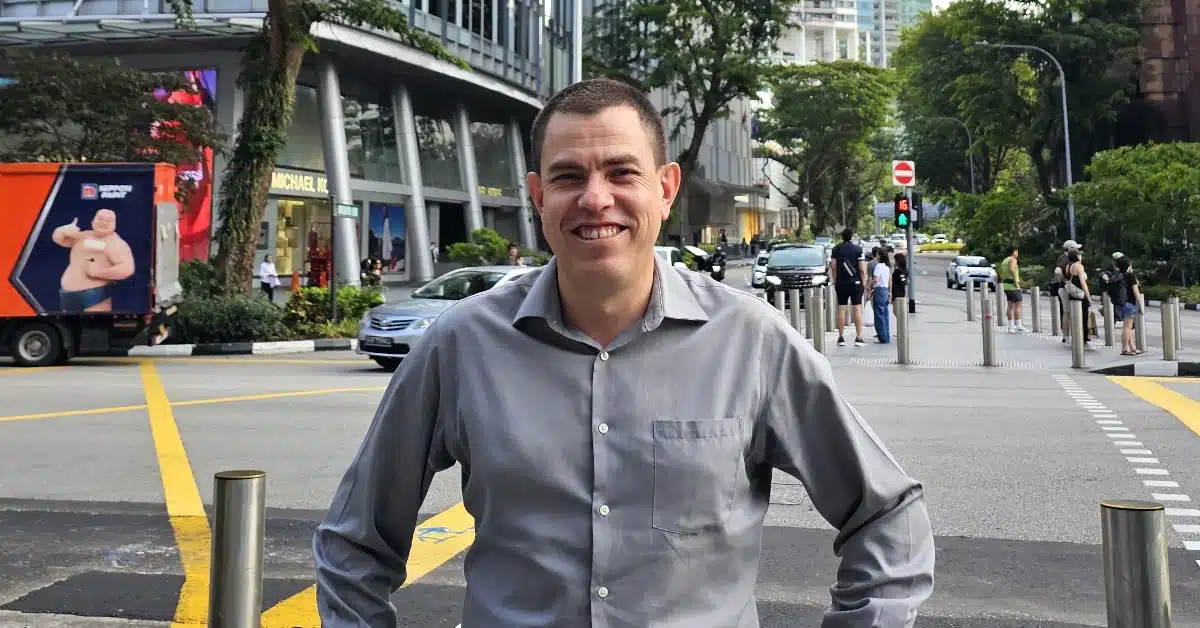
While a student at the Federal University of Santa Catarina (UFSC) in Brazil, 21-year-old Silvino co-founded a company that provided cyber solutions for universities. The business grew to become the country’s largest website for email-based communities, yet he still found himself at a crossroads. “At that point I was wondering whether I would take the private sector route or enter the public service,” he says.
After graduating with a degree in computer science, Silvino finally decided to join the public service. “When I found out I could work for the Brazilian federal police and still use my technical background, to me it was a very easy choice,” he says.
Following a year of written, medical, physical and psychological tests, Silvino got in. He moved to Curitiba, the largest city in the south, and started work as a digital forensics expert. He rose to become head of the unit, then completed a law degree part-time. Since then, his specialisation has been “the intersection between law and computer science”.
Joining INTERPOL in Singapore
INTERPOL (International Criminal Police Organization) is an intergovernmental body, headquartered in Lyon, that offers investigative support to police agencies around the world. It facilitates the analysis and sharing of criminal data, with a focus on four areas: terrorism, cybercrime, organised crime and financial crime.
In 2015, the organisation launched the INTERPOL Global Complex for Innovation (IGCI) in Singapore, a cutting-edge facility targeting emerging crime areas. When the complex began recruiting from member countries, Silvino jumped at the rare opportunity to join INTERPOL and work in one of the Four Asian Tigers.
Once again, he aced the selection process, beating dozens of colleagues, and was seconded by the Brazilian federal police to INTERPOL’s new outpost as assistant director. “It was even before the IGCI building was ready,” he says. “We were working in temporary offices at HomeTeamNS near Toa Payoh.”

In combating digital crime, international cooperation is critical. “Cybercrime may have victims in one country, perpetrators in another,” Silvino explains. “The crime may be committed in a third country, and most likely the proceeds will be in a fourth country.”
As part of the inaugural team, he was involved in shaping things from the ground up. “We were the first police organisation to develop tools and training for virtual currency tracing on the dark web,” he shares. In 2017, his team played a key role in neutralising the WannaCry ransomware attack which infected computers in over 150 countries.
Most of all, he found the work fulfilling. “You are helping the membership, from the most to the least developed countries,” he says. “You are doing something that matters.”
Relocating as a family
When Silvino relocated, his wife, whom he had met in the force, stayed behind in Curitiba for a couple of years to ensure their son and daughter gained a strong foundation in Portuguese. After joining him in Singapore, his wife continued working for the Brazilian federal police remotely, and the children enrolled in New Town Primary School.
Although others may opt for international schools, Silvino says the decision of a local school was “only natural” given the high global standing of Singapore’s education system. “Yes, they study more than back home. Yes, they have far more hours – too many, according to them,” he says. “I think it’s the right way. They are learning more.”

Since Silvino remained a Brazilian public servant, his secondment to INTERPOL came to an end at its four-year limit. “We all left Singapore very sad,” he recalls. “We wanted to stay.” Back in Brazil, he continued to celebrate Singapore’s National Day on 9 August each year, inviting friends over, even though none of them were Singaporean.
Close to six years later, Silvino was asked to return to INTERPOL by the newly appointed secretary general, fellow Brazilian Valdecy Urquiza. “Rejoining the organisation to me was a no-brainer. INTERPOL has a very special place in my heart,” he says. “My only request was that my posting would be back to Singapore.”
His wish was granted, and in early 2025, Silvino began his second term at INTERPOL. “Being able to combine this with living in Singapore once more, my family couldn’t be happier,” he says.
Living a “local” life
Silvino’s children, who now attend New Town Secondary School, worried initially about fitting in as teenagers, but assigned buddies helped them settle in in no time. “Within a week, they started inviting friends to our home,” Silvino says. “What they love the most in Singapore is the freedom, because we are totally unconcerned about their whereabouts, about driving them around or picking them up.”
The family lives in King Albert Park, a quiet neighbourhood with good access to public transport and hawker centres. (Silvino’s go-to order is pork chop rice.) They enjoy walks along the Rail Corridor, a disused railway flanked by forest and other scenic green spaces.

Because Silvino’s wife works from home, she interacts more often with neighbours and shop owners. Leading as local a life as possible has always been a priority. “Even before moving here the first time, we said we don’t plan on going to Singapore to have a life exactly the same as we do in Brazil,” Silvino says.
He appreciates the diversity of cultures in Singapore and across the region. “In Brazil you can travel 4,500 km and still be inside Brazil. Here you can take a one-hour flight and see a completely different society,” he points out.
“I have visited quite a few countries, and to me life here is a privilege,” he says. “I don’t know any other place where people are as kind and educated, where the country is as safe, clean and modern.”
The countdown begins
In his current role as director of governance, Silvino manages the relationships between INTERPOL’s three bodies – the general assembly, the executive committee and the general secretariat – with half his team in Lyon and half in Singapore.
Among other responsibilities, he gathers member countries to discuss the expansion of INTERPOL’s presence and the nature of its relationships with academic institutions and cybersecurity firms. “I travel quite a bit,” he says. “Often our meetings are at very odd times because of our time zone here. Yesterday I left the office close to midnight.”
As much as he loves being in Singapore, the four-year clock has begun ticking again. “I have been here for one year, so I have three more to go,” he says. “I could definitely spend the rest of my life here. But my professional career with the Brazilian federal police tells me I need to go back.”

Interested in working in Singapore or starting a business here?
Find out more about the new Overseas Networks & Expertise (ONE) Pass as well as other work passes that may suit you.

About Silvino
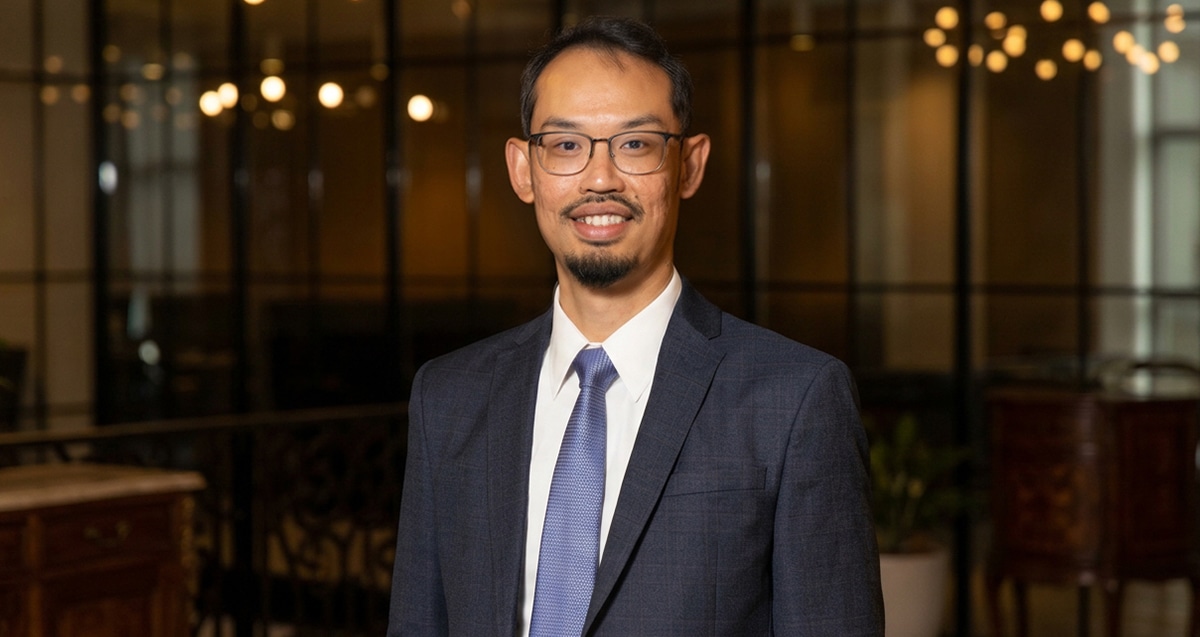
Silvino is the director of governance at INTERPOL, based in Singapore. He is on secondment from the Brazilian federal police, where he has served for over two decades. A specialist in cybercrime, he holds degrees in law and computer science.
Connect with him here.