By SGN | Updated 21 Apr 2026

Megan’s relationship with food began long before she ever stepped into the kitchen.
Raised close to both her paternal and maternal grandparents, she grew up surrounded by the comforts of home-cooked meals and family. She would come home each day to her grandmother preparing dinner, a routine that shaped her love for food.
“I was very well-fed, and grew up eating very well,” she says with a smile.
While her grandmothers were naturally skilled cooks, Megan admits to being the opposite. Despite being surrounded by cooking, she was rarely involved in the process.
“I was told to stay out of the kitchen, because I’d ruin everything,” she laughs. So, instead of learning recipes at the stove, she grew up appreciating food from the other side of the table.
It was only in university years in the UK that Megan first attempted to cook the Singaporean food she missed.
Returning to the kitchen as an adult, she quickly realized how much she had to learn. She recalls one particularly embarrassing moment:
“I was trying to cut raw salmon with a butter knife in my dorm room,” she recalls. “My local friends advised against it, but I told them I was partaking in an Asian ritual they wouldn’t understand!”
Pivoting to a different life path

Soon after passing the Bar in Singapore, Megan moved to the UK to pursue a career in corporate law. On paper, she had the career everyone coveted; yet something felt amiss.
She recognised that her line of work was the dream for a lifetime for many; yet found herself growing increasingly dissatisfied with life. Hoping that a fresh start and new environment would spark some love for the profession, she even switched companies a few times. This never happened.
Once the novelty of her new role wore off, she was faced with reality once again, which revealed her disillusionment with her current life. Several job hops later, she started to recognise a pattern.
“To quote a famous singer, I realised that ‘it’s me, I’m the problem, it’s me,” she laughs.
“At parties, people would ask me if I had always wanted to be a lawyer. I would truthfully respond with a no and say that I was only doing this because I had studied the subject,” she says.
Upon introspecting, Megan began to wonder if her legal career was simply a detour from the life she truly wanted to live. However, it would be four more years before she changed her path.
But first, she wanted to be steadfast in her decision.
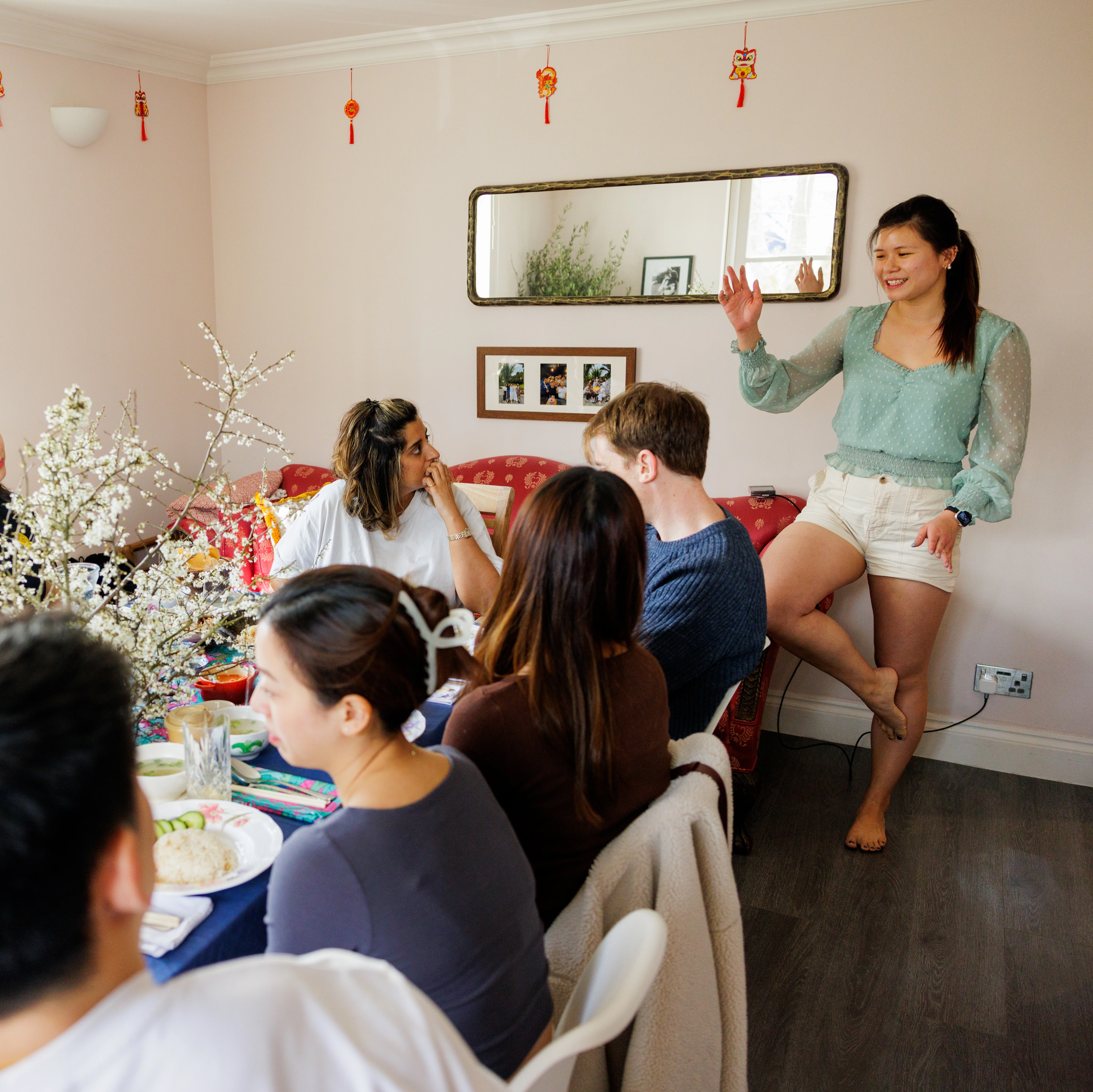
Experimenting with the supper club format

Six months before leaving her corporate job, Megan had already began building the foundations of her Singaporean food business in the UK.
She stated by running a monthly supper club, a low-to-no capital format that allowed her to test demand for Singaporean cuisine with low risk.
Her supper club, christened Homi Kitchen, was on the rise at a time when Singaporean cuisine was gaining traction in the UK, driven largely by word of mouth. Her culinary endeavours grew the same way, freeing her from having to spend a single penny on marketing.
The first edition of Homi Kitchen featured chicken rice, both roasted and steamed. Priced at £25, guests were treated to two bowls of chicken rice and dessert, an accessible introduction to a specialty cuisine.
The eight guests in attendance were crammed into the living room of her tiny London flat.
“Towards the end of the evening, it looked as though a bomb had ripped through my kitchen,” she laughs. “There were chicken pieces and oil everywhere.”
Despite these mishaps, Megan enjoyed the experience. It was her first experience of creating something with her own hands, and having customers pay for her work using their hard-earned money.
But because her first few sessions ran while she was still employed full-time, she knew she was depleted. She could not commit to making big batches of food.
“I thought to myself – if food were to be my full-time job, and if I spent time and resources nurturing my passions, I could build something real,” she says, knowing that once she resigned, there would be no going back.
While the success of her supper club confirmed that she should pursue a career in the food industry full time, she also realised she could not put up with cooking daily for a living.
“I have so much respect for hawkers, who regularly perform this back-breaking physical work,” she says. “But I enjoy not having a physical space to manage, and not taking on the risk of managing assets.”
Building her future in the food business
Unsure of how to proceed, Megan took to reading books and blogs on how to start a company. As most advice was geared towards online businesses and ecommerce products, she felt it prudent to pursue this direction.
She eventually settled on a product-first business for two reasons: she could adjust the scale of operations as per her convenience, and she had identified some potentially lucrative trends, particularly in Singaporean food.
While the awareness of Singaporean and Malaysian cuisine was still in its infancy compared to more established cuisines, they enjoyed a budding demand in the UK. What these cuisines lacked, however, was visibility in UK retail spaces.
“Singaporean condiments on grocery shelves in the UK are unchartered territory,” she shares.
Further research backed up Megan’s convictions. About 78% of world cuisine consumers in the UK were open to trying new foods similar to what they were already familiar with, according to findings from research firm Mintel. Furthermore, with Singapore being such a melting pot of cultures, its cuisine shared similarities with those already in the UK.
“When I first moved to the UK, people often asked me where Singapore was,” she recalls. “But with the rise of Singapore’s prominence in global media, more and more people learned about Singapore.”
Homi Kitchen is born
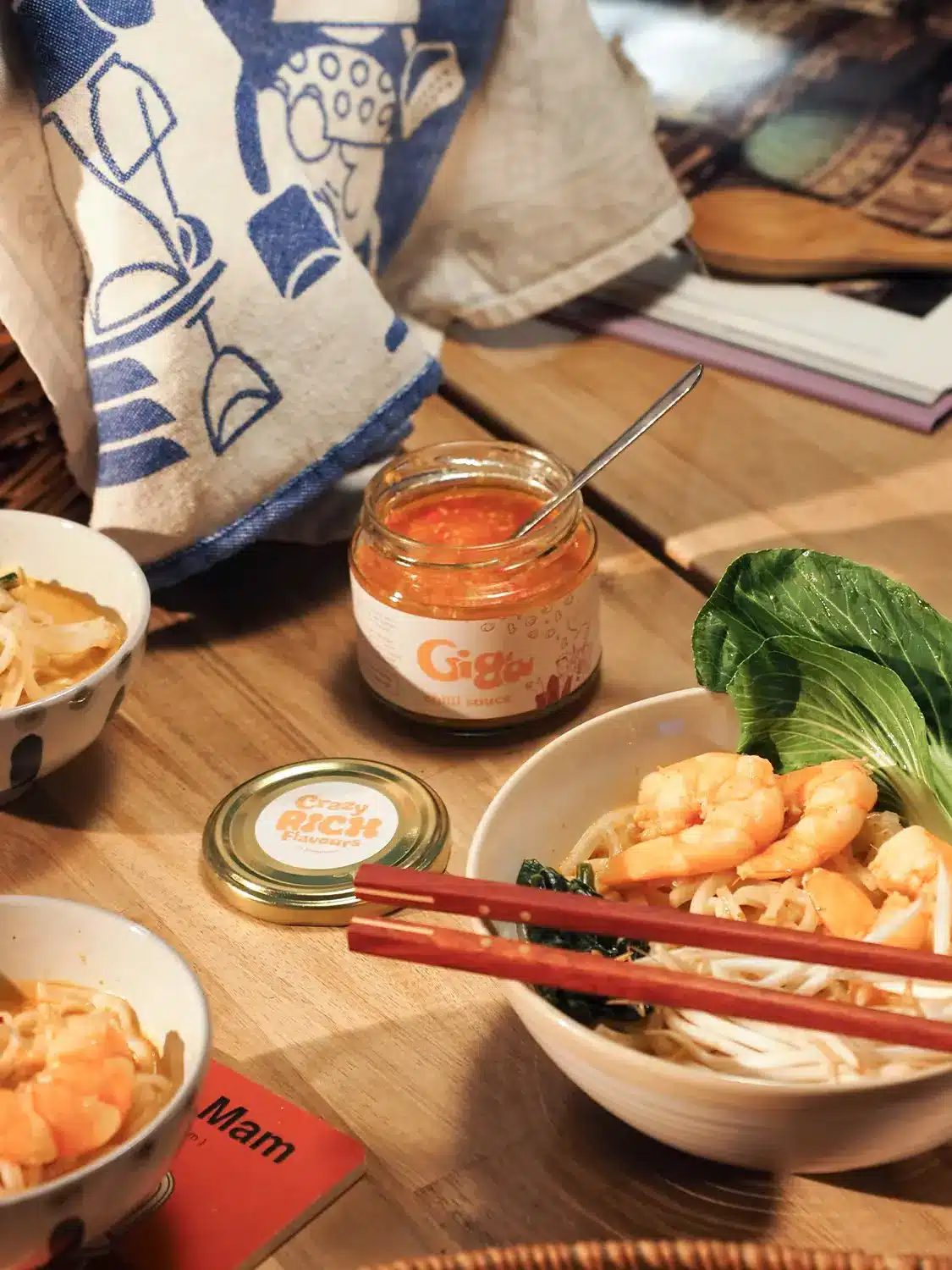
In March 2025, Megan launched Homi Kitchen’s first product in the UK.
Shedding light onto the origins of the brand name, she says, “We were called Homi Kitchen because of the supper club that started out from the comfort of my kitchen, where friends gathered to eat delicious food.”
“When the cuisine and the culture are unfamiliar, having a powerful tagline as an emotional anchor is critical,” she shares.
The first product launched under the Homi Kitchen umbrella was the Giga Chilli Sauce, an ode to the iconic chilli sauce that is served as an accompaniment to Hainanese chicken rice. It became an instant hit, with people raving about its rich, punchy flavours.
A second product was launched a few months later: the Hei Hei Pepper Sauce, a condiment inspired by black pepper crab, yet another iconic Singaporean staple.

The accolades and public support that followed were plentiful. In 2025, Homi Kitchen was crowned the Best Emerging World Foods Brand by the Greater London Enterprise Awards, while the Giga Chilli Sauce was shortlisted as a finalist for the Great British Food Awards.
The brand’s stockists included upscale department store chain Selfridges, premium grocery store Panzer’s Delicatessen, and Raya Grocery, a Southeast Asian-focused grocery store in Borough Market.
The response from Megan’s community of supporters: family, friends, and even long-lost acquaintances was swift and highly encouraging.
Friends, family, and even distant connections rallied behind Homi Kitchen. They attended supper clubs, shared the brand online, and even purchased her sauces as souvenirs to bring back to Singapore, where the flavours were abundantly available. Live tasting sessions also went exceedingly well.
“Out of the blue, people would respond to an Instagram story, or comment on a LinkedIn post about Homi Kitchen, telling me that they loved what I was doing,” she says.
“They were even willing to wait to join the next supper club session, no matter how far into the future that was.”
When a trademark challenge forced a rethink

The months following the launch of Homi Kitchen were eye-opening. Megan spent time attending events, gathering feedback, and introducing the sauces to new customers. Armed with fresh data and insights, she was ready to embark on the next chapter of Homi Kitchen: a brand refresh exercise.
In early 2026, Megan unveiled a new creative direction: Yumm Singa.
A homophone of ‘yam seng’, a cheer often shouted at celebratory toasts in Singapore, Yumm Singa puts at its front and center the bold, vibrant flavours of Singapore cuisine and the spirit of celebration behind it.
Yet the circumstances that inspired this rebrand were far from ideal.
In October 2025, Megan had initially planned to build her new brand identity around the phrase ‘Crazy Rich Flavours’, which had proven to resonate strongly with the audience. She had already had a trademark registered for the tagline in February 2025, but she filed further trademark applications as part of the rebranding process to expand the brand’s coverage.
Just as she was on the cusp of rolling out her new branding, she received an opposition notice from Warner Bros’ legal team. Among other things, they argued that the tagline would mislead audiences into thinking that the condiments were associated with the movie Crazy Rich Asians.
Rather than entering a prolonged legal battle with a global brand with hefty resources at its disposal, Megan’s lawyers advised her to withdraw her October 2025 applications. In turn, she turned to social media to share about the plight of her brand.
“I was blown away by the response,” she shares. “People I had never met before were resharing my story, sending me messages of support.”
The experience shifted her perspective.
“It made me realise the brand was more than its name – it represented a community of people behind it.”
Weeks later, Megan announced the move to ‘Yumm Singa’, a move that received much fanfare online.
Advice for the next generation of food entrepreneurs
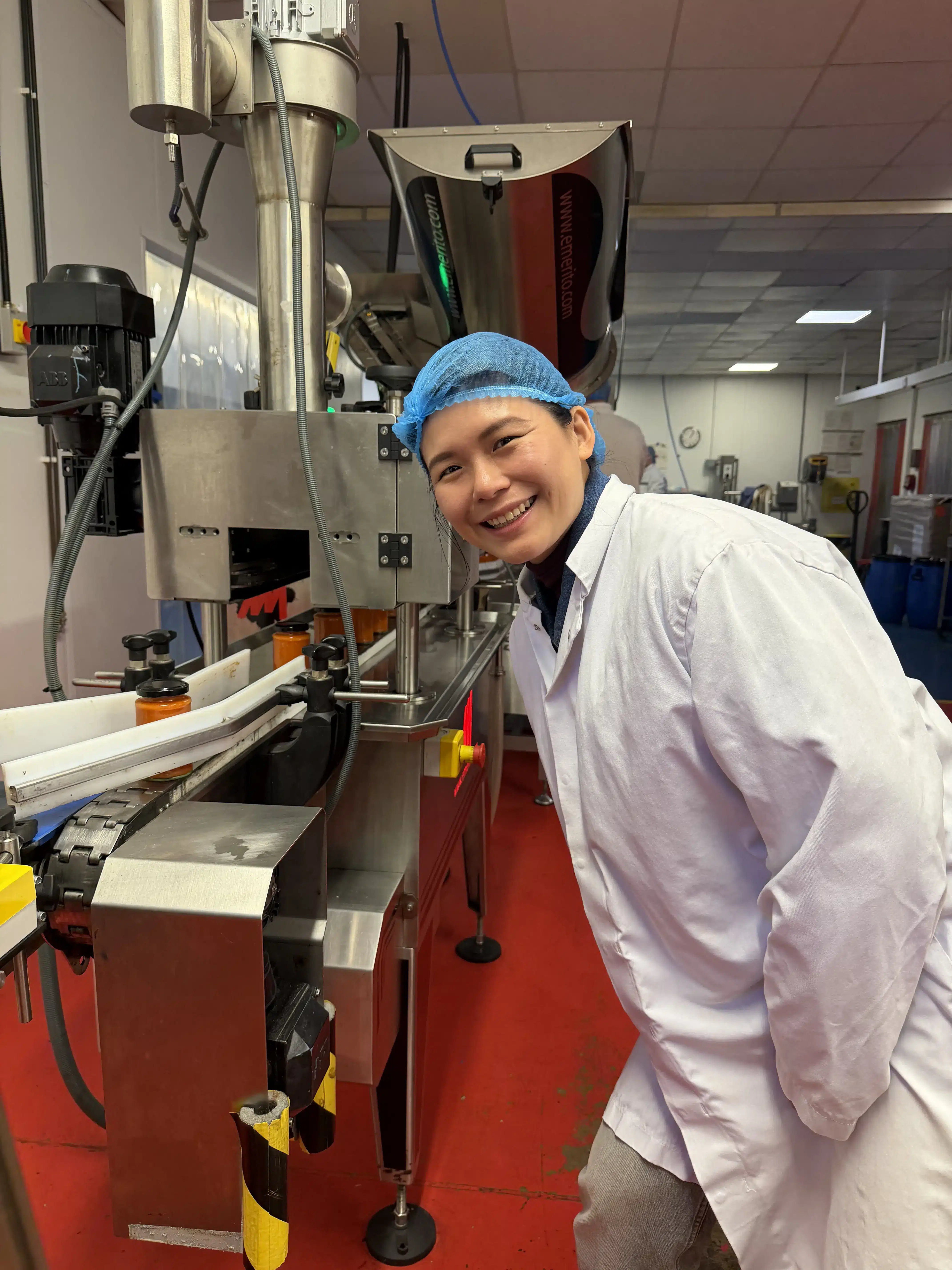
When asked what advice she would give aspiring founders, Megan laughs. “So much,” she says.
“As cliché as it sounds, you have to believe in yourself. You also have to be willing to leap into the unknown.”
Building a business, she explains, often means doing everything yourself, especially in the beginning.
“I can’t pay for billboards. I have had to rely entirely on the power of social media,” she says. “I’ve taken courses, learned new skills, and had to wear multiple hats. That’s one of the realities of being a small business owner.”
That challenge becomes even more complex when the brand needs to speak for itself.
“It’s one thing to meet people in person and represent your product,” she says. “But how do you get your brand to do that on its own, without you there to shape perceptions? That’s been a steep learning curve.”
Part of the answer, she reveals, lies in collaboration.
“I expected the industry to be cutthroat, but everyone has been incredibly supportive,” she shares. “People like Maureen Suan Neo of Nonya Secrets, who is often positioned by others as my competitor, have been magnanimous enough to take me under her wing.”
Megan’s dreams for Yumm Singa

“My vision is for Yumm Singa to be the go-to condiments brand for Singaporean flavours, and for it to transform the global culinary landscape by placing Singaporean cuisine on the map,” Megan shares.
Beyond condiments, she hopes to launch complementary product lines consisting of Singaporean-themed snacks and drinks, and ready-made meals. For now, this remains an aspiration.
“I envision Yumm Singa becoming the Charlie Bigham (popular readymade meal brand) of Singaporean food,” she says. “Imagine how cool it would be to waltz into Waitrose (British supermarket chain) and shop Yumm Singa products.”
Ultimately, Megan sees her work as part of something larger than just building a business.
“We can change global culture,” she says. “We can make Singapore more prominent in the world, and not just a side note in global food culture.”

About Megan
Megan Tan is the founder of Yumm Singa (formerly Homi Kitchen), an award-winning food brand that started out as the antidote to Megan’s homesick cravings for Singaporean food.
The brand’s sauces – the Hainanese chicken rice chilli sauce and the Black Pepper Crab stir-fry sauce – have received much adoration from the public.
Connect with her here.