By SGN | 3 Nov 2026
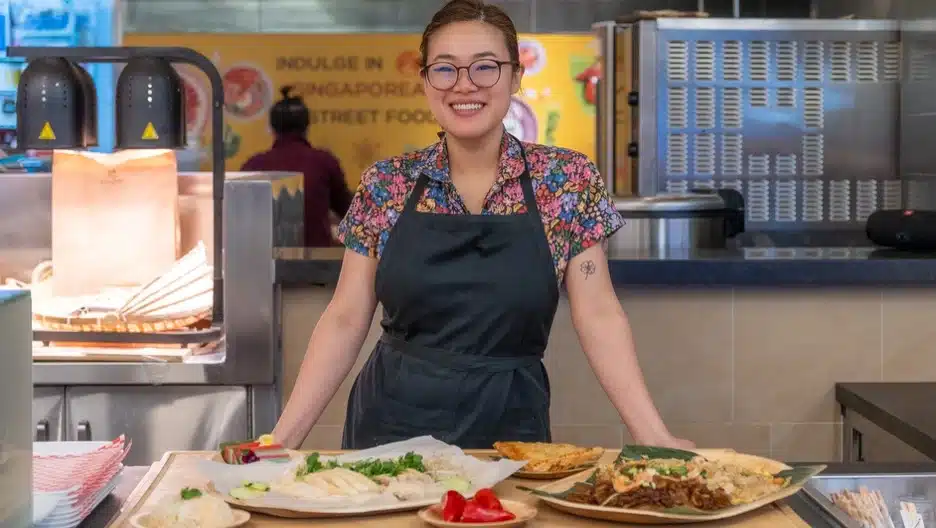
Growing up, some of my strongest food memories still came from family members cooking very specific things: my auntie making egg tarts in our little toaster oven, my paternal grandmother making feng zhao (braised chicken feet), my maternal grandmother teaching us how to make bak zhang (Chinese dish made of seasoned glutinous rice stuffed with savory or sweet fillings and wrapped in bamboo or reed leaves).
Culturally, my palate was all over the place. My dad’s family is Hockchia, my mom is Teochew, and my grandmother is Cantonese. For a long time, my understanding was basically: if a dish had soy sauce or oyster sauce in it, it was a Chinese dish.
I was maybe nine or ten years old when I first tasted rendang (a stir-fried meat dish or dry curry made of meat stewed in coconut milk and spices, commonly known as a Malay or Indonesian dish) and thought: how does this unfamiliar dish taste so incredibly delicious?
Naturally, I asked my parents how it was made, but neither of them actually knew. And I think that’s very Singaporean of them, honestly.
Try asking the average Singaporean to name every ingredient in a dish we eat all the time, or explain how to make it from scratch. We probably can’t. We depend on these foods so deeply in our everyday lives, but the knowledge of how to make it usually lives with someone else: a hawker, a cook, a grandmother or a domestic helper.
As I got older, I started asking more questions and trying to understand these dishes for myself. It wasn’t until adulthood that I learnt that rendang didn’t just involve a list of ingredients I’d never thought about. It was also incredibly laborious to prepare.
As a child, I also struggled to understand why the spaghetti I ate at the mall cost more than the chicken rice I bought at school. Why was one type of food considered a “restaurant meal” while another, which might take just as much work, was expected to be served cheaply at a hawker center?
Obviously, at that age I understood absolutely nothing about rent, labour, regulation, or supply chains. But the questions stuck with me.
Creating a taste of home, away from home
I moved to San Francisco in 2014, and I didn’t realise how spoiled we were in Singapore until I left. Laksa, hokkien mee, and fish soup noodles were the big three I missed. But I also really missed hot, savoury snacks like curry puffs from Old Chang Kee, otah and all the random food I used to pick up on the commute home at Bukit Batok Interchange.
Then I moved to America and thought, wait, are your snacks mostly chips and candy?
What do you do when you’re homesick, can’t just fly home, don’t have much money, and don’t even have a car?
You try to make wherever you are feel a little more like home. For me, this meant making my own food. I frequented different Asian grocery stores around San Francisco: Chinese supermarkets for one ingredient, Indian stores for another, and even Vietnamese markets for something else.
I remember finding laksa leaves at a Vietnamese grocery store close to where I was staying and feeling like I had struck gold. It sounds like a small achievement but when you’re far from home, finding one ingredient that smells or tastes familiar can feel enormous.
My kitchen in the US was very pieced together. I bought secondhand pots and pans from Facebook Marketplace, and inherited equipment and pantry staples from friends who had finished their time in the US and were moving back to Singapore.
At first I was making dishes like bak kut teh (pork rib dish cooked in broth) from pre-made packets, then eventually I started attempting hokkien mee, with some ingredients from Chinatown and some from Trader Joe’s.
I always joked that I was borrowing ingredients from different cultures to recreate Singaporean food. But it occurred to me that this was a very Singaporean to do, since our food has always been shaped by migration, trade – borrowing from, and adapting to different cultures.
The beginnings of Dabao Singapore
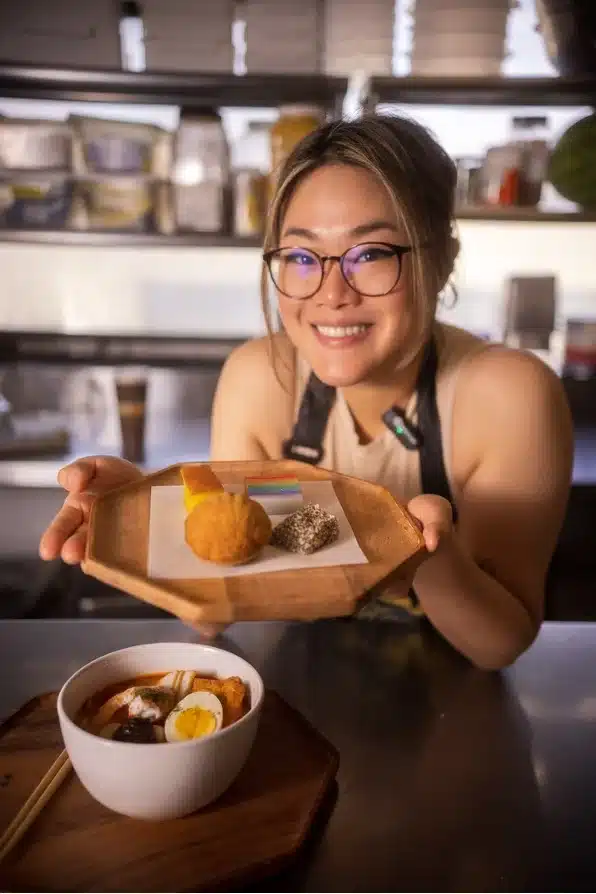
By 2019, I was already toying with the idea of returning to Singapore and starting a hawker stall near my home. The idea was to focus on one local dish and to do it really well. But thinking about the hot weather in Singapore made me hesitate. Then came COVID-19, which was the real catalyst that gave me the “YOLO mindset” to start Dabao Singapore.
I was the executive sous chef of a brand-new restaurant at that time and was furloughed immediately when the pandemic hit. After a few weeks of waiting, I got restless and started talking to some of the interns from my company, and their situation was much worse.
They were foreigners, so they weren’t eligible for government aid, and with borders closed they couldn’t go home. They were stuck in San Francisco, one of the most expensive cities in the world, without income, struggling to afford rent.
That’s when another Singaporean chef and I decided to start making and selling Singaporean food. I had already been making meals for people with dietary restrictions, so I started with meal kits. Tracy Goh, a Malaysian chef who was opening her restaurant Damansara SF at the time, posted on Instagram telling people to come to me for laksa (spicy, creamy noodle soup).
And then, boom! Orders poured in through messages on my social media, and I found myself cooking hundreds of bowls of laksa out of my tiny home kitchen. It was overwhelming, but it was also the beginning of something big, which became Dabao Singapore today.
Finding my Singaporean community in San Francisco
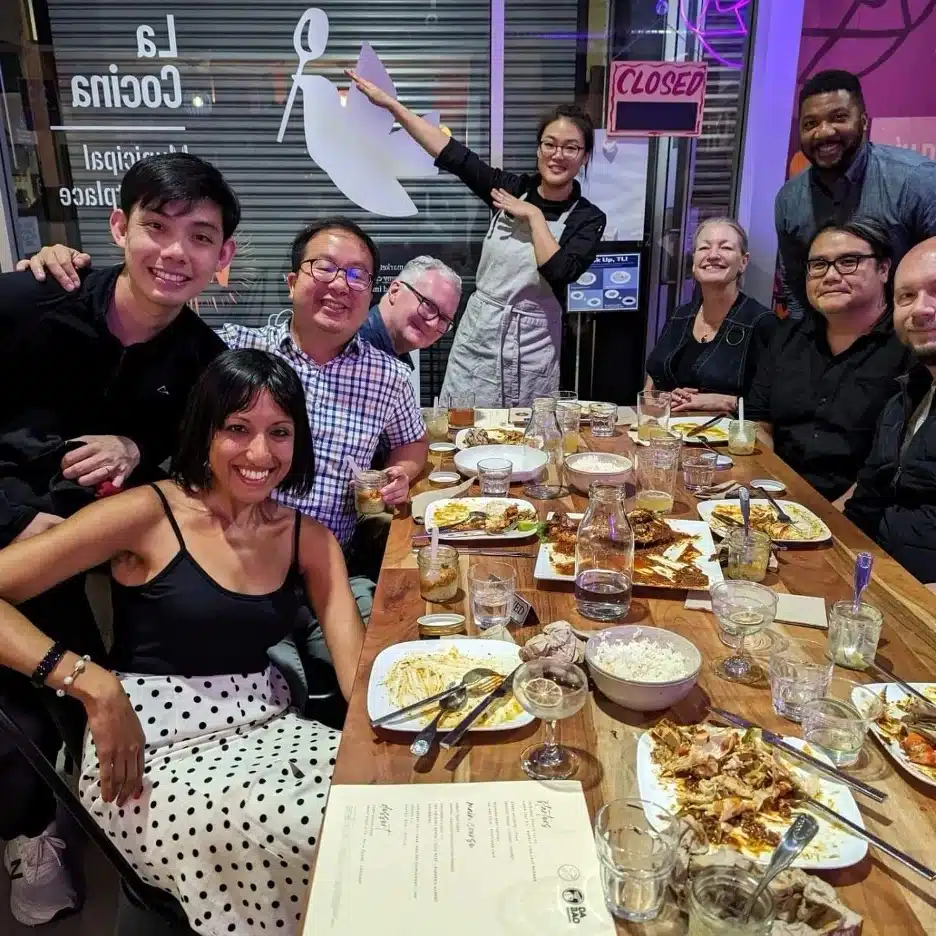
The way I found the Singaporean community here felt a little crazy. Apparently, all these Singaporeans had been here the whole time, but because I wasn’t working in tech, I wasn’t plugged into many of the networks where Singaporeans abroad were connecting.
Through running Dabao Singapore, I’ve met Singaporean chefs, artists, musicians and craftspeople living in San Francisco. Dabao Singapore unexpectedly became a gathering point for some of that community, and I think that’s one of the things I’m proudest of.
More than anything, I wanted to recreate a feeling. If a bite of food can suddenly transport someone back to a memory they haven’t thought about in years, that’s incredibly powerful.
Someone might take a bite of laksa and remember eating with their grandparents, or being 12 years old again at a hawker centre, or their commute home from school. One customer told me he ordered my Hokkien Mee during the pandemic, and when he ate it, he cried. With travel restrictions in place, there was no way to go home, and he missed his family deeply. The food gave him a sense of comfort. That, to me, is the essence of Singaporean food.
But I also realise now that I’m trying to create something else: a better understanding of what it means to make Singaporean food outside of Singapore. We are the expats making the food now. And I don’t think people always understand what that means economically.
When a cuisine is no longer made in the place where its supply chain, labour, ingredients, equipment and food culture naturally exist, it generally costs more. Sometimes we get pushback that the food is “too expensive,” and that can be frustrating because the criticism doesn’t consider what ingredients go into the dish.
A burger with fewer than five components can cost the same as our chicken rice. But our chicken rice has multiple sauces made from scratch, rice cooked with chicken fat, and garlic we prepare ourselves, and a chicken with its own preparation process.
Every condiment that looks effortless on the plate represents another recipe and another person doing work. “Cheap food” and “simple food” are not the same thing.
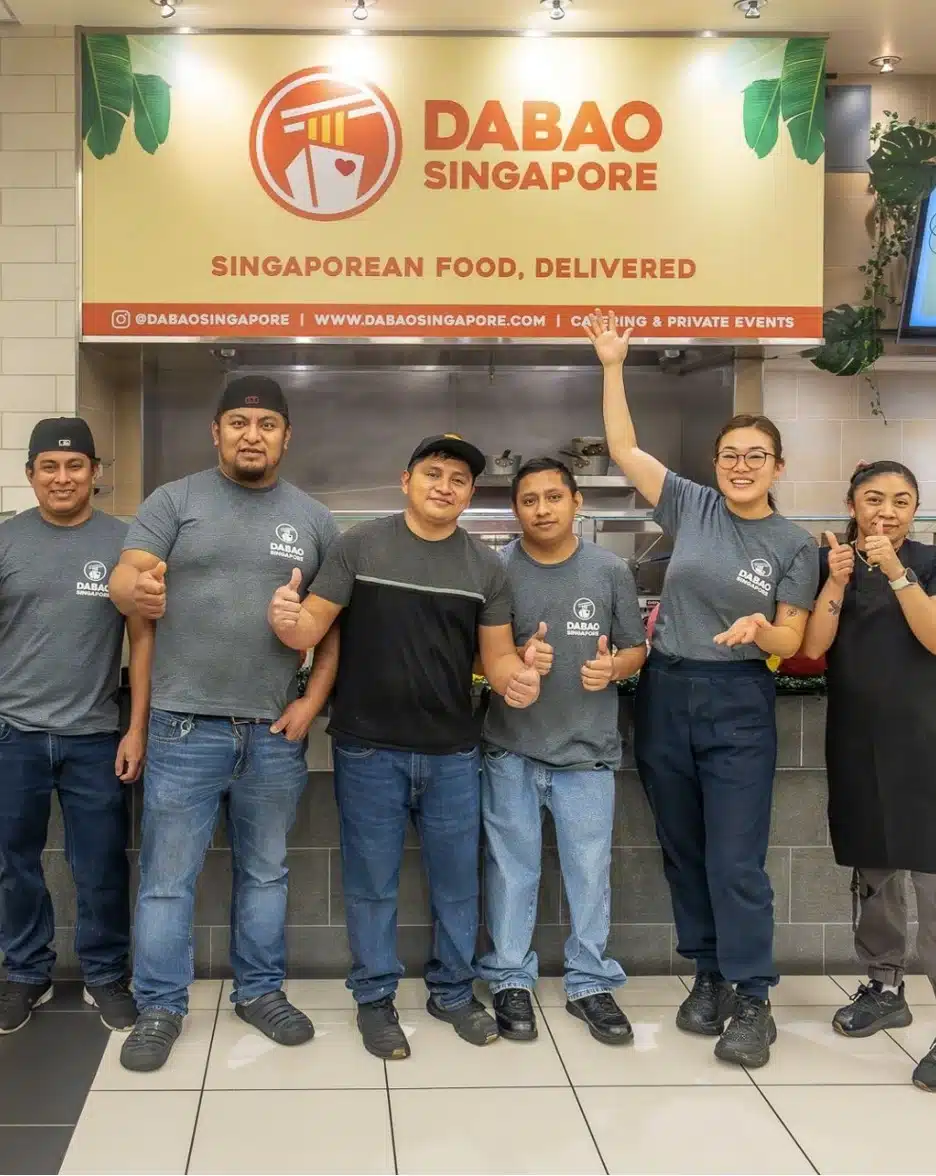
When I am cooking at Dabao Singapore, I think a lot about the hawkers behind these dishes. Some spend decades making one thing over and over again. Their bodies take the toll, their schedules can be brutal, and their entire lives revolve around feeding other people. Yet we give enormous prestige to other cuisines while expecting our own food to remain cheap forever.
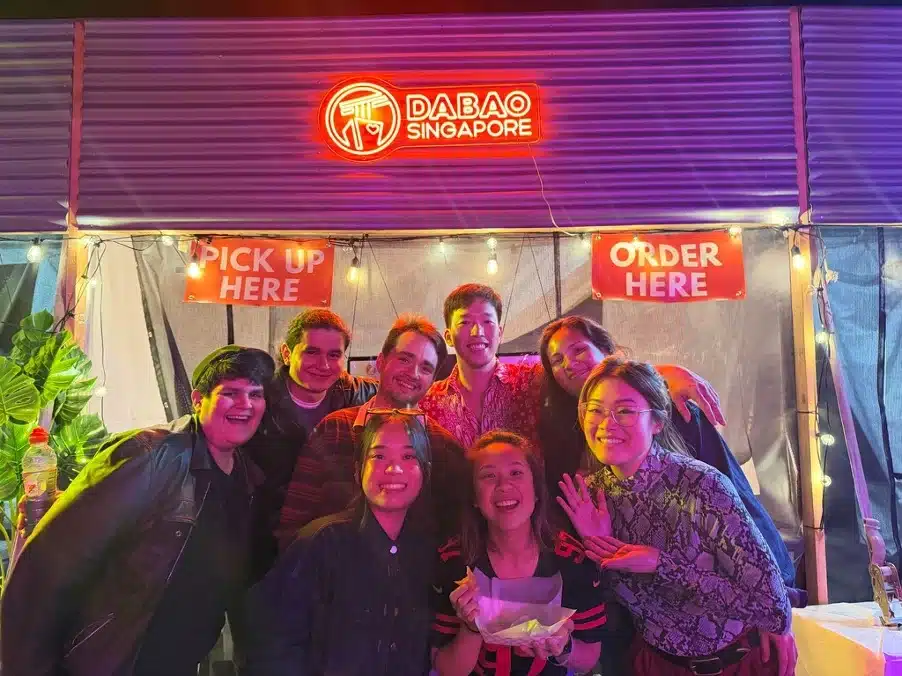
Somewhere along the way, Dabao Singapore became a way for me to share and preserve Singaporean food culture. I’m not claiming to be the best or the ultimate authority; I’m doing it in the way I know how. But I do feel a sense of responsibility now that I truly understand that restaurants aren’t factories. There are human beings behind the food, often working incredibly hard just to keep the doors open.
Food doesn't stay frozen in time

Dabao Singapore started as meal kits out of my home kitchen. Today it’s a stall in the food court at the Metreon in downtown San Francisco, and I get to see people discover this food in person. A lot of them have heard about Singaporean food but haven’t had much chance to try it. They come in curious about laksa or chicken rice, and then suddenly they’re hooked.
Food is fuel in every sense of the word.
It fuels your body, but it also fuels your soul: memory, creativity, conversation, relationships, and, with the right people around the table, I think it fuels a good life. As a kid, I probably just understood food as something delicious that was always around me, like the unassuming plate of rendang. Now I see everything behind it: the labour, the economics, the culture, the history and the people.
I care deeply about preserving the spirit of the food, but I’m also running a business. There must be a conversation between tradition and the place you’re serving it. Food doesn’t stay frozen in time. It travels with us, adapts with us, and somehow still manages to bring us home.

About Emily
Emily Lim is the founder and chef of Dabao Singapore, a Singaporean hawker food business in San Francisco. She launched Dabao from her home kitchen in 2020 as a meal-kit operation, and it has since grown into a popular stall at the Metreon food court. A 2024 James Beard Foundation Emerging Chef semifinalist, Emily is also a winner of Food Network’s Chopped and Guy’s Grocery Games. She has appeared in more than 11 Food Network episodes, including Beat Bobby Flay and Beachside Brawl, as well as Dropout’s culinary comedy series Gastronauts.
Connect with her here.