By SGN | 1 Jul 2024

Despite their adventurous palates, Southeast Asians might find it hard to swallow the fact that cendol has Persian origins, kaya has Portuguese influences, or that roti prata has Uzbekistani roots.
Not Ivan.
For him, the blurring of cultural lines is only natural. After all, his own lineage is a rich stew of ancestries: Italian, Spanish, Syrian and Lebanese on his mum’s side, Russian and German on his dad’s.
Growing up outside São Paulo – Brazil’s capital of diversity and the Western hemisphere’s most populous city – he passed on the legal path many relatives had taken and chose to embark on a culinary career. As a teenager, he moved abroad to train and later work in the renowned kitchens of Mugaritz in Spain, Per Se in the States, and The Fat Duck in Britain.
Today, as the creative force behind the celebrated restaurant Nouri in Singapore, he uses food as a medium to celebrate mixed identities and the fascinating ways in which cultures intersect and diverge.
Diving headlong into Singapore food
In 2012, Ivan moved to Singapore to join the now-defunct Bacchanalia as executive head chef. Under his leadership, the restaurant attained a star in the country’s inaugural Michelin Guide in 2016.
Similar to São Paulo, Singapore has a long history as a hub of commerce and immigration. “My first impression was how culturally diverse it is,” he recalls.
Friends in Singapore like Michael Han – the former chef-owner of FiftyThree under the Les Amis Group, whom Ivan met at Mugaritz – showed him around its gastronomic landscape. From char kway teow (stir-fried noodles) to sup kambing (goat soup), Ivan tucked into local dishes with unbridled enthusiasm.
“I had a policy of not saying no to things,” he shares. “I ate everything, to the point where I broke out in a rash.” TCM and ayurvedic doctors he consulted urged him to slow down his intake of spicy and fatty food.
His first encounter with durian was also quite the trip. After a heavy meal, a friend took him to a shop in Balestier, where Ivan devoured seed after seed of the spiky fruit, washing it down with beer. “I arrived home and thought I was going to die of a heart attack. Everything was racing,” he says. “I was literally high on durian.”
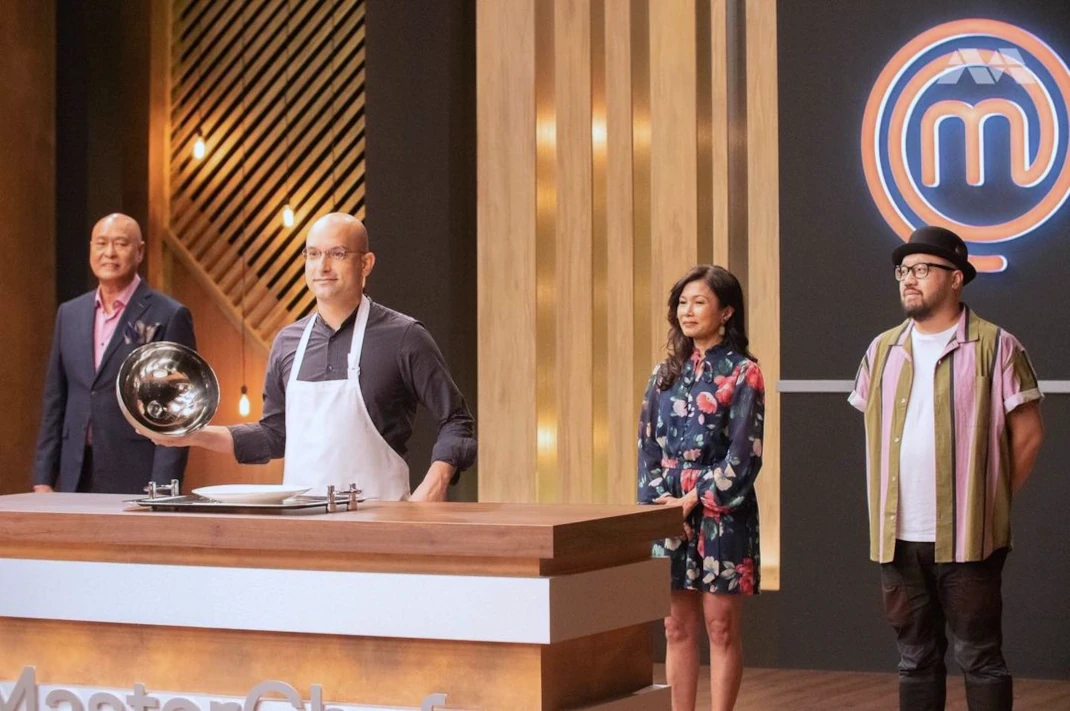
As he explored Singapore’s hawker centres and coffee shops, Ivan began to see food as a sort of social unifier across class and culture. “I was completely enamoured,” he says. “It clicked with how I saw the world and what I thought the world needed more of.”
Whereas chilli peppers have long been considered a food of labourers in South America, he was astonished by how ubiquitous it is as a condiment in Singapore. “Everybody always goes, ‘Where’s the chilli?’ It was very exciting to see people, regardless of creed or social status, just going for it,” he says.
Ivan’s love for local fare endures to this day, and it’s something he misses when he travels. His all-time favourites include appam (hoppers) – often at Madras New Woodlands in Upper Dickson Road – and Teochew steamed fish. “I’m gonna sound a bit atas (posh) but I love the one at Imperial Treasure at ION Orchard,” he reveals.
Not as different as we imagine
When Ivan left Bacchanalia in 2016, he intended to return to Brazil for good. But a chat with the prolific restaurateur Loh Lik Peng of Unlisted Collection convinced him to stay on in Singapore and helm his own establishment. This was the birth of Nouri.
During this time, Ivan developed a philosophy called Crossroads Thinking that has come to drive his work and define the spirit of the restaurant.
In essence, Crossroads Thinking sees no dish as an island, no culture as a monolith. Ivan is less interested in ideas of ‘authenticity’ – who has ownership over a dish – and more captivated by how cuisines intersect. He sees the world as a tangled, inextricable web of cultural connections.

“I think our worldview, especially within the last 100 years, is somewhat superficial, and our idea of identity is very tied to nation-states and borders,” he explains. “It’s convenient to place things into boxes. Because when you complicate it, you’re complicating your own identity.
“But when you look back and trace the genealogy of any dish or food culture, you see how it interacted with other peoples and incorporated ingredients that were not native to the land. Ultimately, what we might perceive as unique to Southeast Asia may not be all that different from the food in South America or Papua New Guinea.”
At a time when political tensions are reaching a boiling point, Ivan says food is one way to dispel destructive narratives and celebrate our shared roots. “Crossroads has become for me a way to have these conversations about building bridges across communities,” he says.
He believes this philosophy was the result of his experiences in Singapore, itself a centuries-old commercial and cultural entrepôt. “I’d say Nouri owes a lot of its existence to the fact that it’s in Singapore. And even though I’m not from here, in some ways I see it as a truly Singaporean restaurant.”
Linking the distant and the familiar
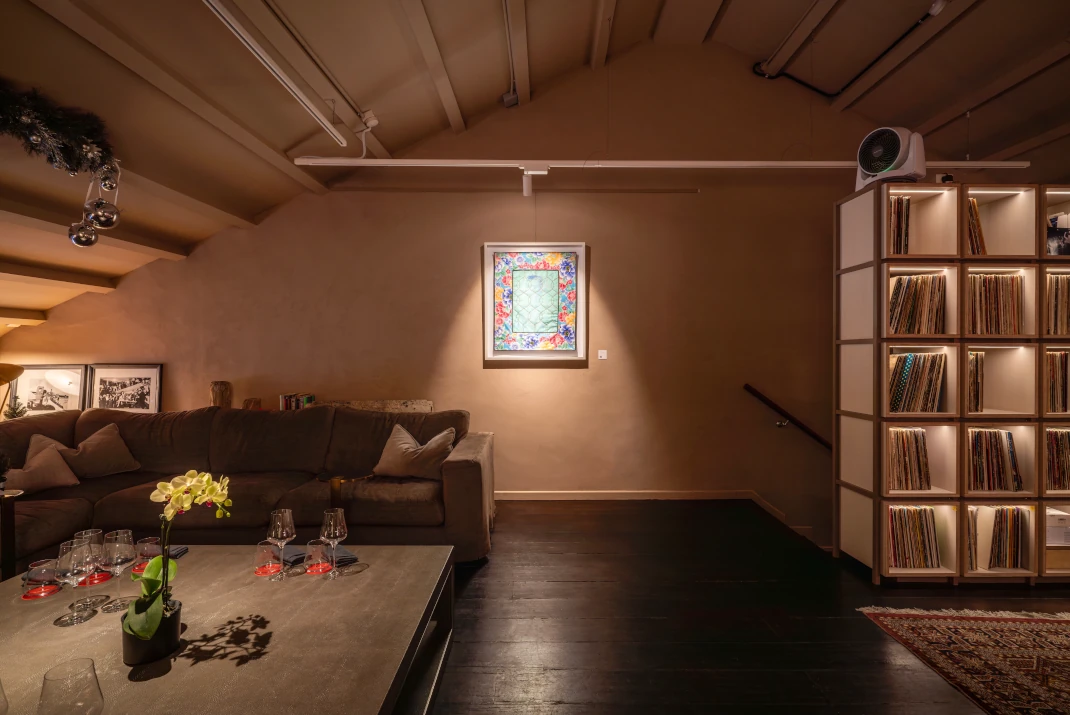
On the floor above Nouri – which has maintained a Michelin star for four years – Ivan runs a second concept called Appetite. The restlessly modern space combines an art gallery, a record bar and an experimental kitchen.
Appetite is also the research arm that investigates food and cultural history through a Crossroads lens, engaging both local and international scholars and contributors. This research informs the development of Nouri’s menus, which take diners on global voyages that connect the distant with the familiar.
For instance, the dish akarajé and vatapá presents Afro-Brazilian foods Ivan grew up on while highlighting their culinary connections to Asia. His akarajé is a spiced fritter of pinto beans, onions and – in a nod to the South Indian vadai – lentils. His vatapá, a creamy concoction of shrimp, coconut and cashew, evokes shades of laksa and Thai turmeric curry.
Another mainstay, narezushi, astonishingly reveals the Southeast Asian origin story of sushi. While modern or Edo-era sushi pairs fresh fish with vinegared rice, its former incarnation narezushi ferments salted fish with cooked rice – a practice that traces back to the Mekong Basin in the 3rd century. Thoughtfully harmonising past and present, Ivan’s interpretation includes layers of idli (Indian steamed cake of fermented rice), prahok (Cambodian fermented fish paste) and pickled iwashi (Japanese sardine).
“Like akarajé and vatapá, it’s a narrative that highlights how ingredients and ideas had to move across a vast landscape to arrive at a dish that’s quite iconic for a particular culture,” Ivan says. “I’m very proud of those creations.”

The journey of discovery continues
After a decade of living in Singapore, Ivan still thrills in learning about the city.
“I believe that if you’re curious about a place, you’re always going to see novelty,” he says. “You talk to the auntie at the coffee shop, the cab driver, the guy repairing the floor, the banker, the wealthy lady – and all of those conversations help you understand more about the country.”
For him, social integration is a vital part of living abroad. “If I am to thrive here, I need to be part of the culture – just like any bacteria in a petri dish,” he jokes.
Amoy Street, along which Nouri’s shophouse space stands, encapsulates many of the contrasting facets that intrigue Ivan about Singapore: old and new, affluent and poor, natural and urban. The neighbourhood has proven to be full of secrets that he occasionally discovers. One day, it was learning that coconut nectar was being harvested nearby to make tuak (palm wine). A couple weeks earlier, it was discovering the presence of a nutmeg grove on Ann Siang Hill.
True to Nouri’s cross-cultural character, Ivan organises a four-hands dinner nearly every month, featuring chefs like Thitid “Ton” Tassanakajohn (of Le Du in Bangkok) and Maksut Aşkar (of Neolokal in Istanbul).
Ivan has seen the fine dining scene in Singapore grow in vibrancy, and he is glad to be a part of its evolution.
Notably, the past few years have seen the rise of local and regional chefs presenting a contemporary vision of Southeast Asian heritage. “Modern restaurants like Fiz and Seroja are reinterpreting traditional flavours at a high level of execution, with a respect for culture and provenance,” he says.
“I am very happy here,” he concludes. “I have two thriving businesses, I feel included in the community, I feel like I contribute. And also, I feel like every day I still learn something new. So this is home for me.”

Meet Ivan
Ivan Brehm is the chef-owner of one-Michelin-starred restaurant Nouri and the creative interdisciplinary space Appetite in Singapore. His work is driven by the philosophy of Crossroads Thinking, rooted in the conviction that no food culture exists in isolation.