By SGN | 23 Nov 2026

Allan Teng set out to build a global career.
Yet, he found himself in unfamiliar global rooms because he said yes to opportunities, often choosing to build something rather than wait for the right conditions to materialise.
Today, he is part of the leadership team at cloud-based automation platform Workato, where he has spent more than a decade helping the company grow across Asia Pacific.
He has also returned to learning through IMDA’s SG Digital Leaders programme and Harvard Business School’s Advanced Management Program, while mentoring young founders himself.
Across all of it, one idea keeps resurfacing: opportunities tend to find the people who put themselves out there.
Being spurred into action as an enterprising teenager

Allan’s entrepreneurial spirit was ignited long before he arrived in California.
At age 20, fresh out of National Service, he pitched the idea of the Jurong Lake Run to Peter Fu (then-CEO of Fortis Bank and former CEO of UOB China) and the Taman Jurong Community Sports Club.
“I had volunteered at other runs, and wanted to recreate something in the Taman Jurong area,” he recalls.
While committee members urged him to start small with 1,000 runners, Allan held firm on aiming for 10,000 participants to maximise community impact. His pitch reached the office of then-Deputy Prime Minister Tharman Shanmugaratnam, who, impressed by the 20-year-old’s passion and rigorous financial model, lent his full support.
When he landed in Silicon Valley in August 2014 as an intern under the auspices of the NUS Overseas Colleges (NOC) programme, his first reaction wasn’t awe at ultra-futuristic skyscrapers or high-tech cityscapes.
He quickly realised that Silicon Valley’s true magic was fuelled by a dense, relentless melting pot of global talent, capital, and an unshakeable culture of execution. This environment would shape the trajectory of his career over the next decade, as he built Workato from a tiny 5-person startup into an enterprise integration unicorn valued in the billions.
Building a company from a 10PM – 6AM shift
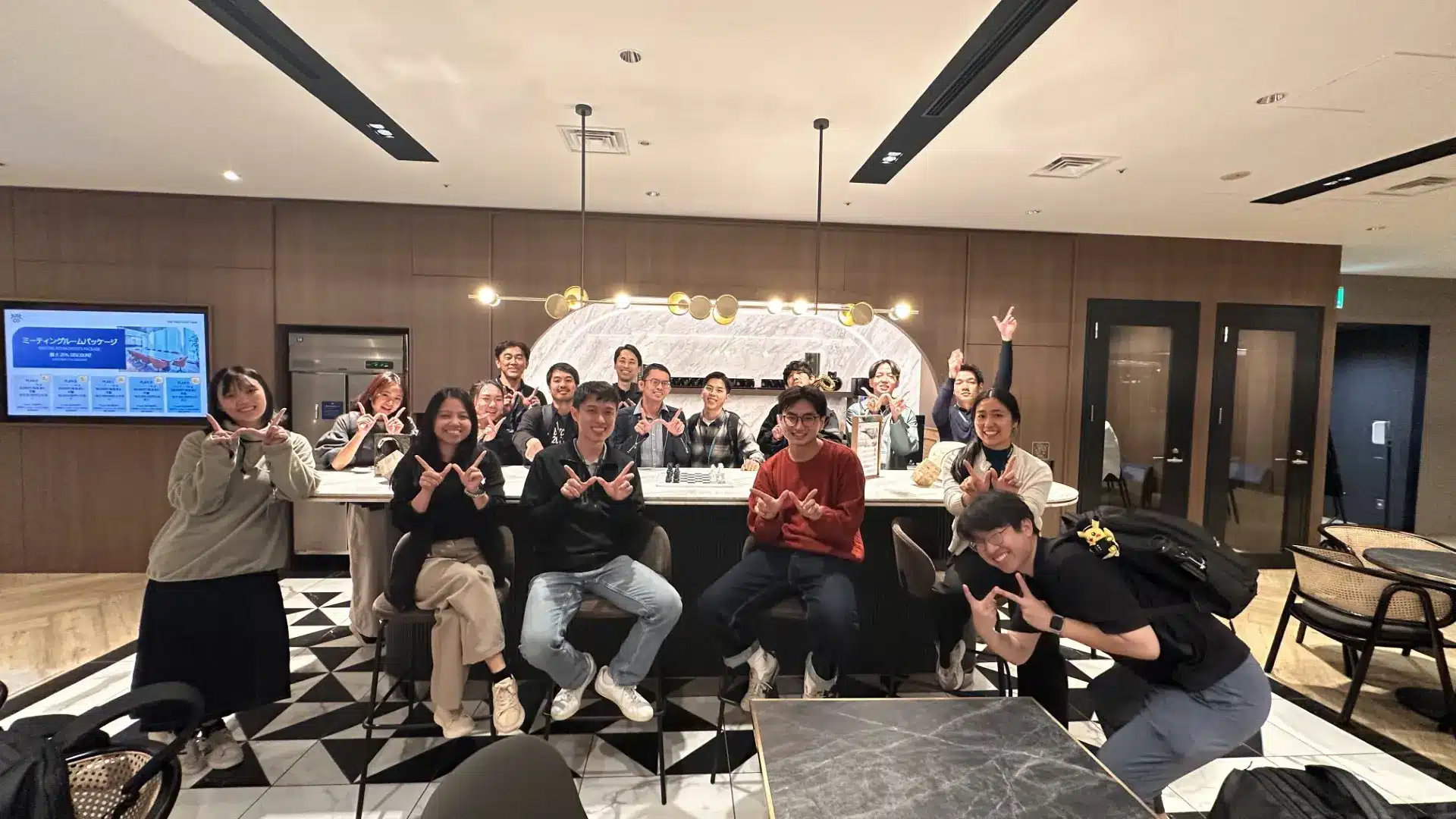
In May 2014, Allan began conversations with Workato co-founder and CEO Vijay Tella (VJ), and the company’s founding team. He had joined the company as employee number five, acting as the ultimate operational generalist, despite being only an intern on paper.
“I took over every function our CEO and product engineering teams couldn’t handle,” he shares. “Things like marketing, backend, and customer support. In fact, my number was the company’s customer support hotline for years!”
When Allan returned to Singapore in 2015, Workato was still focused primarily on the US market. “I needed to complete my studies, so I came to an agreement with the Workato team that I was to continue building their business in Singapore,” he recalls.
He took a leave of absence from university for a year to focus on building Workato, then resumed classes while working simultaneously, in a rather exacting arrangement: he would have to work during American business hours, roughly 10PM to 6AM in Singapore.
This meant an unusual daily routine. He would work through the night, sleep for two or three hours in the office, then head to classes at NUS at 10am for class. And since Workato’s office was relatively close to the NUS campus, this made the arrangement slightly more manageable, but not for long.
“I told our CEO that we would not be able to convince people to keep working the graveyard shift forever,” he recalls. “So, I decided to try exploring bringing in new businesses based in Asia.” Securing Grab as Workato’s first major regional customer proved Workato’s viability in the Asian market.
Over the next seven years, he expanded Workato’s presence across APAC, growing the team to 350 personnel and establishing dedicated country leadership in Australia and Japan.
The sabbatical that never happened
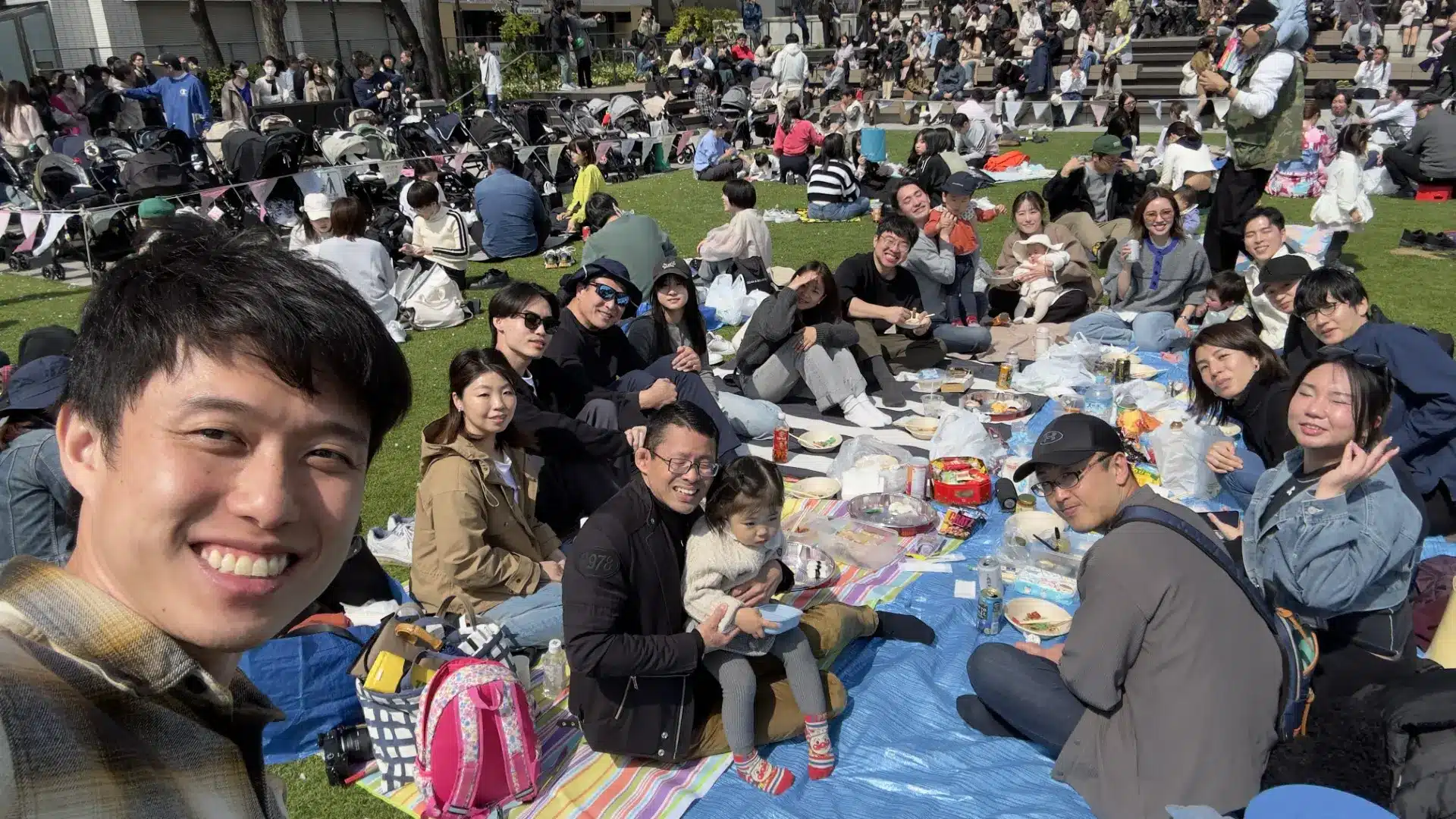
By 2023, after nearly a decade of relentless expansion, Allan planned to take a well-deserved one-year sabbatical.
However, two months before his scheduled break, Vijay called with an urgent challenge: Workato’s operations in Tokyo were struggling, and the company needed a leader to diagnose and turn around the business.
The sabbatical was postponed. Yet, for Allan, the decision was not as painful as it might sound. The Japan team was only around 20-strong at the time, and his CEO had essentially given him the freedom to approach it like a startup. This was more than enough to pique his interest.
“I love building things. I’m a startup guy,” he says.
Arriving in Japan without speaking the language, Allan encountered a deeply siloed organisational structure and slow, consensus-heavy decision-making.
“People sat side-by-side without knowing what their colleague did, because everyone was operating strictly within their functional silo,” he explains. “Nobody was putting two and two together, to figure out how various business functions impacted each other.”
His initial top-down urge to mandate rapid changes was met with significant resistance.
“At first, I was extremely frustrated because of how slow things were,” he admits. “People talked at length, but refused to take action. I even went on a ‘listening’ tour of all my employees, where I spent my first three months in Japan listening to my employees’ grievances, then repeated the same process with customers.”
This experience forced him to reconsider his leadership style. A breakthrough came through a book recommendation, The Culture Map by Erin Meyer, which had been suggested by a colleague.
Realising that Japanese business culture relies on subtle, bottom-up consensus rather than top-down directives, Allan had to adapt his leadership approach. Instead of imposing decisions, he presented data, proposed ideas, and facilitated structured group discussions.
“It wasn’t about driving change by force, but about being effective as a leader to enable change,” he reflects. “Once I adjusted my style to respect the cognitive and cultural process, the entire team was onboard.”
By aligning the Tokyo team around a single unified goal rather than isolated targets, Allan engineered a dramatic operational turnaround. Within 18 months, Workato Japan transformed from the company’s lowest-performing region to its top performer globally.
Building bridges with SingCham Japan
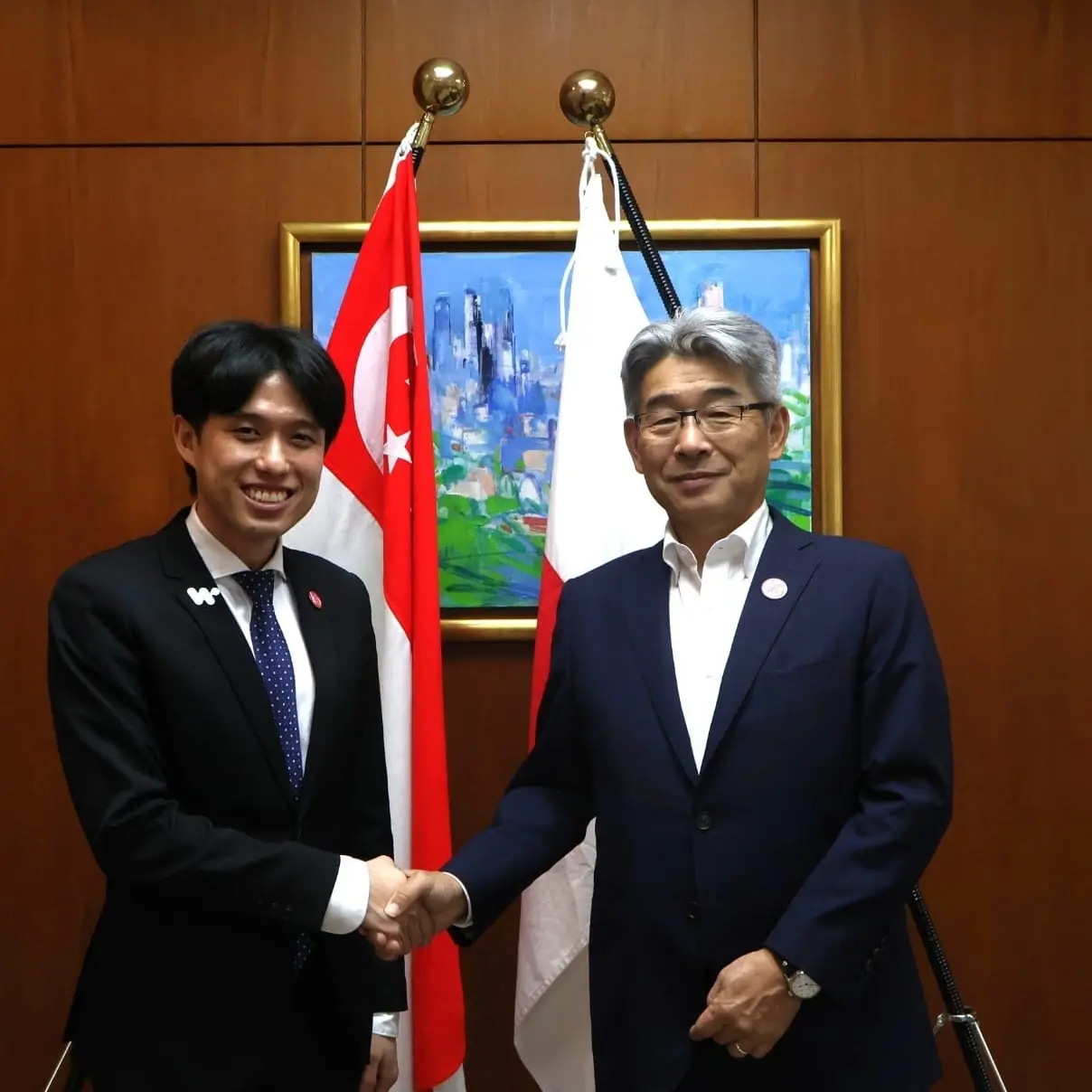
Allan’s penchant for community building naturally extended to his new home in Tokyo.
“When I first moved to Japan, I was struggling to adapt, because I didn’t speak a word of Japanese,” he says. “When I attended networking events, the language barrier prevented me from connecting with other people.”
While pockets of Singaporean communities existed in Japan, most were oriented towards social or personal activities.
Allan was looking for something different: a community that could help Singaporeans and others interested in Singapore build business relationships in Japan. Working alongside Singapore’s Ambassador to Japan, Ong Eng Chuan, he co-founded the Singapore Chamber of Commerce in Japan (SingCham Japan), officially registering it as a legal entity in December 2025.
Unlike informal social clubs, SingCham Japan was explicitly structured to drive bilateral trade, support enterprise networking, and bridge regional business ecosystems across Silicon Valley, Singapore, and Japan, with Singapore Global Network providing funding and structural support for several events.
“As a small country, Singapore’s role in this world is to bridge ecosystems,” he reflects. “Our members are all professionals trying to grow their companies, or meet other like-minded people in a business context.”
Learning beyond his own industry
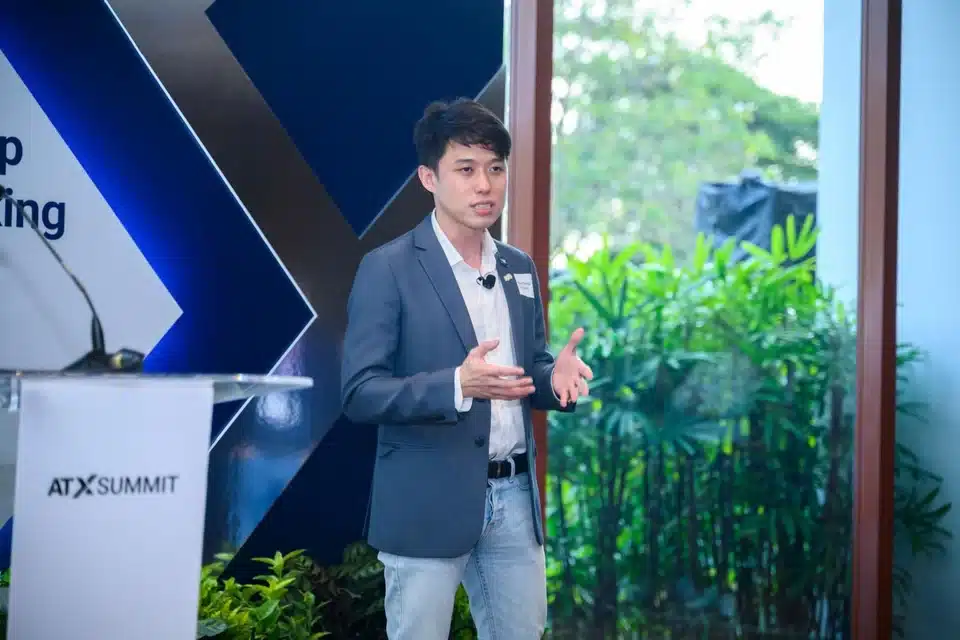
As Allan’s executive responsibilities grew globally, so did his conviction to continuously broaden his perspective and give back to the tech ecosystem. That opportunity materialised when he was recognised as an SG Digital Leader (SGDL) in 2024 through the Infocomm Media Development Authority’s (IMDA) Singapore Digital Leadership Accelerator (SGDLA).
SGDLA develops a pipeline of tech leaders comprising corporate leaders, product innovators, and startup founders. This community, including SGDLs, has doubled to over 1,600 since its launch.
Allan deeply connected with the core mission of the SGDLA: to develop and connect high-potential Singaporean digital leaders, broadening their leadership capabilities, networks and perspectives, while enabling them to support one another and contribute to Singapore’s digital ecosystem.
“The programme is about globalising the Singaporean mindset – going out into the world, learning from international ecosystems, and finding meaningful ways to contribute back to Singapore,” he shares.
With co-funding support from IMDA, Allan enrolled in the prestigious Harvard Business School Advanced Management Program (AMP). The experience proved transformative. Studying alongside 140 C-suite executives representing 42 countries, he engaged in rigorous case studies spanning diverse sectors.
“As we go through life, we can become myopic in our approach, and unable to see past the sectors we’re working in,” he reflects. “This programme helped me to build connections from other industries, and gain excellent cross-industry perspectives across retail, finance, and global markets.”
For Allan, being a part of the SGDLA also meant deepening his role as both a mentor and a mentee. He views mentorship not as formal teaching, but as a reciprocal exchange of experiences.
“I don’t think we are necessarily teaching anybody anything, as the world is changing so quickly,” he reflects. “Rather, it’s about sharing experiences on the journey I’ve taken and the decision points along the way.”
In his own growth, Allan regularly turns to mentors for fresh strategic angles. Speaking with mentor Allen Shim, who guided Slack through its landmark IPO, Allan tapped into Shim’s CFO background to rethink how to evaluate company finances, track metrics differently, and measure success.
Beyond sharing perspectives, Allan actively uses his network to open doors for younger leaders.
“I always tell my mentees that we can help you get in the door, but ultimately, you need to show up and prove your own worth,” he says.
Building bridges and creating one’s own luck
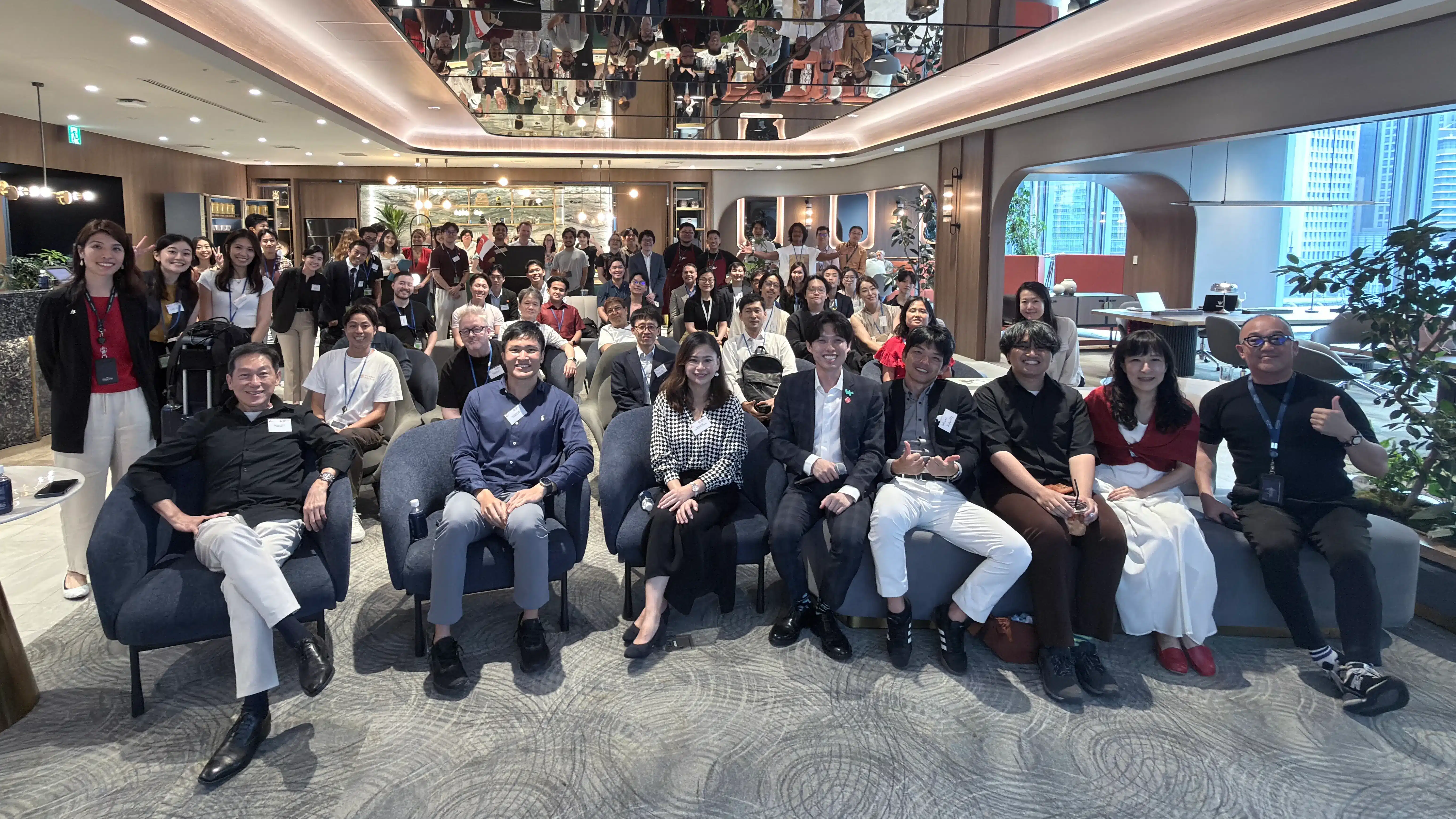
If there is one lesson Allan wants other young Singaporeans to take from his international career, it is to embrace opportunities when they appear.
“Luck is a measure of the opportunities you are exposing yourself to,” he says.
His own brush with building intentional luck started when he was 16: He was selected for a programme at Jurong Secondary School, designed to nurture young social entrepreneurs.
There was one problem: the programme clashed with a family holiday to South Korea. Yet, Allan chose the entrepreneurship programme. His parents supported the decision, even though the family could not get a refund for the non-cancellable trip.
“My parents knew that this was a once-in-a-lifetime opportunity, and that I wanted to be an entrepreneur,” he says. The programme became his way in, and it changed the trajectory of his life.
It led to him starting several companies, eventually helped him secure the NUS Global Merit Scholarship and opened the door to NOC, which in turn took him to Silicon Valley and introduced him to the Workato founders.
“Looking back, the dots are easy to connect,” he says. “But you cannot know for certain, at 16, when and where a particular opportunity will take you. What you can do is put yourself in the room.”
“Attend the event. Join the programme. Meet the person. Take the opportunity.”

About Allan
Allan Teng is Vice President and General Manager for Workato Japan, and has founded and scaled Workato’s APAC business. Besides being the co-founder of the Singapore Chamber of Commerce in Japan (SingCham Japan), he is an alumnus of IMDA’s SG Digital Leaders Programme and Harvard Business School’s Advanced Management Programme.
Connect with him here.