By SGN | 21 Oct 2024
“We should be deliberately designing for failure.”
This statement might seem uncomfortable and counterintuitive. Even if failure was a learning experience, the accompanying sting of disappointment can be difficult to deal with. Yet researcher and educator Manu Kapur advocates for setting up for failure in a way that makes the student feel safe making mistakes.
“I learned very early on in my career that traditional learning methods did not promote deep learning in students,” Manu explains. “They might perform well in an exam, but it doesn’t mean they truly understand the concept at hand. So instead of providing students with explicit instructions on a particular concept, and telling them what to do, we get them to learn by making as many mistakes as possible.”
This concept is the foundation of his life’s work, known professionally as “Productive Failure.” To date, it has been successfully implemented in schools across the globe – in Singapore, Switzerland, India, USA, UK, Germany, and Japan.
With the support of Singapore’s Ministry of Education and ETH Zurich in Switzerland, Manu has led large interdisciplinary research programmes, working closely with scientists, policymakers, funding bodies, and learning institutions.
“Over the last thirty years, Singapore’s research scene has blossomed exponentially,” he shares. “There’s an abundance of research funding available, both for competitive and curated research programmes. If you have a good idea and solid expertise, the sky’s the limit.”
But before Manu became a decorated researcher and scientist, he was nursing dreams of becoming a professional athlete.
A football injury sets the stage for a lifelong career in mathematical cognition
As a child, Manu had grand aspirations of becoming a soccer player. Unfortunately, his dreams were dashed when he suffered a knee injury that would prevent him from playing professionally.
However, he discovered his talent for a subject that required a drastically different type of mental athleticism – mathematics.
“One of my math teachers recognised that I was different. She always gave me the space to carry out my own explorations – if I performed well in math. And I did,” he shares.
This math teacher would turn out to be a key figure in kickstarting Manu’s research career, by taking a chance on him when, later in his career, other institutions turned him down.
And while Manu might have hung up his boots for good, he still relied on the philosophies picked up on the field to guide him in his academic career. “During football training, our coach followed the mindset of “training to failure,” he explains.
“You train until you can train no more, and once you reach the point of no return, you push past your physical limits – but only slightly,” he recalls.
Manu confesses to immensely disliking this grueling process but came to appreciate its relevance decades later in an academic setting. Later, for the final year thesis of his engineering bachelors, he was tasked to tackle a challenging project dealing with advanced mathematical concepts.
“My supervisor asked me to solve a particular differential equation using mathematical methods. And no matter how many times I tried, I couldn’t solve it.”
This process of trial and error carried on for six months. Every time Manu hit a roadblock, his supervisor would advise him to try a specific method. When that failed, he would go back to the drawing board, fail spectacularly, and start all over again with a new method, rinse and repeat.
He was nearly at his wit’s end when his supervisor finally told him that the equation could only be solved computationally using programs and algorithms, rather than mathematically.
And while he initially believed he was being set up for failure, his supervisor had a different perspective. “By repeatedly pushing me to explore the different paths that led to inevitable failure, I came to understand the boundary conditions of the mathematical problem better.”
[In layman’s terms, boundary conditions are limits or requirements applied to problems in mathematics, physics, and engineering – think of it as a list of terms and conditions within which a mathematical or scientific model must operate.]
Failing in the classroom

Another brush with failure brought Manu one step closer to what would become the founding concept for productive failure.
While in university, he discovered his passion for teaching when he was asked to tutor secondary school students. Subsequently, he headed to the National Institute of Education of Singapore to obtain his Post-Graduate Diploma in Education.
Following this, he taught college mathematics for four years at the National Junior College in Singapore while simultaneously serving as deputy leader for Singapore’s team to the 43rd International Mathematical Olympiad in Glasgow.
Given his extensive experience as an educator, Manu is no stranger to his share of challenging classroom situations. “I take pride in how I teach. I structure lessons in a robust manner and provide clear explanations. My students even told me how they enjoyed class, and that they understood everything. Except, they did not.”
No matter how clearly he tried to explain certain concepts, there were always students who either did not understand them, or gained a superficial understanding. “If I changed a little detail about the problem, they were completely thrown off.”
During his doctoral studies, Manu decided to dive deep into the phenomenon of learning via failure by exploring it for his thesis. He reasoned that if educators didn’t see positive results after teaching students the correct concepts and the correct way of solving problems, they should flip the problem on its head and start with failure instead.
“I started reading research material on how learning from failure is important. I took this concept a step further – if failure were a good teacher, and learning from failure is intuitive, we should deliberately design for failure, instead of waiting for failure to happen.”
Manu applied this mode of learning to abstract subjects like statistics, linear algebra, and calculus. “Instead of giving students the correct formula and teaching them how to apply it correctly, we give them a dataset and ask them to come up with solutions,” he explains. “Eventually, they’ll keep running into hurdles and discover that they have the wrong approach.”
Proving Productive Failure’s efficacy
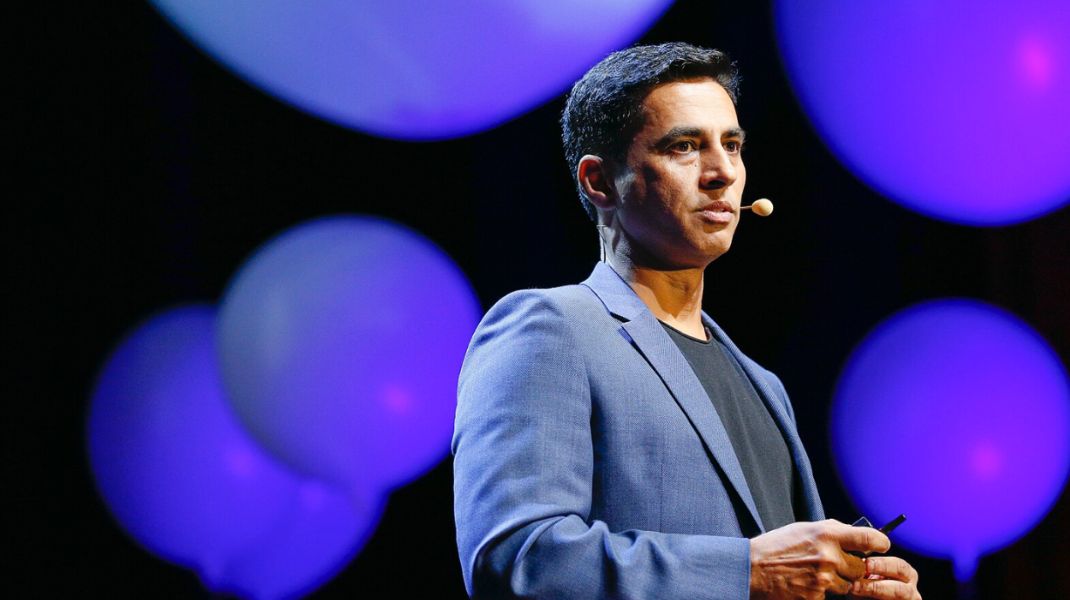
Manu’s thesis didn’t have a name until much later. “I was playing a game with other doctoral students over some beers. We were all discussing what the shortest descriptions of our research would be. It was in one of those moments in the fall of 2005 that I thought of the term ‘Productive Failure’, and everyone agreed it was a great name,” he shares.
While Manu’s peers were readily accepting of his work, the rest of the academic world would take their time to warm up to it – as is the case with any newly proposed scientific concept or theorem.
“People wanted to see proof of Productive Failure in action. So, I asked schools to let me run some experiments. But nobody was willing to let me do so. It became a sort of a chicken-and-egg problem. I had the architecture, theory, hypothesis, and a proof of concept – but I needed a lot more.”
Just when Manu felt like he had run out of options, his junior college math teacher stepped in to help. She was now the principal of a school and was willing to let him run experiments in one of her classes. He was now able to collect the crucial evidence he needed.
“Failure is not something that sits right with people. We’re afraid of it. But all it took was one institution to take a chance on me, and the rest followed suit,” he recalls. As the evidence emerged, more and more schools started to come on board – albeit slowly.
Finally, the breakthrough came in the form of a major academic player – Singapore’s Ministry of Education (MOE). The Ministry decided to scale Manu’s research in 2014 and introduced Productive Failure into the statistics portion of the A-level curriculum, nationwide – a reflection of Manu’s earlier observations about Singapore’s research scene, which he feels fortunate to have been a part of as a young academic
“In Productive Failure, success means gaining a deep understanding of the subject at hand,” he says. “We compared traditional direct instruction with Productive Failure, using the same time limits, learning materials, teachers, and problem sets.
“We tested conceptual understanding of the subject – if I were to slightly change something about the problem set, would the students still be able to catch on? We also tested for transfer, which is something you cannot test using traditional assessment methods.
“With Productive Failure, students should be able to make a certain leap. This leap requires creativity and flexibility. If I’ve only taught you addition using Productive Failure, you should be able to do multiplication – which is repeated addition – before I’ve even taught it to you,” he explains.
“Demonstrating the effectiveness of Productive Failure in the hardest of domains has been my life’s work.”
Manu’s life’s work is chronicled in his latest book on Productive Failure, now publicly available. Besides mathematics and statistics, Manu describes applications of Productive Failure across domains like science, language, social sciences and the arts.
Crossing oceans to pursue the next challenge of his scientific career
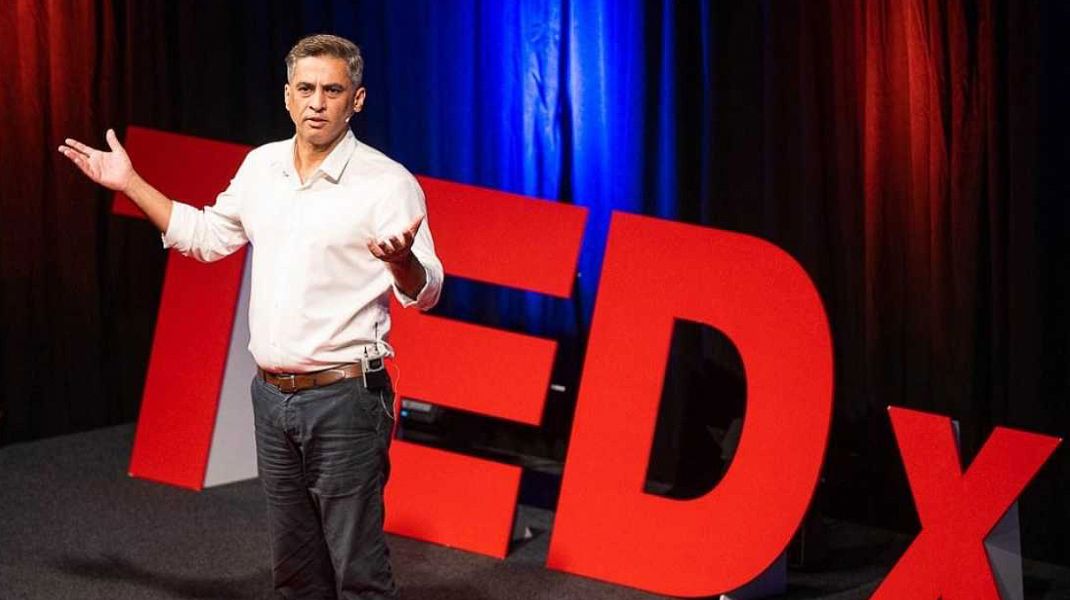
Manu spent a decade at the NIE in Singapore before serving as a Professor of Psychological Studies at the Education University of Hong Kong. Finally, he accepted a full professorship at ETH Zurich, a Swiss public research university. “If you thought trying to change schools’ mindsets on Productive Failure was challenging, wait till you deal with universities,” he laughs.
At ETH Zurich, Manu spearheaded an interdisciplinary programme titled The Future Learning Initiative. Here, professors from the Math, Science, Engineering, Architecture, Computer Science, Medicine, and Philosophy disciplines came together to advance both basic and applied research on human learning. He remained in this role for seven years until an opportunity to return to Singapore presented itself.
“ETH Zurich collaborated with the Singapore government via the National Research Foundation to set up the Singapore-ETH Center in 2010, which I was offered to lead in January 2024. This is a departure from my previous work as a researcher and an academic, but it is a welcome change. I wanted to challenge myself,” he explains.
In his new capacity as Director of the Singapore-ETH Center, Manu’s work pivoted towards addressing challenges faced by Singapore, like urbanisation, sustainability, climate change, health and aging, cybersecurity, AI, education, and more.
“As someone who’s lived on so many continents at this point – I’m a huge advocate of just getting up and doing things. Of not becoming too comfortable. Of being productively uncomfortable, as I like to call it. “We often like to wait until all our i’s are dotted, and our t’s are crossed, but there’s no right moment – just make the leap.”

Meet Manu
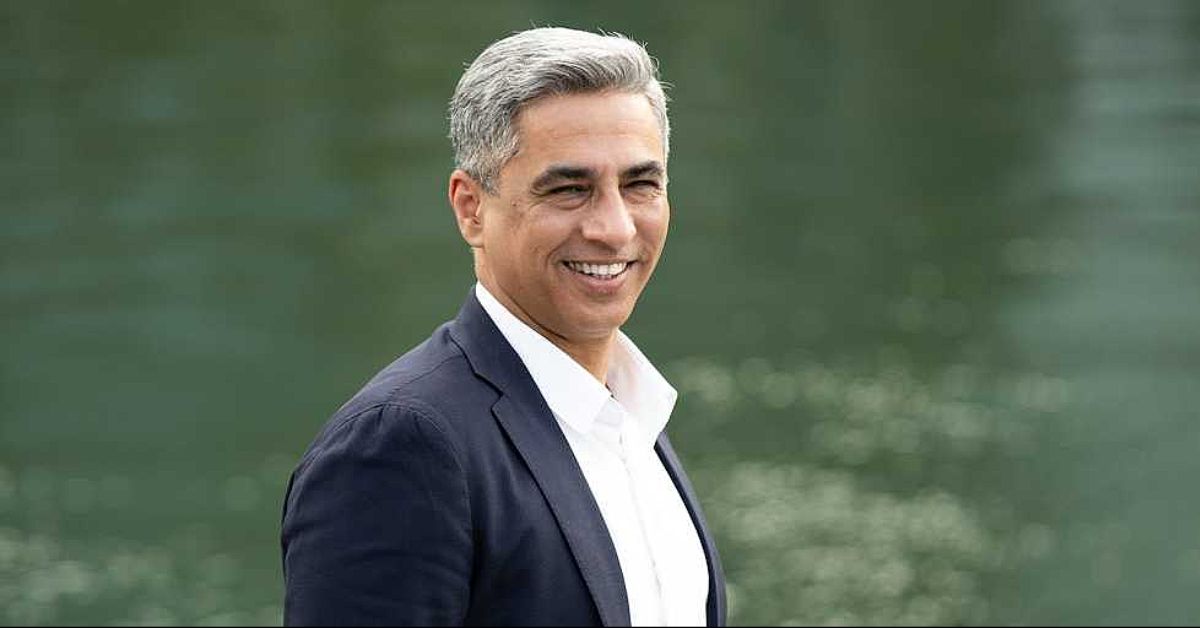
Professor Manu Kapur is best known for conceptualising and developing the theory of Productive Failure to design for and bootstrap failure for learning abstract concepts in math and STEM. He also serves as the Director of the Singapore-ETH Center, and Professor for Learning Sciences and Higher Education at ETH Zurich. His latest book on Productive Failure has just been released worldwide, both online and in bookstores.
Connect with him here.