By SGN | 17 Jun 2026

I remember the first time I walked through Hong Kong International Airport. The terminal had just opened, and I remember standing there, looking up, taking in the scale of the architecture, absorbing what the city was communicating about itself to me. I remember the optimistic rays of daylight that filled the entire airport.

I grew up in Vancouver, where I trained under Valerie Jerome (retired Track and Field Olympian), as part of Canada’s pioneering Olympic sprinting family . I ran the 4×100 relay at the Jerome Track Classic, and by 14 years-old, I was canoeing eight hours into Pacific coastal waters with a team. I learned early on that excellence has a number attached to it, and that you can excel as long as you show up and do the work. These lessons have always stayed with me.
But I have always been more than one thing at once. This realisation is the central fact of my life, and the thing Singapore made clearest to me.
What Kyoto taught me
I went to Kyoto after travelling to Rome, Paris, Venice, and Barcelona, with architecture professors and engineers who had worked at the Large Hadron Collider and built the Canadarm2. There, I worked at a local firm that operated entirely in Japanese. I also took up Kyudo, studying under ninth-dan masters in their eighties and nineties who used traditional handcrafted asymmetric bamboo bows. I sat my shinsa (examination) and passed.
Then, tragic events at Fukushima unfolded.
I was still in Kyoto when the meltdown hit and tuned into live news footage of cabbage farmers watching their entire harvests declared radioactive. To help out, I worked with evacuation shelters and kindergartens in Tohoku and Fukushima, helping them respond and adapt to new conditions.
You learn something different about engineering when the stakes are that high, or direct. Words like energy management, resilience, accuracy and consistency stopped being technical terms and turned into moral ones.
I don’t see these worlds as fragmented. I see them as different modes of existence within the human condition.
I moved to Shanghai soon after, where I worked on masterplans and residential developments. In a single two-hour construction meeting, I would move through Mandarin with Taiwanese lead architects, Shanghainese with local builders, Japanese with the landscape team, and English with international consultants.
Every language shift brought about a corresponding shift in posture, in register, in the hidden context of the words being communicated. Language, I realised, was not just how we talked about the project, it was the foundation of the project itself.
For me, speaking English, Cantonese, Mandarin, Japanese, and some French, as well as a bit of Shanghainese and Zhejiangese, isn’t just about closing a deal or navigating a city; it’s about accessing five different operating systems of human thought. It allows me to build businesses, technology, and physical spaces that deeply resonate with diverse markets because I understand the worlds they inhabit.
Building something that lasts
When I returned to Canada, I carried all of these experiences with me.
Back home, one of the most meaningful projects I worked on was the Western North York Community Centre— Canada’s first net-zero aquatic facility and a recipient of the Canadian Architect Award of Excellence.
I was a part of the core team of architects leading facade design and solar energy management: calculating payback periods, modelling daylight autonomy, managing engineering consultants and arborist assets.
By tapping a local aquifer, we reduced energy demand by 46.7 percent over standard heat pumps. I drew on everything I know — Tadao Ando’s geometric rigour, Kengo Kuma’s material sensibility, the fluid dynamics I had been thinking about since my childhood on the Pacific coast.
I also proposed using Natural Language Processing for community engagement on the project. Once I received the relevant permissions, I implemented what I believe was the first application of its kind in Canada, between 2019 and 2020.
While the initiative was underreported, the results were real and sharing them with the wider team was one of the better days I can remember.
When the Western North York Community Centre was later exhibited at the Singapore Architecture Festival, something within me felt settled. A Canadian project, built for a suburb in Toronto, was being showcased on a premier Asian platform. When infrastructure works, it does not stay local. It becomes an argument about what is possible.
The first time Singapore made sense

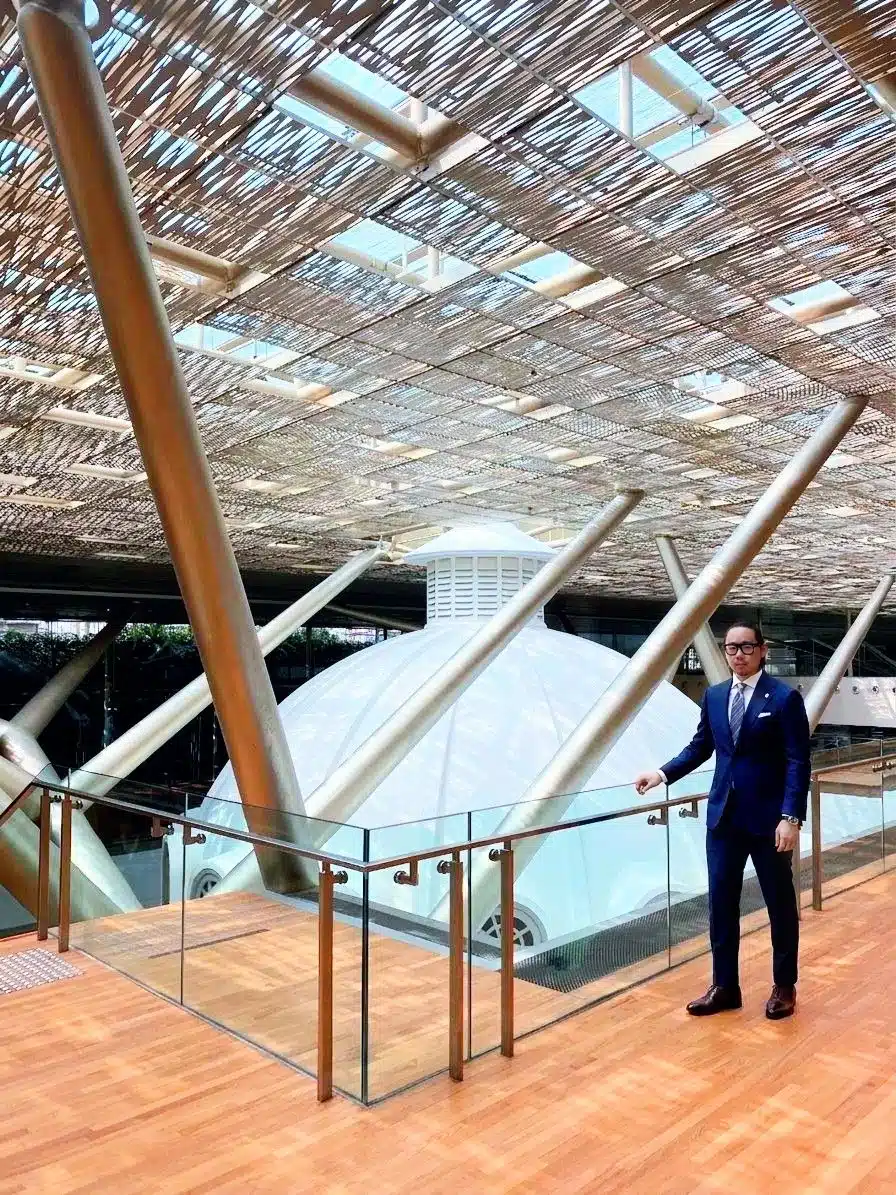
My recent trip to Singapore started with my interest in Moshe Safdie’s works, he was also a McGill alumnus from Montreal whose works I’d been following from Expo 67 in Montreal, to Marina Bay Sands and the Jewel Changi Airport in Singapore.
I spent time at Maxwell Food Centre with tech founders and scholars, talking about AI and linguistic histories over mee siam and Hainanese chicken rice, then toured Fusionopolis with A*STAR scientists and investors.
While meeting with URA’s Director of Conservation Management to discuss AI planning and urban heritage, I found myself on a canopy tree walk in a local public park, surrounded by wild pandan and tropical birds, which I had not expected at all.
I had been warned, before going to Singapore, that hawker centres were like North American food courts – curated food halls offering diverse culinary options.
But this was far from the truth, as what I found were generational businesses selling heritage made from raw ingredients, operating inside civic infrastructure designed to be accessible to everyone, regardless of age or income.
This is no mean feat. Once you examine history, and the contexts within which people’s spaces were kept out of reach for many, you stop taking things like this for granted. I viewed hawker centres as a way of reducing informal and formal barriers to belonging.
Safety and efficiency of access is a type of freedom. It allows us to do more with our time and mental capacity; to innovate, to create, and to develop culture.
I had also been in conversation, over the years, with George Yeo, former Singapore Cabinet Minister. Our discussions ranged across Matteo Ricci, the ancient Nalanda University, the intellectual traditions that cross between Asia and Europe.
Yeo’s writings on global collaborations are something I have returned to several times.
What he showed me was that Singapore does not operate by accident. The intelligence and effort that went into creating its highly functional systems – the global diplomacy, the high-tech infrastructure, the local cultural depth — is deliberate, and by design.
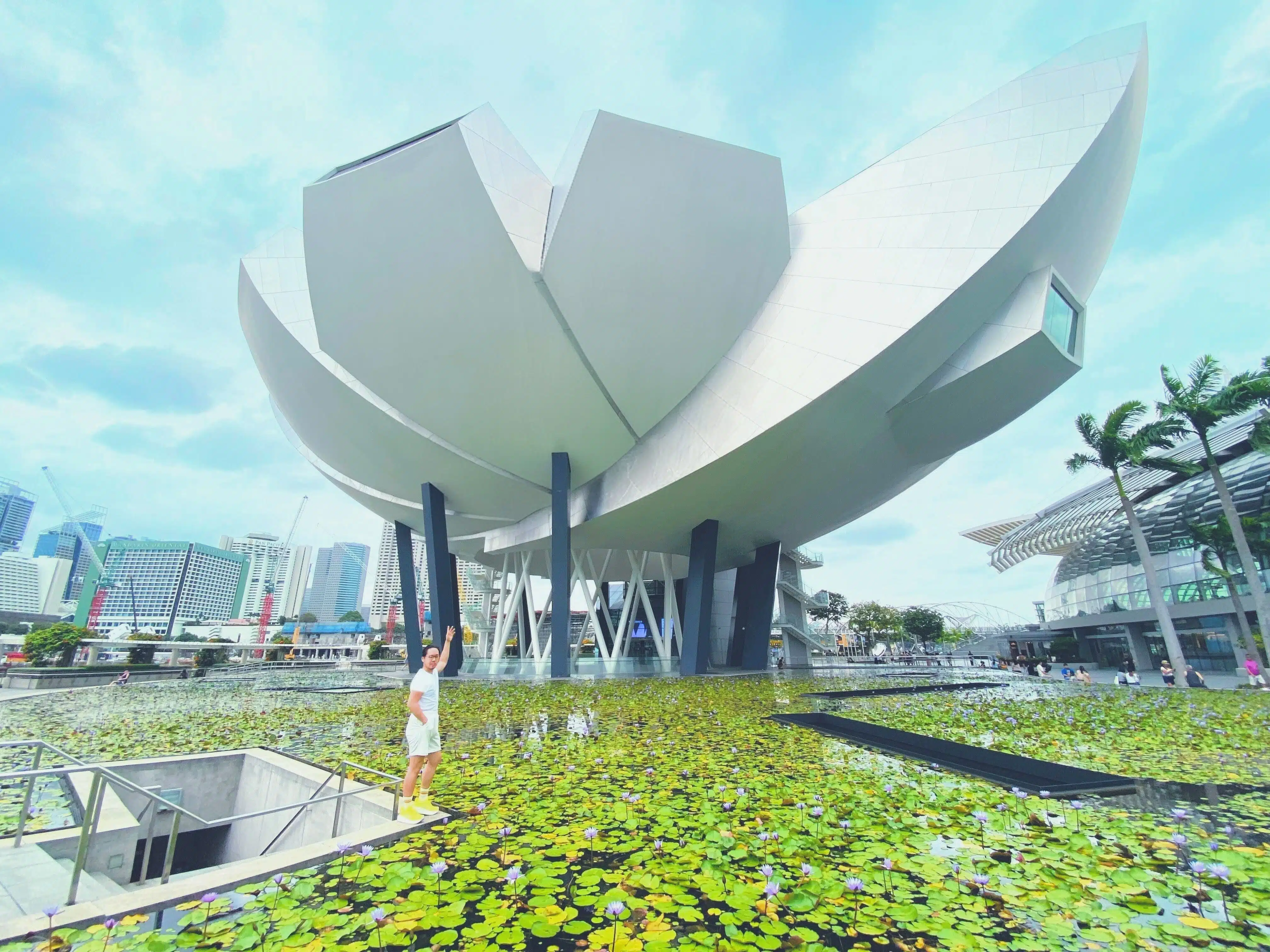
To me, Singapore exists in a permanent state of ‘both/and’. The East and West binary is a default way of framing reality, but it fails to capture the convergent reality of true global nodes, such as Singapore.
Art Nouveau drew inspiration from Asia and Ming Dynasty furniture shaped contemporary Japanese design philosophy. The Peranakan culture I studied at the Peranakan Museum, and explored further over dinner at Candlenut and through Khir Johari’s writing on Singaporean Malay food, is evidence that integration is not a modern idea. Regional syncretism predates ‘globalisation’ as a concept by centuries. Singapore did not become a global node recently.
It has always been one.
This was the same energy I brought to representing world-class architecture, engineering, and construction firms. I was awarded the Toronto Centre Community Builder Award — and it’s something I reflect on: from global perspectives to local expertise.
What my father showed me
My father was diagnosed with cancer early in my life. He battled it for ten years in Vancouver. For part of that time, I was his primary caretaker. I worked remotely, so I could finish my architecture master’s degree by his side.
While the last few years have been taxing and I would never wish such an experience upon anyone, they have transformed my perspective on how I approach buildings.
When someone is going through chemotherapy, every elevator, every corridor, every pharmacy counter is a moment of negotiation of safety, dignity, care, and thoughtfulness. Design is not neutral in those spaces. It either helps or it does not.
That is not something I can unknow.
That experience is now the centre of my professional focus: palliative and long-term care. I work with physicians at McGill and Unity Health Toronto, where my OAA-funded research applies machine learning to care environments.
I led a multidisciplinary team that includes palliative care doctors, architects, data scientists, space engineers from a Canadian satellite startup for a Venice Biennale submission on AI, healthcare analytics, and spatial design. While we did not win, the connections we forged were priceless.
In Asian cultures, the care of elders carries a particular weight. There is a saying: a senior is a crown jewel in every family. I believe that. The question I am trying to answer, with architecture, with AI, with everything I have learned across these cities, is how to build environments that honour that.
Where I am heading
In five years, I see myself leading work that translates AI-driven community insights into high-performance healthcare and public infrastructure. Singapore is clearly part of that picture.
As a Blue Zone country, Singapore offers regulatory agility, institutional stability, capital readiness, and a density of talent I have rarely encountered elsewhere. It is undoubtedly the right place to test and scale what I am building: care environments that are technically sophisticated and fundamentally human.
What I am trying to build is what I call engineering empathy at scale. In most business contexts, empathy is treated as a soft variable, as a ‘nice-to-have’.

My work is to make it a hard requirement, a ‘need-to-have’, so it can be measured. The same rigour I applied to calculating solar daylighting on a community centre façade, can be leveraged to design a corridor where a person undergoing chemotherapy can walk with dignity.
The gap between the high-velocity optimism I absorbed in Asia, and the institutional frameworks of North America has not always been easy to navigate. There are moments where the frame I brought the process is unfamiliar. However, I have learned to work around this perspective by showing up and continuing to build.
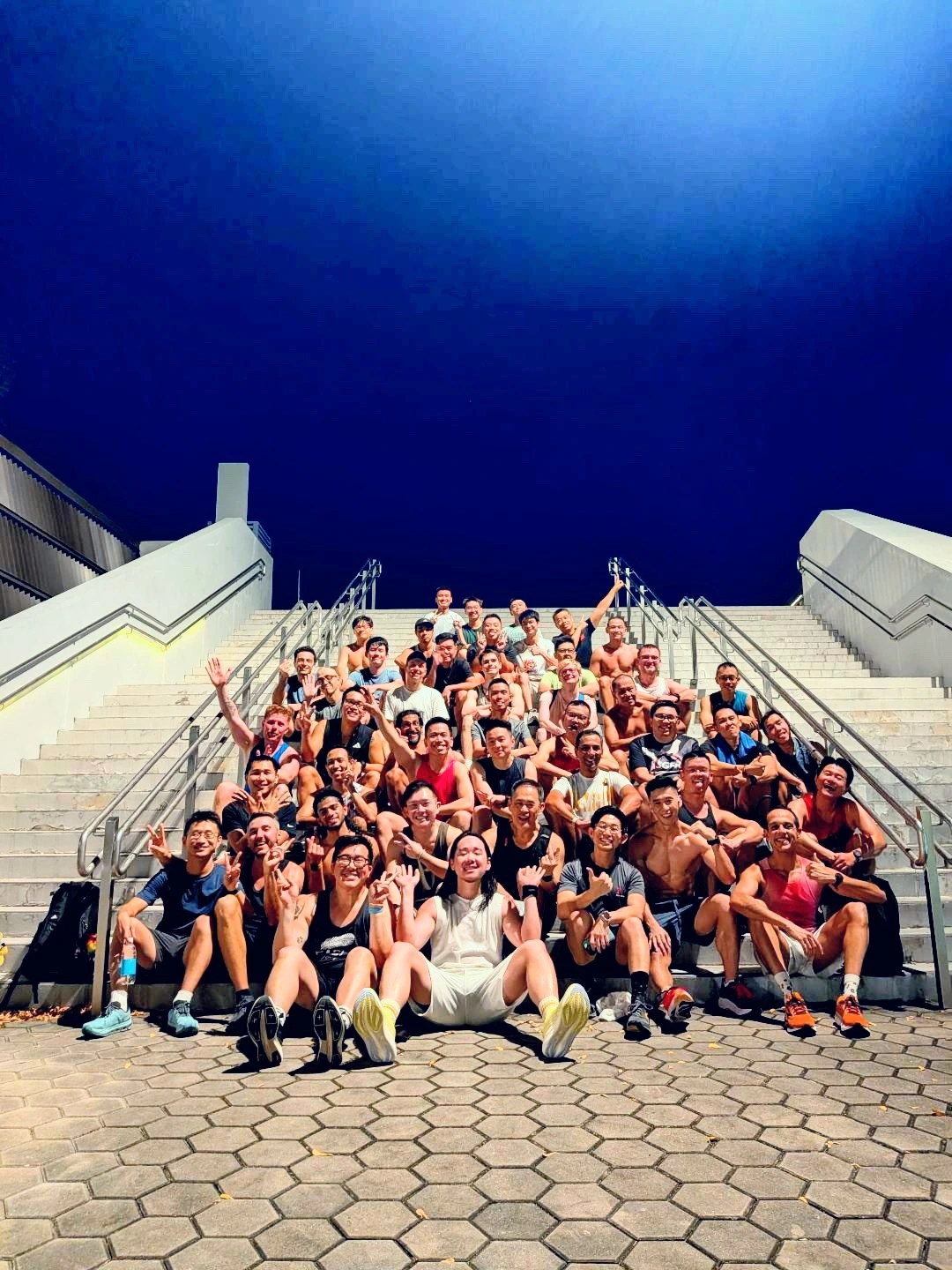
If you are thinking about Singapore: come with an open mind and shed whatever you think you already know. Run around the waterfront at sunset, eat at the hawker centres, and learn the local customs.
The skies at that latitude transform into a sight to behold, especially in the morning.
I found myself running past locals training for marathons, heading up towards Henderson Waves, and watching the city open up below. It is the kind of place that, if you are paying attention, asks you a question about what you are building and whether it is worth the effort.
For me, the answer has always been yes.
Interested in working in Singapore?
Learn about our Work Holiday Pass and how to get started.
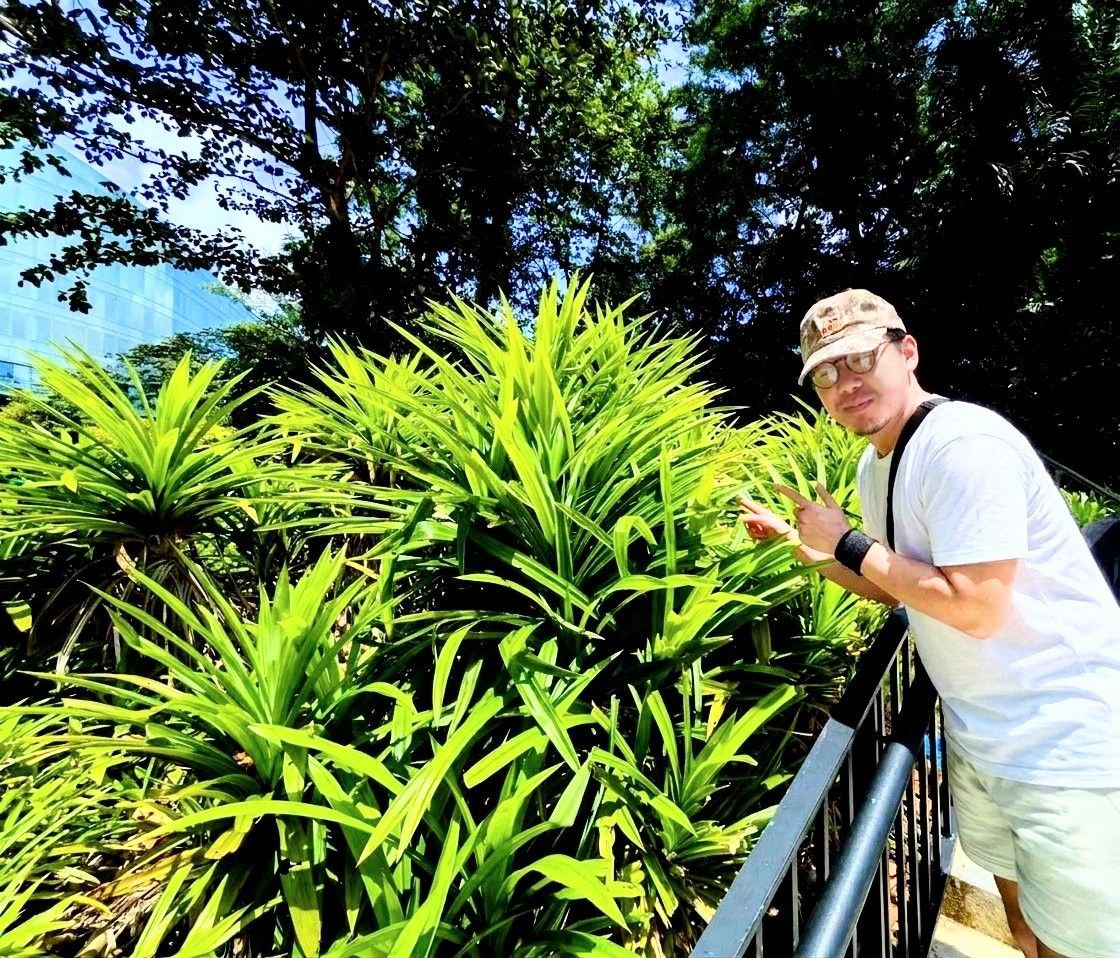
About Kelvin
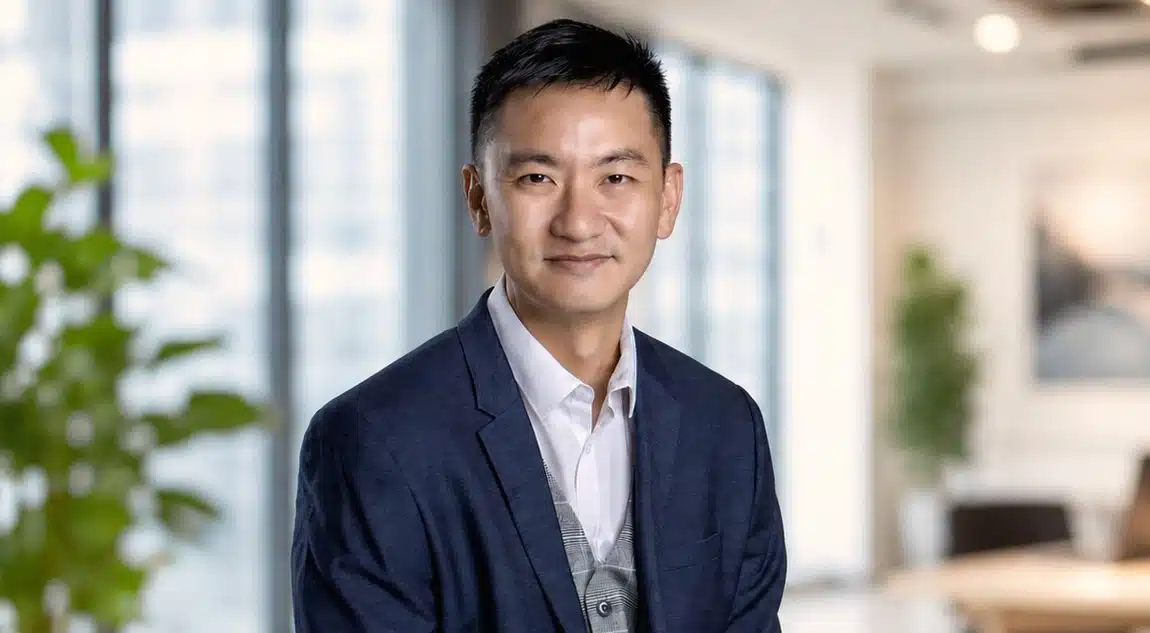
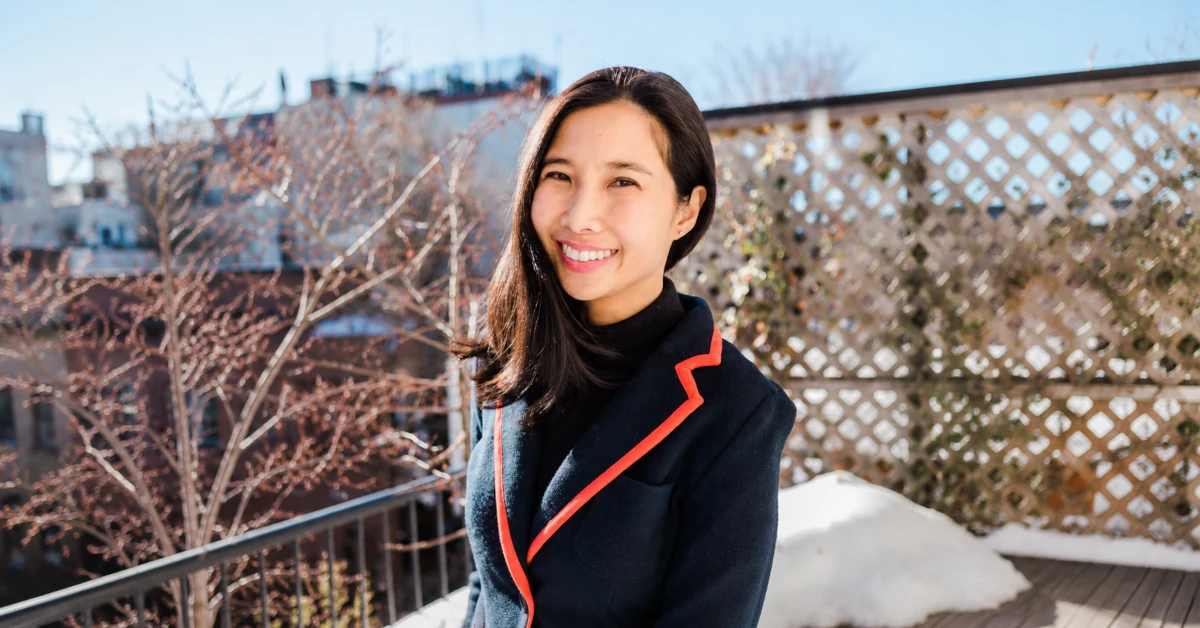
Kelvin Kung is a Toronto-based architect, AI strategist, and healthcare design researcher. He is a recipient of the McGill Excellence Award and the Toronto Centre Community Builder Award, and serves on advisory committees for the City of Toronto. He is a McGill24 Global Ambassador and collaborates with Unity Health Toronto and the McGill Innovation Fund on applied AI in healthcare.
Connect with him here.