By SGN | 9 Jan 2026

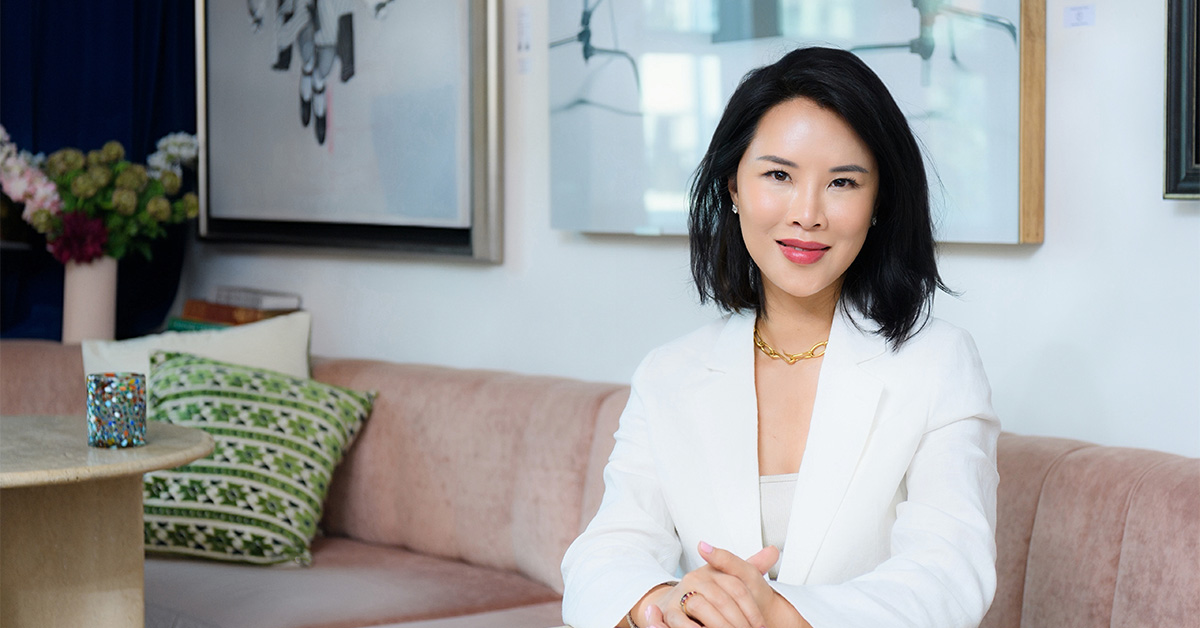
Sze Ying had to claw her way to university.
“I came from a very humble academic background,” she says, “contrary to what a lot of people may assume.”
After scoring dismally in the Primary School Leaving Examination (PSLE) – the high-stakes exam taken by 12-year-olds in Singapore – she was posted to the secondary school that she had ranked last. Before stepping onto campus on the first day, she stopped at the entrance and gazed at the school crest. “I told myself that I will never again be anybody’s last choice,” she recalls. “I will work so hard so that I get to make the choice.”
Setting a laser focus on her studies, she turned down invitations from friends to play basketball or go to the movies. Eventually, her grades qualified her for junior college, then allowed her to fulfil a yearslong dream of entering the National University of Singapore (NUS).
“It was the first time in my life where I cried tears of joy,” she says.
Highs and lows in China
In university, Sze Ying signed up for NUS Overseas Colleges (NOC), an entrepreneurial programme that sent her to Shanghai to intern at an events company. The experience proved to be life-changing. This was 2012, when China was on the cusp of explosive digital growth, marked by the rise of powerhouse apps like DiDi, TikTok and WeChat.
Though she moved back to Singapore after a year, Sze Ying longed to be part of China’s transformation, and to one day build something of her own. “That period opened up my worldview. It gave me more clarity on what I wanted to do in life,” she says.
Her chance came six years later, while she was working for NOC as a programme manager, developing partnerships with Chinese companies like Ant Financial and Huawei Honor. When a consumer electronics firm in Beijing offered her a role in business development, she took the leap and moved to China.
The months that followed were tumultuous, to say the least. Sze Ying had difficulty in adapting to her new environment and was blindsided by the competitive culture. She blames her naivety.
“I’ve always been a more collaborative person. If there’s a problem, let’s solve it together,” she says. “The people there were like, ‘You are a manager. You tell me what to do.’” Still, she grew close to her team. “We still meet up online, even today. These are like my brothers. We have been through hell together.”
After six months, Sze Ying was roped into a new startup, only to find out as soon as she joined that the founders had scrapped the original idea and were moving on to something entirely different.
“My year in Beijing was extremely volatile, and I hit rock bottom,” she reflects. “I learned many, many lessons there.”
Setting the table for real connections
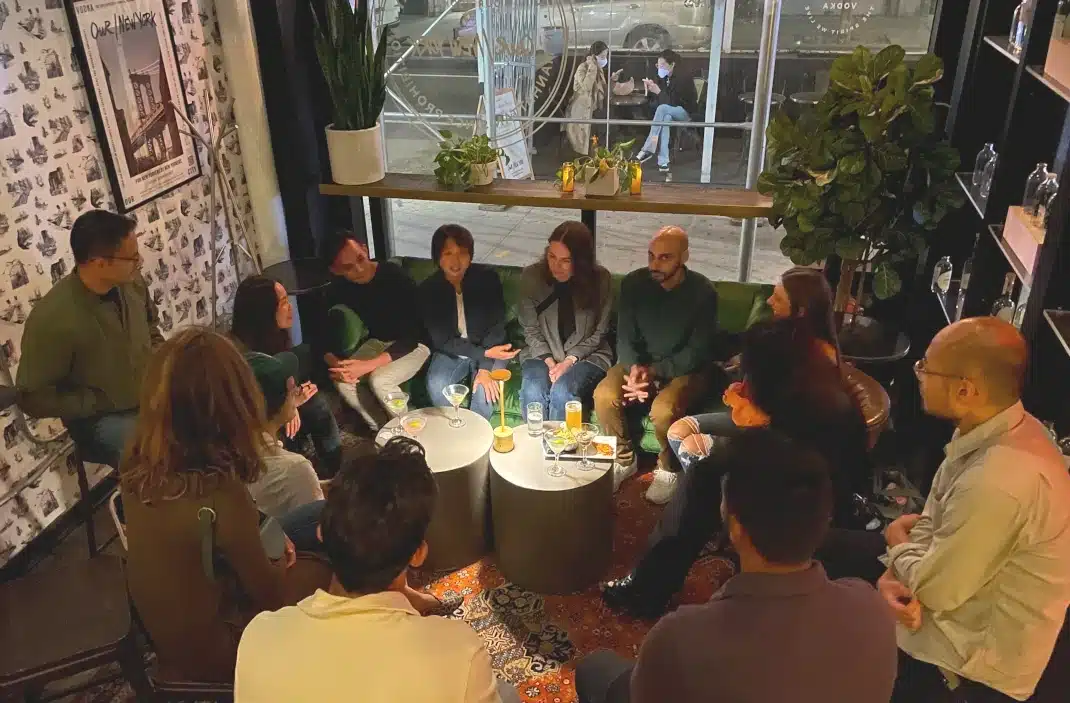
Sze Ying has never been a fan of networking events and their transactional nature. “People judge you based on how you look, the title on your name card,” she says. “You can literally see their face calculating, ‘Does this person have value for me?’”
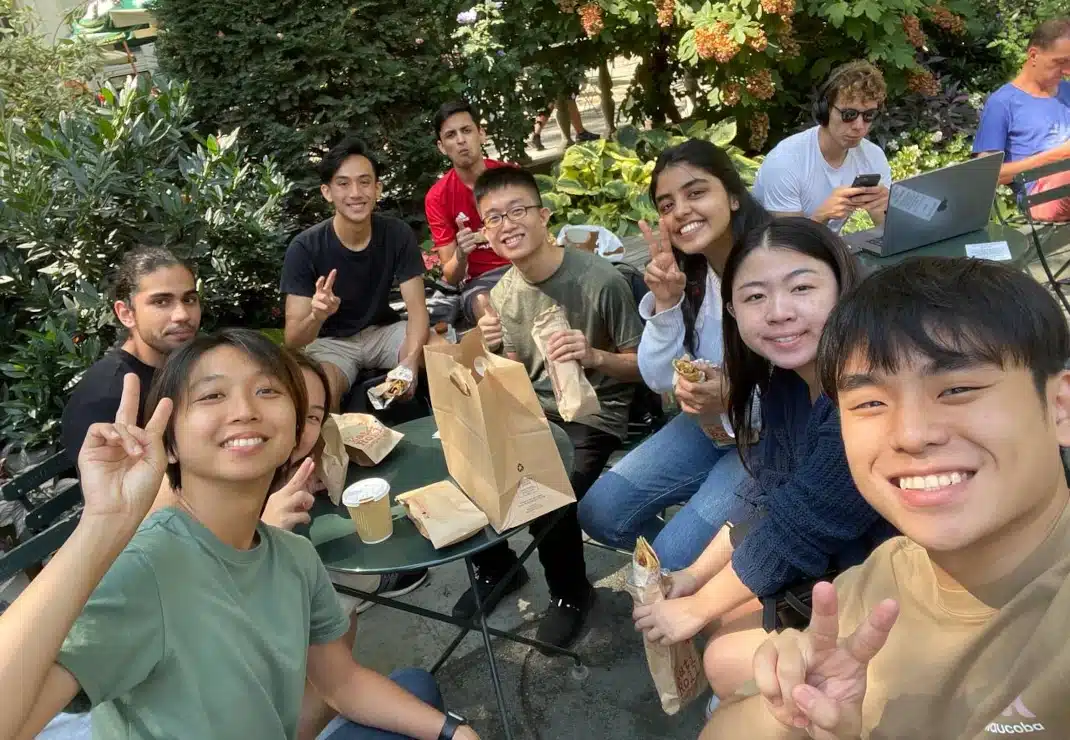
During her time in China, and after returning to Singapore, she adopted a more casual, authentic approach to making connections: organising dinners where shop talk is strictly off the table. She had found her modus operandi for building community wherever she went.
Career-wise, more tumult lay ahead. She landed a job as a community manager at French innovation company Agorize but was laid off when the pandemic struck. She then rushed into co-founding a startup, one that helped mid-career switchers find job placements.
The company went nowhere.
“It was a huge mistake,” she admits. “I only met my co-founders once and we jumped into building a company together. I was too eager to prove myself. I was too eager to rebuild my confidence. But the thing is, if you don’t have clarity, you can’t do anything. You are just jumping from one hellhole to another.”
Journey to the East Coast
Returning to NUS, Sze Ying joined BLOCK71, the incubator that counts unicorns like Carousell, Biofourmis and PatSnap among their alumni. One year in, NOC offered her the role of programme manager in New York. She was apprehensive.
“My impression was that New York is super glamorous,” she says. “You’re either a finance bro or you’re some fashionista.” It was also not easy to give up the stability she finally found in Singapore. On a friend’s urging to embrace the challenge, however, she accepted the job.
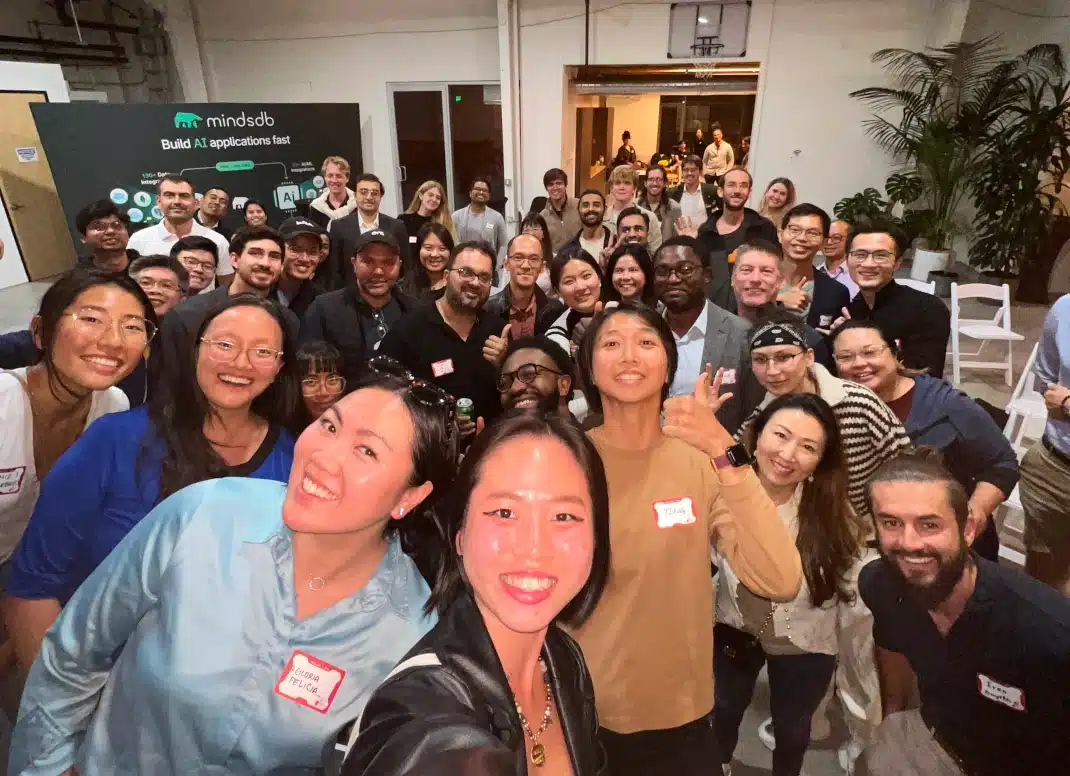
Sze Ying’s fears were swiftly dispelled. Within her first week in Manhattan, she attended a Supermomos Valentine’s Day event for tech professionals and formed close friendships that led to connections with other community builders. “It was like a domino effect,” she shares.
She continued to organise dinner parties, inviting interesting people she met at events. “The rules of my dinners are always the same,” she says. “We don’t talk about our jobs. We want to know who you are.”
Matching Singapore talent with US startups
As she connected with US startups and got them to hire NUS students, some founders encouraged Sze Ying to start her own private practice. She took their advice, and named her new company Ventur-io.
“I really enjoy talking to people, understanding their motivations, identifying the growth potential that they don’t even realise they have,” she says. “There’s never a right talent or best talent. There’s only the most suitable talent at that moment.”
Through initial calls that lasted up to an hour, she went the extra mile to suss out if candidates had the characteristics to blossom in a chaotic early-stage startup, as opposed to a more corporate environment. Recruiter friends called her crazy for investing so much time.
“Out of ten people, not even one may be suitable,” she notes. “But if I don’t do that, how would I know whether they’re suitable?”
At the same time, Sze Ying was upfront with founders about potential challenges and never pushed for unsuitable candidates. “This is why they trusted me,” she says. “It takes a lot of discipline to not oversell someone.”
To network with startups, Sze Ying spent three months in San Francisco. Through a regional representative at Singapore Global Network, she secured lodging at a hacker house, where she hosted potluck parties (i.e. dinner parties on a tighter budget).
Sze Ying decided to operate Ventur-io remotely from Singapore. After 18 months, her business hit a wall, prompting her to move on. Though it was sustainable, she found herself unable to scale it to the next stage. “Gen AI has taken over a lot of jobs as well, so hiring is a lot slower for junior talents,” she observes.
Oceans apart in mindset
When comparing the tech sectors in Singapore and the US, Sze Ying notices a vast difference in the perception of failure.
“In Singapore, people look at my resume and say: ‘Why do you keep changing jobs? You built a startup, but you failed,’” she says.
“Because I failed, I have zero negotiation power. Because I failed, I don’t deserve to be anywhere. In the Asian context, people respect you for your success. But in the US, they respect the journey, they respect the hustle. They’re like: ‘Keep going, keep trying. All this experience will add up when the time is right.’ The difference is really in the mindset.”
She sees a similar gap in mindset among tech hires. “Singapore junior talents actually have the raw power to compete with US tech talent. We are equally smart, if not smarter,” she says.
“But Singaporeans in general are scared to break things: ‘If I break this, am I going to get into trouble?’ That willingness to try new things, that risk-taking ability makes a whole world of difference.” According to her, it would serve founders well to venture abroad and “experience what it’s like to build with no fear”.
With characteristic candour, Sze Ying says she is still figuring out her career – how to balance disruptive ambition with steady progression, and whether she ultimately needs to be a founder to find fulfilment. “Our time in this world is very short,” she muses. “We shouldn’t YOLO too much, but we also shouldn’t be too afraid to try.”
As she contemplates her next move, one thing’s for sure: she will continue connecting and community-building – whether dinner parties are involved or not. “No matter what I do or where I go, that’s always a part of me,” she says.

About Sze Ying
Sze Ying is a community builder in the innovation space. She has worked for Agorize, BLOCK71, NUS Overseas Colleges, and was the founder of Ventur-io, which connected young Singaporean tech talent with early-stage startups in the United States.
Connect with her here.