By SGN | Updated 17 Sep 2025
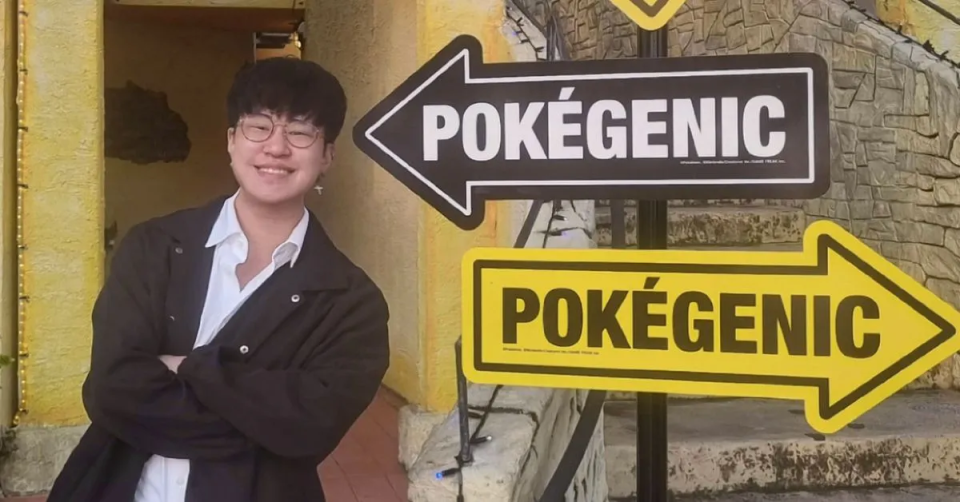
Like many other adolescents, Jay loathed school.
He found the school curriculum tedious and struggled to relate to his classmates.
So, he turned to video games as a means of escape. He’d peer over his siblings’ shoulders, hoping they’d let him have a turn. Eventually, they relented.
Naturally, his parents did their best to encourage him to study harder. Their child, on the other hand, had little intention of suddenly becoming academically inclined.
“I’d spent hours playing Maple Story. I think I might have had a computer addiction,” he laughs.
Games like Warcraft III, Okami, Undertale, Night in the Woods, and the Pokémon series took up most of his time. Enamoured by their intricate graphics and stunning visuals, he felt compelled to create art reflecting similar sensibilities.
Over time, he realised that he did not want to be a passive player or a consumer of the games he held so close to his heart. He wanted to make them.
His love for the visual medium, and passion for creating games would come in handy later in life. When contemplating his next steps after secondary school, he stumbled upon Nanyang Polytechnic’s (NYP) courses in game art and design. And in yet another move at odds with his parents’ wishes, he enrolled at the institution.
“Courses that combined the two things I love the most – gaming and art – actually existed? I couldn’t believe it,” he effuses.
Later down the line, he’d end up meeting his kopiforge co-founder, game developer Foo Jing Ting, at NYP and illustrator Nadiyah Toi at NTU.
Playtime for all
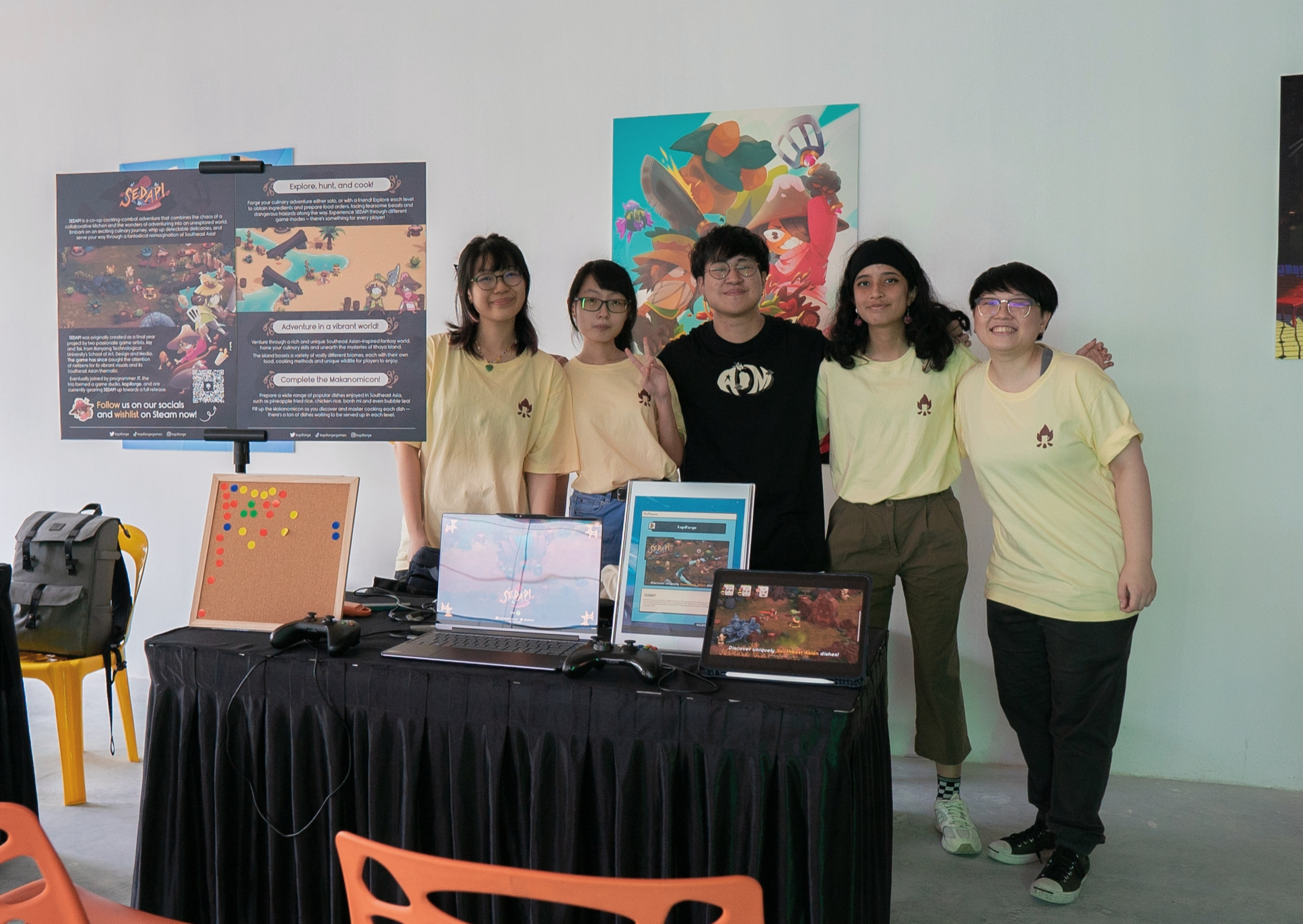
Jay believes that games should be for everyone, no matter their age.
“When I recommend games to people and they say they’re not a gamer, I get a little sceptical,” he explains. “As humans, play is naturally ingrained in us. I want people to partake in the fun and community-building aspect of gaming,” he reasons.
Unbeknown to most, people are playing ‘games’ in real-life, in real-time. “When you buy a cup of bubble tea, you get a stamp on a coupon. If you end up accumulating ten stamps, you’ll probably get a drink. That’s gamification,” he says.
This philosophy would come in handy during the creation of SEDAP!
After graduating in 2023, Jay intended to work in the gaming industry. However, with the shadow of a recession cast over the entire sector, he found himself taking on freelancing jobs to make ends meet.
Around this time, SEDAP! already existed as a prototype, and was available to play. Jay and Nadiyah had created it as part of their final-year project at NTU and were contemplating developing the game in a commercial and professional capacity.
“I remember being in class and thinking about how there were no games about chicken rice,” he reminisces. “And I wanted to change that.”
Nadiyah, kopiforge’s co-founder and Art Lead, reveals more about her motivations regarding SEDAP! “I wanted to make games about stories rooted in our personal experience,” she shares. “I felt very strongly about SEDAP!’s storyline, because Southeast Asian cuisine is so underrepresented.”
With not much to look forward to in terms of opportunities, the trio decided to take matters into their own hands. Soon afterwards, kopiforge was born, with SEDAP! as its inaugural offering.
Co-founding kopiforge, creating SEDAP! and becoming entrepreneurs
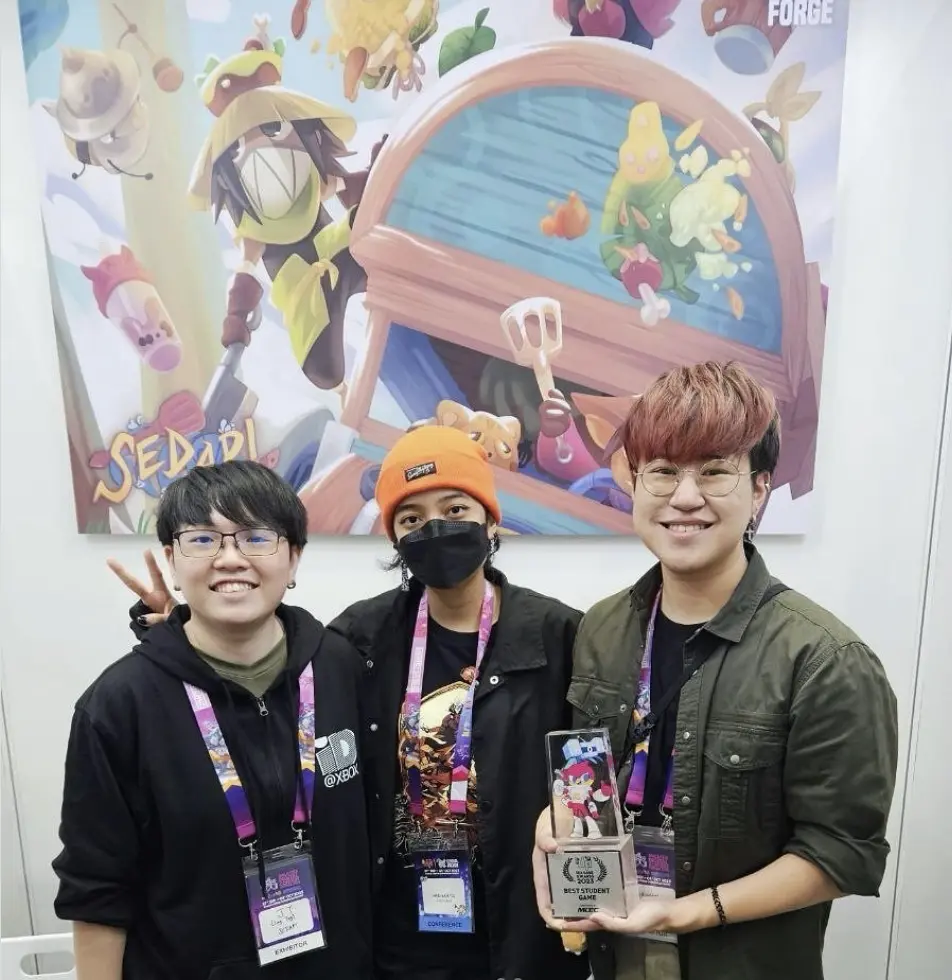
Team kopiforge was flung headfirst into the business world, their initial excitement over creating SEDAP wearing off quickly once they realised they had to manage the business aspects of running a company and search for ways to raise capital, which would directly impact their salaries.
They’d have to set up the company properly, create branding, and consider their upcoming pipeline of games.
The trio worked on a shoe-string budget, financed by small grants and one private investor. With an average monthly salary of $700 each, they resorted to surviving on budget meals and getting by with other lifestyle hacks.
“There’s a lot they don’t teach you in school. Things like managing the business, paying your taxes, trying to make sense of legal contracts were foreign to us,” Jay explains.
“If you miss a single sentence, you’ve sold your soul.”
His co-founders experienced a similar accelerated growth trajectory. Nadiyah, in particular, who has an arts background, had to quickly learn about writing dialogue and stories specifically for games.
Between herself and Jay, the duo handled marketing, finance, operations, human resources, and even 3D modelling. Jing Ting, the team’s coding maven, on the other hand mostly focused on her realm of expertise. Eventually, the team found their footing.
As far as workplace allowances go, the team works based on a system of trust. Their flexible schedules allow them to work any time, at any hours they wish. This means leaving three hours early to attend to personal matters, or taking a break if they feel burned out.
While the three co-founders are a tight-knit bunch and leverage their closeness to foster room for tough conversations, they draw a line between business and friendship.
“At the end of the day, we want to ensure that people can deliver excellent, high-quality work, and are empowered to do their best,” Jay shares.
Curating chaos in the kitchen, Southeast Asian-style
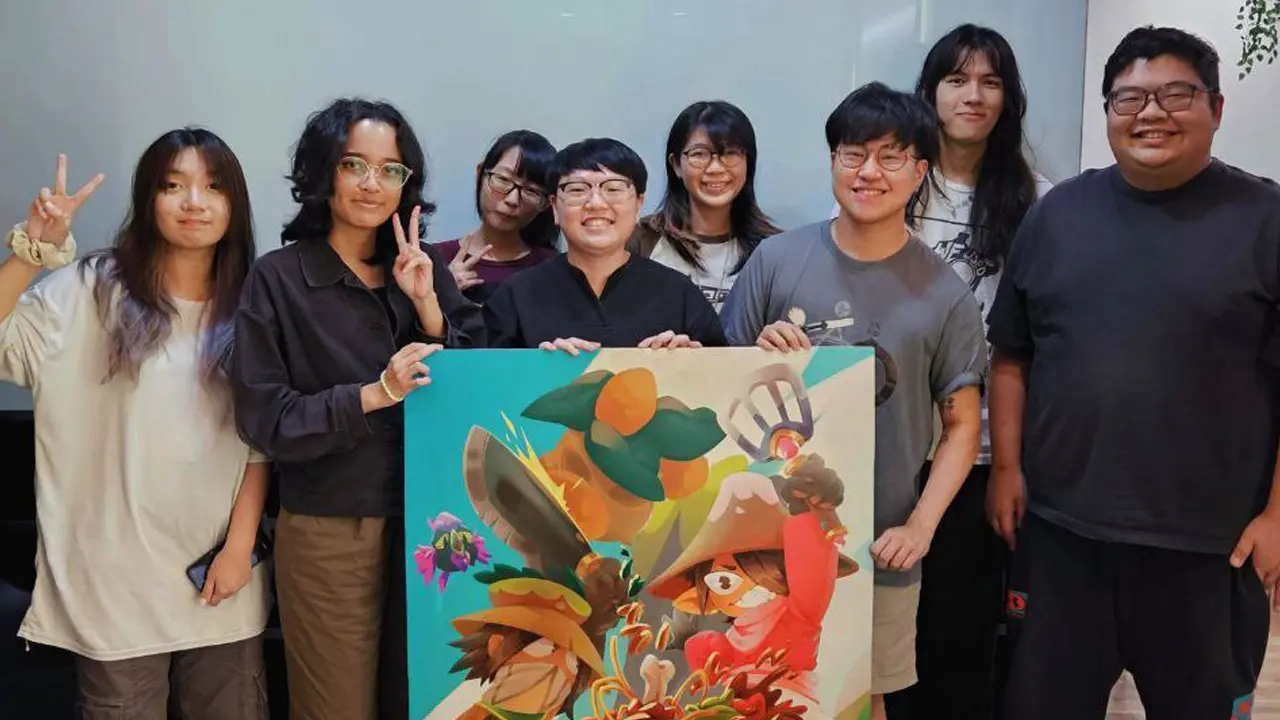
At its core, SEDAP! is a love letter to Southeast Asian cuisine.
What was supposed to be a final year project for a course at Nanyang Technological University (NTU)’s School of Art, Design, and Media, has turned into a fully-fleshed-out game, available to play on PC and consoles as of 2025.
A co-operative cooking-combat adventure, combining the chaos of a collaborative kitchen and the magic of adventuring in an unknown land, SEDAP! promises to take players through a delightful culinary voyage through Southeast Asia.
If you thought that serving soup or chopping vegetables was stressful, wait until you play SEDAP!, which ramps up the stakes considerably. The game offers delightful twists in the form of occupational hazards – namely, foraging for ingredients that fight each other, decoding complex recipes, and navigating hostile environments.
To preserve culinary accuracy, Jay and Nadiyah consulted friends from the cultures whose dishes they wanted to feature, and thoroughly researched ingredients. Besides staples like bubble tea, chicken rice, and teh tarik (hot milk tea), regional fare like Cambodian fish amok and Myanmar’s mohinga, make an appearance.
A firsthand examination of the gaming industry

Because of the work required to run kopiforge and SEDAP!, both Jay and Nadiyah have a better understanding of how the gaming industry works. “In previous internships, we’d be given just one thing at a time to focus on. However, we had to get our hands dirty in every single aspect of the business,” she shares.
“Now, I know how much work goes into publishing a game. Every time a new game is released, I have a newfound appreciation for all the efforts that go into the launch.”
Jay echoes her sentiments, drawing special attention to the difficulties they faced in securing financial support for the game. “We initially pitched our game to a hundred publishers, all of whom refused to sign us, because of the lack of funds, and because we were a new team,” he recalls.
The stream of rejections made the team doubt their capabilities and their hard work. “So many times, we wondered if we were even doing the right thing,” he shares, recognising that his struggles were symptomatic of a bigger issue in Southeast Asia – the lack of a strong indie gaming community.
“We’ve been grateful to have received grants from the likes of Xbox and PlayStation, that have been slowly fuelling our team through the months,” he shares. “However, relying on grants is not a long-term solution, and releasing our first game is a step towards sustaining our studio financially.”
Looking ahead

Both founders hope to see more sustainable practices in the gaming world — especially for indie creators.
Jay notes that while the Singapore government at one point was financially supportive of local indie game creators, they may have shifted their focus to other priorities instead. This leaves young indie game creators with limited options.
His wishlist for the gaming industry as a whole involves reasonable, sustainable hiring practices, fewer layoffs, more liveable wages, and meaningful exposure for indie studios, in particular.
“I’m glad that indie creators are receiving a little more attention and fanfare than previously” Jay notes, pointing to Belgian indie game developer Larian’s thunderous success with Baldur’s Gate 3.
“But a lot more work could be done at home to increase support of and appreciation for indie gaming outfits.”
While he’s heartened to know that more established game creators have hailed indie developers as the way forward, he’s concerned that there might not even be room for newcomers to carve out a slice of the gaming pie for themselves.
“A healthy industry should be able to make space for new talent capable of creating excellent games,” he says.
For the present, he remains hopeful.

About Jay
He is one-third of Singaporean indie gaming studio kopiforge, and a part of the team responsible for creating culinary chaos with SEDAP! A Culinary Adventure. A Nanyang Technological University (NTU) graduate, he is passionate about game art and design, 3D modelling, gamification, game psychology, and crafting entertaining and meaningful experiences for people through the element of play.
Connect with him here.