By SGN | 21 May 2025

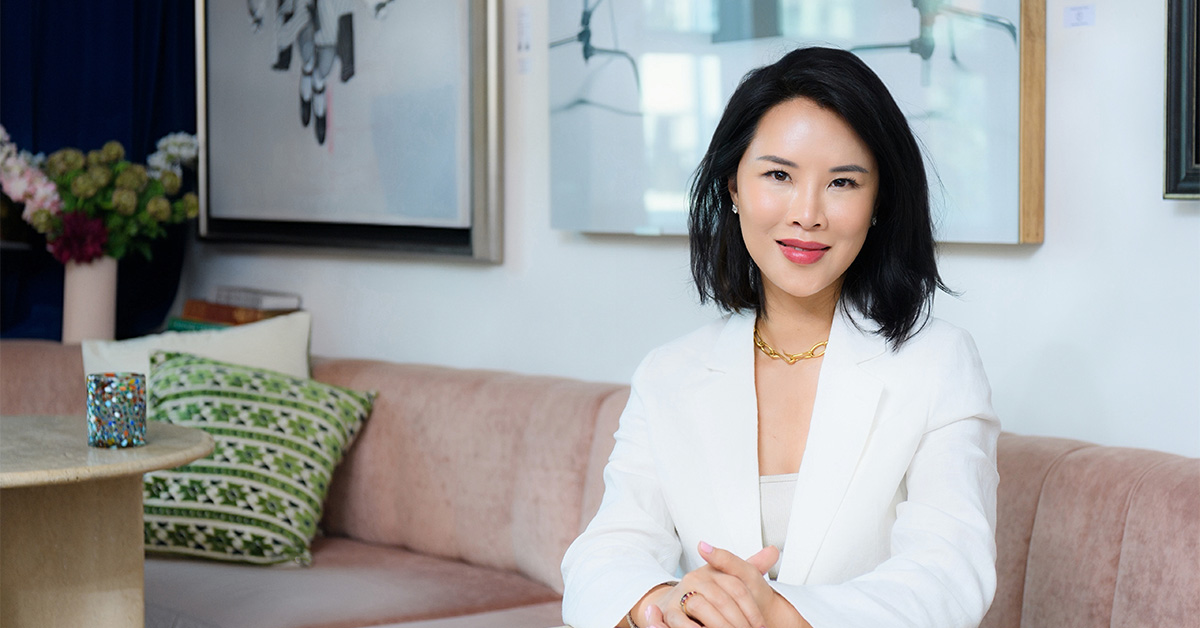
When Hien moved from Hanoi to Singapore at 14, she wasn’t prepared for the culture shock of a radically different school system.
The pinafore uniform at Singapore Chinese Girls’ School had astonishingly short hems and left her arms bare, a far cry from the long sleeves and pants in Vietnam. Intrigued by the idea of co-curricular activities, Hien joined quite a range: basketball, robotics club, even the debate team, despite her limited English proficiency. Singapore food was much saltier and less soupy, and she found herself scarfing down more than she should. “I gained 10 kg in three months,” she laughs.
Hien’s big brother Binh was a big influence on her life. Ten years her senior, he had first made the move to Singapore and convinced Hien to do the same. Binh later became the founder of several startups, including Garena Vietnam. Following in his footsteps, Hien too would venture into the world of tech.
Searching for a sense of satisfaction
After studying mathematics and statistics at the National University of Singapore, Hien gained valuable experience as a data scientist at Grab, Sea and Google. “Grab taught me teamwork and camaraderie. Sea taught me what it means to be an effective leader. Google taught me the importance of engineering excellence,” she says.
At Google, she used her spare time to build models for nonprofits like the Singapore chapter of DataKind. She also launched BigDataX, a community that provided free training for aspiring data and software engineers.
“We had over 3,000 members and we would fill the biggest rooms in Google,” she recalls. “We needed a logistics arm to cater food and organise each weekend workshop for 200 participants.” Through these projects, Hien discovered a sense of satisfaction that went beyond the corporate rat race.

Becoming a startup founder was a leap that involved much trepidation, not least because Hien was just beginning to navigate motherhood.
But even her three-year-old son cheered her on. “I asked him, ‘Do you want Mummy to do something that will allow me to spend a lot more time with you, or do you want Mummy to do something that you will be proud of?” He confidently chose the latter.
Binh was closely involved in the founding of KarbonMap but later receded into the role of advisor, as Hien took over the reins. Initially, the startup focused on easing the MRV (monitoring, reporting, verification) process for forestry operators in Vietnam to monetise their businesses for the carbon market. Seeing how carbon credits require heavy upfront capital and take a long time to generate returns, however, Hien pivoted her strategy in 2023 to building a sustainability platform for farming and forestry communities in the Global South.
KarbonMap incentivises farmers to adopt sustainable practices that benefit both the business and the environment. Costs are lowered, crops are more resilient, soil quality is boosted, and healthier, carbon-rich ecosystems are created. The software supports the production of perennial crops (e.g. cocoa), seasonal crops (e.g. rice), garden crops (e.g. tomato), livestock (e.g. cattle), as well as carbon credit projects such as forests and mangroves.
Currently, the startup has a presence in Southeast Asia (Vietnam, Thailand, Malaysia, Indonesia) and Africa (Ghana, Ethiopia). Its partners include the World Bank and Wild Asia, a Malaysian social enterprise.
Keeping it simpler and simpler
KarbonMap is designed to be hyperlocal, customised according to each community’s needs, language and workflow. Because end users often cannot read or write, the interface has to be as intuitive as possible. On one occasion, the team realised that a customer got stuck because he was unfamiliar with the search function.
“We are still on the path of simplifying,” Hien says. “Other companies are like, ‘How do I make my software more fancy and look cool?’ For me, it’s like, ‘How do I make it simpler and simpler and simpler?’”
For a seamless user experience, the platform incorporates technologies like generative AI. With the help of augmented reality to measure the size of trees and compute the carbon stocks in a forest, data collection no longer requires someone with a PhD or a background in research. “Building for a very sophisticated user is easy,” Hien notes. “But the less sophisticated the customer is, the more advanced your technology needs to be.”
KarbonMap provides training videos – say, for biochar production – that can be viewed offline. The platform is designed to be flexible, allowing users to integrate other companies’ technology (e.g. drones) and switch crops out depending on terrain or seasonal changes.

Joining the Singapore startup community
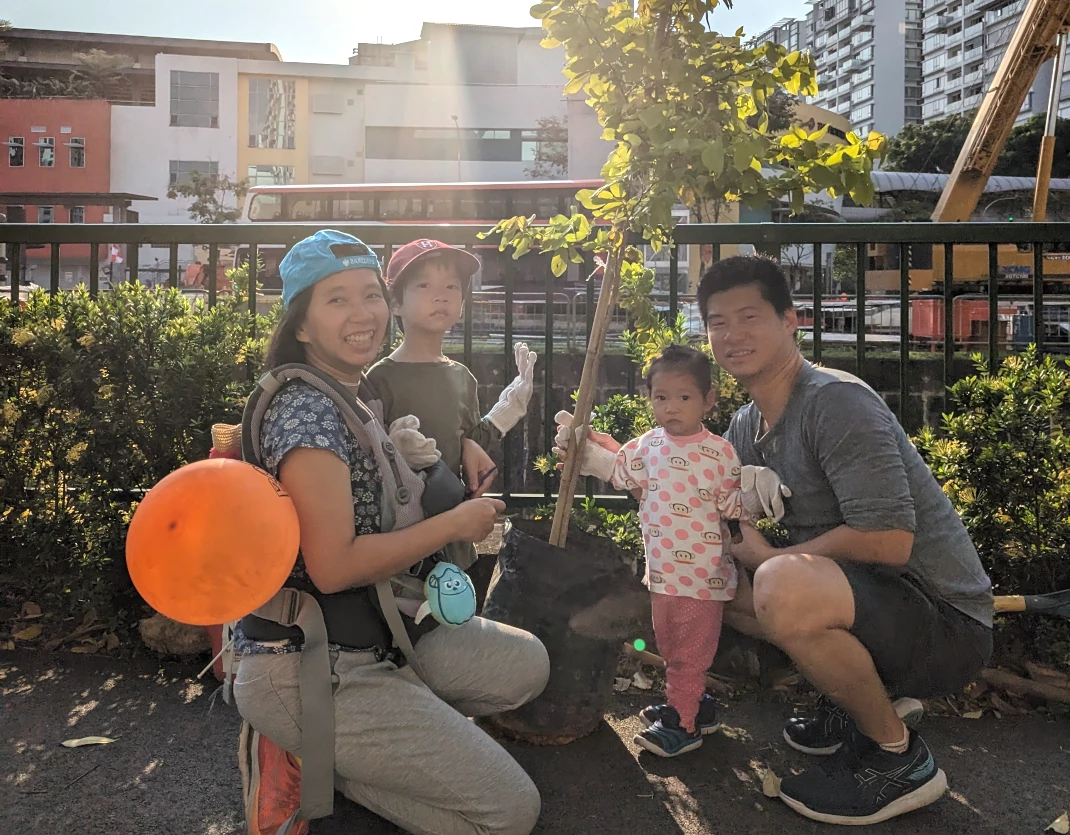
Having married a Singaporean and started both a business and a family in the Lion City, Hien proudly considers Singapore home. The KarbonMap team is based in Hanoi, and she taps into forestry and agricultural expertise from Singapore universities on an ad hoc basis.
Moving forward, Hien intends to build a business development team in Singapore, as well as hire for supporting roles in sales, legal and finance. “I think the Singaporean workforce is well rounded and has excellent communication and soft skills,” she says.
Running a Singapore-based startup builds trust, she explains. “Clients know I’m under strict audits, I’m not going to cheat, I’m not going to run away from my contract,” she says. It also helps that Singapore has a vibrant climate and carbon space. “We can find companies, investors, experts in every sub-segment of climate tech or the carbon market,” she notes. “There are a lot of climate events every day. If I attended all of them, I would never have a meal with my family!”
As a Big Tech alumna, Hien finds it a breeze to connect with founder and investor communities. “I still keep in touch with old friends from Grab, Sea, some of whom became founders before me,” she says. “There are a few female founder groups that I’m part of, like Coralus and UBS Project Female Founder. It is always a joy learning about what others have built.”
The importance of getting it right
As KarbonMap prepares to scale, Hien has been travelling more frequently, meeting with governmental clients and private land owners. “What I enjoy the most is going into the field and seeing the people that I serve, seeing that things work,” she says. “That to me is very meaningful.”
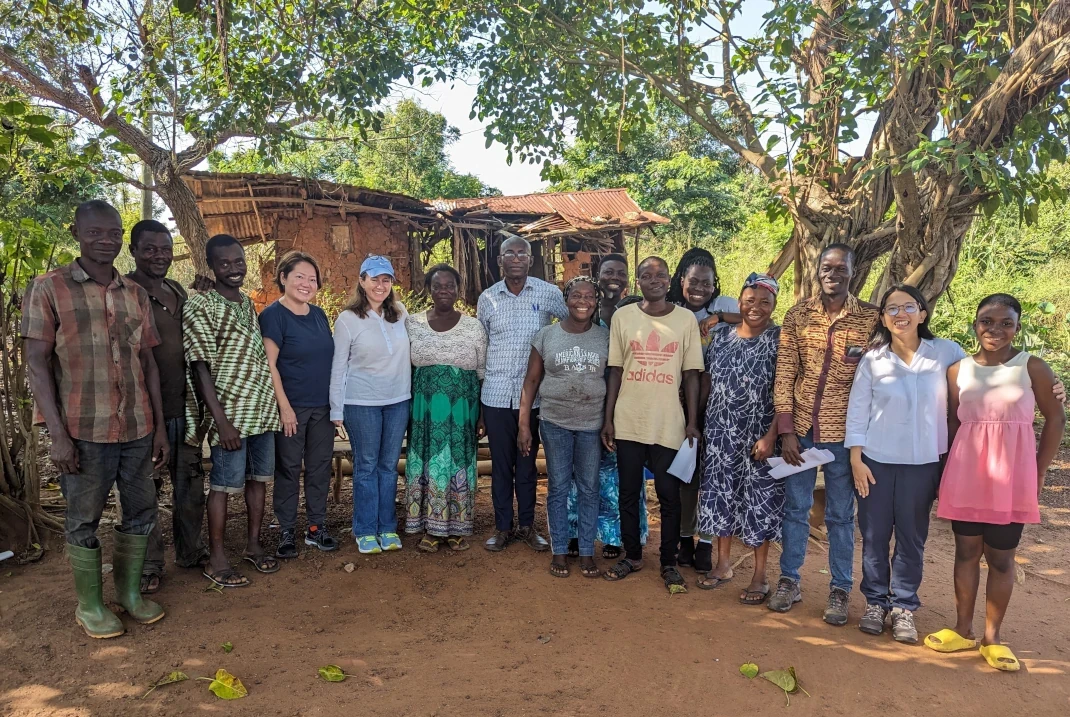
For these communities, change can be scary. They’re being asked to reinvent the wheel – but what if the wheel breaks? In a village in Ghana, Hien recalls a meeting where the locals, some of whom had been trained in the KarbonMap system, now had to decide whether to join the project. “They asked a lot of very difficult questions,” she says.
Hien couldn’t speak their language, but she shared their Christian faith. Her client helped to translate what she had to say. “I used to work to earn money,” she told them, “but now I think God has called me to work to serve other people, and when I see you I understand why the work I have done is meaningful.” The locals saw her heart and decided to join the project.
For now, KarbonMap is not seeking external capital. “We don’t believe in fundraising,” she explains. “We are an impact-first company, so I prefer having control over how I select my customers and the direction I want to pursue. I don’t want to be constantly answering questions about, ‘Why are you not growing 10x next year?’”
Neither is she in a rush to expand market share. Having onboarded over ten projects in 2024, KarbonMap now manages an inventory of 3.6 million hectares and expects the issuance of 6.3 million carbon credits by 2028.
“For me, the priority now is to serve existing customers well,” Hien says. “We feel that the market is big enough and it’s more important to get it right and add value.” Her team is focused on streamlining processes that are scalable and building features that can apply across projects. “Once all that is in place, it’s not too difficult to acquire new customers who have similar needs,” she says.
About Hien
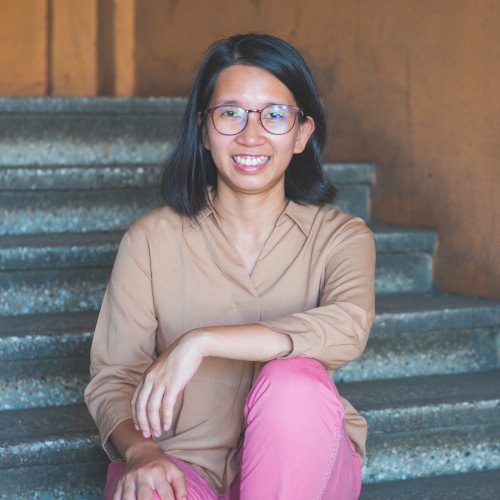
Hien Mai is the founder of KarbonMap, a SaaS platform that enables agriculture and forestry communities in the Global South to adopt sustainable practices. She is a graduate of the National University of Singapore and a former data scientist with Grab, Sea and Google.
Connect with her here.