By SGN | 8 Jul 2024

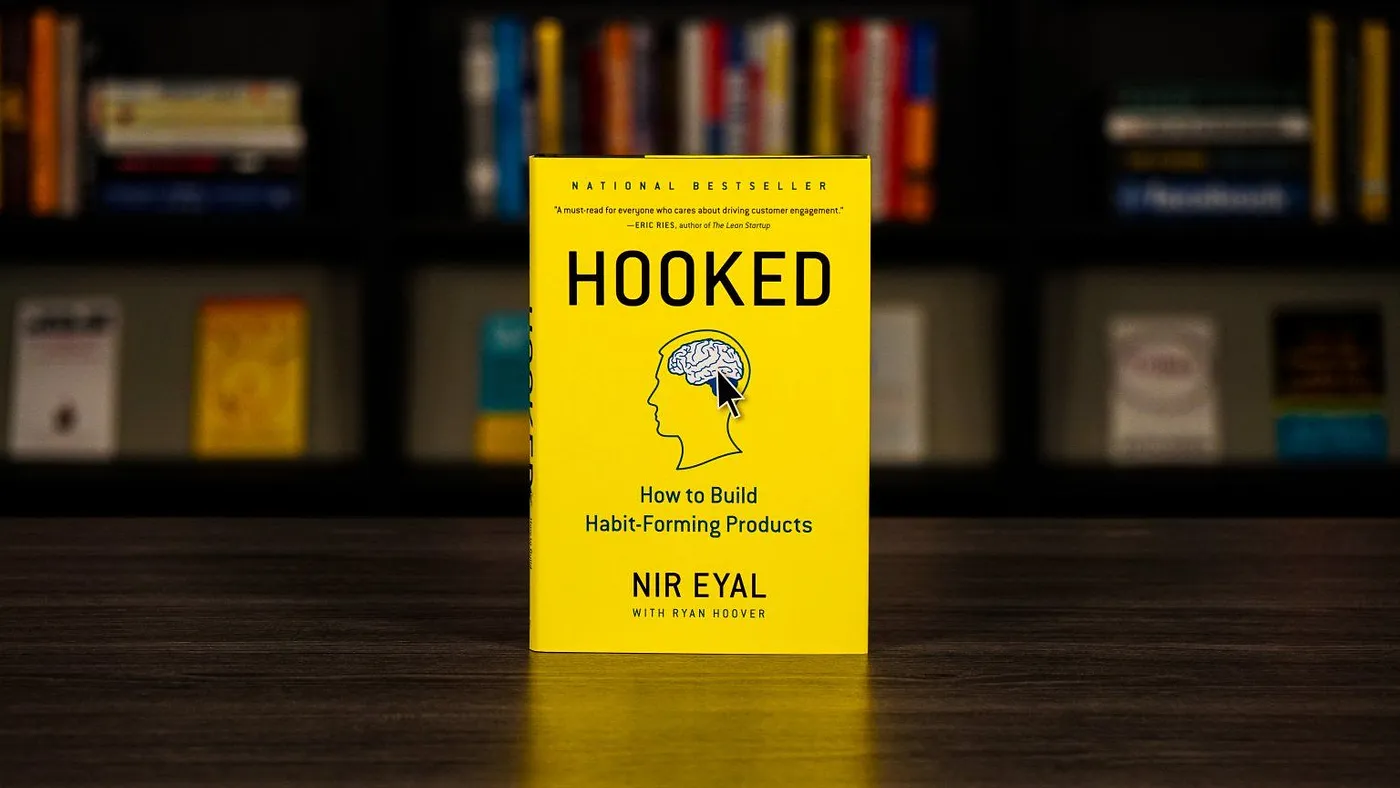
In 2014, Nir Eyal wrote Hooked: How to Build Habit Forming Products. In an instant, the secret behind the addictive qualities of Facebook, Instagram, YouTube and more were laid bare. The book became a best-selling handbook for tech companies seeking to design products that keep consumers coming back.
Five years later, Nir followed this success with Indistractable: How to Control Your Attention and Choose Your Life. Here’s how this bestselling author became a master of writing, investing, entrepreneurship and product design.
Entrepreneurial Endeavors from Silicon Valley
Nir’s story begins in the tech incubator of the world, Silicon Valley. After working at Boston Consulting Group (BCG) in his first job out of college, Neil moved to Silicon Valley in 2006 and started a solar panel company.
As tech start-ups grew exponentially around him, he increasingly became curious about the elements behind not only the small guys but particularly the big ones. He asked, “What was it that made Facebook and Instagram and Google and YouTube and Snapchat and Slack? Why were these companies so sticky? What made them products that people just had to start using?”
The desire for deeper knowledge and expertise in technology and business drove Nir to Stanford, where he pursued his MBA. It was during his time at Stanford that Nir, along with fellow students, founded a company specializing in placing online ads on Facebook.
In 2012, after his company was acquired, he decided to write about how companies built habits using technology products. He realized that it didn’t matter how good a product was if it didn’t capture that customer habit to bring people back to use the product.
Journey to Becoming an Author
One of the most influential experiences in Nir’s career as a writer was his tenure at Boston Consulting Group (BCG). Here, he was exposed to complex business problems and the importance of clear, concise communication. This experience was pivotal in shaping his ability to distill complex ideas into simple, understandable diagrams and visuals.
He shares how before he writes anything, he’s always drawing things out. His time at BCG were some of the most intense years of his life, but he’s grateful for the diagrams and matrices he picked up during his time there.
With Nir’s expertise in behavioral engineering, which intertwines elements of behavioral science with software design, and his experience building and studying habit-forming products for businesses, Nir published his first book, “Hooked: How to Build Habit-Forming Products,” a title that earned acclaim and became a Wall Street Journal bestseller.
Nir shares what surprised him most as he wrote “Hooked” as he studied lots of Silicon Valley companies, “I think it was a surprise to me to see how much they thought about user psychology and how little the outside world recognized that fact. And so it was kind of my job to democratize these techniques for the rest of us so we can all use these techniques for good, as opposed to just social media and video games.”
From Hooked to Indistractable
The insights uncovered from writing his first book inspired him to dive deeper into the subject of maintaining attention in a highly distracting world. He shares that there were three main reasons that motivated him to write a book on becoming indistractible:
First, I wrote the book because I needed it. I was finding myself distracted throughout my day, especially during one of the most important moments in my day: my time with my daughter. And the thing that seemingly distracted me was–wait for it–technology. So I set out to solve my own problem.
Second, I had insights into the products that were leading me to become distracted. Hooked went deep into how psychology could be used to build engaging products and services. I understood this hidden psychology because I had spent years researching what makes products habit-forming.
Third, I wasn’t a fan of the fear-mongering narrative around tech. It seems there’s a new headline every day about tech “hijacking our brains” and “addicting” us all. That narrative isn’t true and isn’t helpful. While some tech does addict some people, the vast majority of us are not pathologically addicted. Most people aren’t addicted, they’re just distracted. Furthermore, telling people to give up their devices isn’t practical. We need these products for our livelihood and to stay connected with important people in our lives.
The journey from “Hooked” to “Indistractable: How to Control Your Attention and Choose Your Life” was motivated by a deeper understanding of the double-edged sword represented by habit-forming products.

While “Hooked” provided insights into creating engaging products, Nir recognized the growing need for strategies to manage the distractions these technologies often introduce. “Indistractable” emerged from this realization, offering readers a comprehensive guide to reclaiming their focus and enhancing their lives amidst an ever-increasing barrage of digital distractions.
Views on “Addiction” to Technology and Responsibility
Nir has a nuanced perspective on addiction and the role technology companies should play to help those who may be vulnerable to addiction. He argues that our attention is not being stolen by these companies; rather, we are willingly giving it away.
Nir argues, “The vast majority of people aren’t addicted, they are distracted. The reason why I like that word better is, the word addiction sounds powerless, it comes from the latin word ‘addictio’ which means slaves.”
“We’re not slaves to this stuff, we’re just distracted. Distractions aren’t good, but diversions are … there is nothing wrong with diversions as long as it’s something you intended to do and planned to do,” he expands.
The term “addiction” is a pathology, but the way in which we tend to use it today shifts the responsibility from ourselves to the technology companies, and this mindset can lead to a sense of helplessness and lack of agency.
He acknowledges that there are individuals who are clinically addicted or vulnerable to addiction. For these individuals, Nir suggests that technology companies do have a responsibility to help. Unlike the alcohol industry, technology companies have access to data to track user usage and screen time. All media companies that know personal identifiable information, should have a responsibility to have, what he calls, a “use-and-abuse” policy.
“There should be a law that says you need to define some kind of trigger that says after x number of hours per week, we’ll reach out with a respectful message saying something along the lines of: we see that you’ve been using our product in a way that indicates you’ve been struggling with addiction, can we help? Maybe we can block you or suspend your credit card, or maybe we can give you resources around treatment,” says Nir.
For the majority of us who are not clinically addicted, Nir suggests that distraction comes from a deep place within us – from our human desire to avoid pain and take the easiest possible path.
He proposes that we can use technology responsibly and gain many benefits from it, as long as we are mindful of our usage. He recommends practices like turning off notifications, altering our physical environment to reduce distractions, and making pacts with ourselves to pre-commit to certain behaviors.

“The key is not to eliminate technology, but to understand our relationship with it and take control of how we use it,” says Nir.
“The price of progress, the price of living in an age that has so many good things in our pockets, for the first time in history, we have to learn how to deal with these distractions. The price of progress is learning how to become indistractable, it’s learning how to make the best of these tools without letting them take the best of us.”
Read more about Nir’s top tips to becoming indistractable on his blog here.
Relocation to Singapore to start his next chapter
A significant chapter in Nir’s life was his decision to move to Singapore, largely influenced by his wife and 15-year-old daughter. In March of 2020, when the pandemic started, Nir typed “best place to go during a pandemic” right into google and the top three most prepared countries were Singapore. Taiwan, and New Zealand. He felt that it might be a good idea to take a little vacation to somewhere a little bit more safe than New York City. So what was meant to be a few week trip ended up becoming the start of their transition to live in Singapore as the family fell in love with how safe and clean the city was.
They decided to settle in Singapore in 2020.
This transition represented more than just a change in scenery; it marked an immersion into a culture that Nir has grown to deeply admire. Singapore, with its strides in addressing common urban challenges such as homelessness, healthcare, and public transportation, left an indelible impression on him. “It’s really inspiring to see how a country can overcome so many of these issues that I thought were always just part of a big city,” shares Nir.
A major reason Nir felt that Singapore was the right place for him to be in terms of his career was just how well he functions in Singapore. It allows him to really focus on his writing without the usual distractions and concerns you get from living in other large cities. He shares how Singapore is so great in the way that he can just get to work and focus on the writing and the research.
“There’s just a lot of stuff you don’t have to think about. You don’t have to think about the snow. You don’t have to think about safety. You don’t have to think about, I don’t know, like, random crazy politics. You can focus on good food, good people and doing good work. And that’s been really great.”
Since moving to Singapore, his family has settled very close to Singapore’s former Prime Minister, Lee Kuan Yew’s old home for the convenience and exceptional safety of the neighborhood. Nir enjoys being able to commute to the places he needs to be through public transportation and walking. He joked, “Like, if you literally gave me a Lamborghini today, I’d trade it in.”
Beyond its infrastructural achievements, Nir found himself drawn to the cultural fabric of Singapore. Nir was particularly drawn to aspects of Singaporean’s collectivist mindset and emphasis on group responsibility. He also appreciates the values of Filial Piety, which his daughter is learning to understand, and Lo Hei, a tradition he finds profoundly beautiful for the lessons it imparts to children.
Despite his admiration for Singapore’s culture and people, Nir humorously points out one aspect that left him bemused: the driving etiquette, particularly on narrower roads lacking designated crossings. He cautions pedestrians navigating these streets to exercise caution.
His advice for others looking to grow their career in Singapore is to appreciate the Asian diaspora that Singapore provides. Similar to how New York City and London can provide that diversity, Singapore is able to do the same. As a writer, and with half of his book sales coming from Asia, it’s very important for Nir to stay global and be in touch with what people think is important around the world.
Nir’s product masterclass event with SGN.
Want to keep updated with events happening in the USA?

Meet Nir
Nir Eyal writes, consults, and teaches about the intersection of psychology, technology, and business. Nir previously taught as a Lecturer in Marketing at the Stanford Graduate School of Business and the Hasso Plattner Institute of Design at Stanford. He is the author of two bestselling books, that resonated with readers worldwide, selling over 1 million copies in over 30 languages.
Connect with him on LinkedIn.