By SGN | Updated 17 Feb 2025

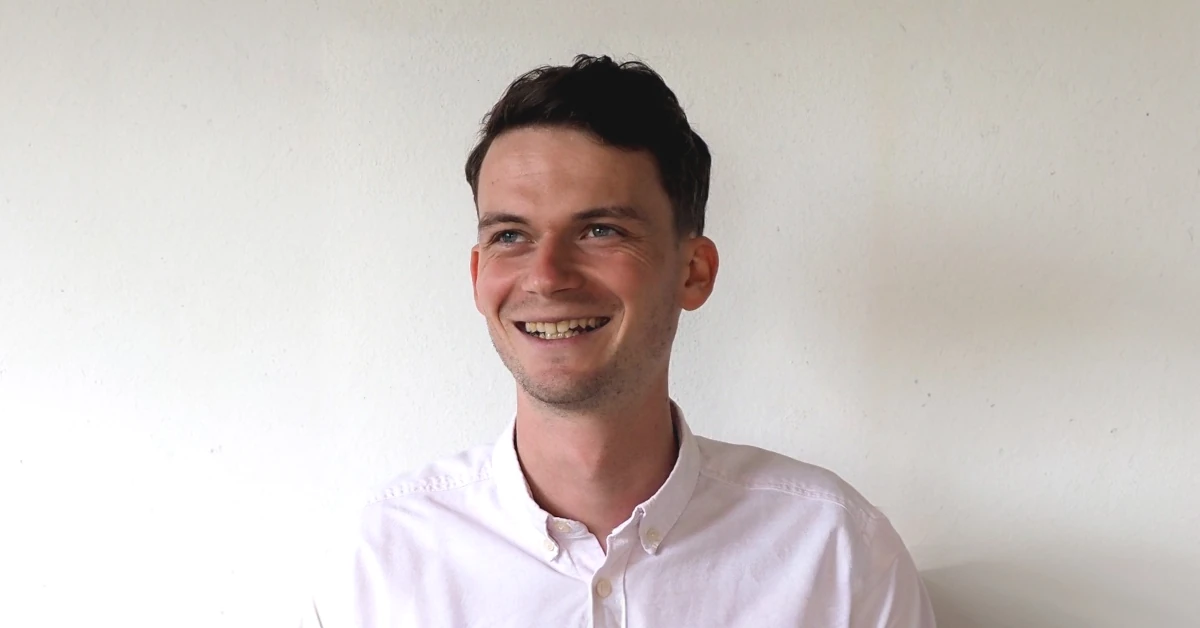
“The people who build companies seemed to be having more fun,” says Oliver.
This observation came after he had spent time in a slew of roles in finance and venture capital (Morgan Stanley, New Enterprise Associates), and was looking to switch things up.
Oliver spent most of his childhood in Hong Kong, then moved to the United States, where he would remain for almost 25 years. Shortly after the aforementioned realisation, he decided to take up an opportunity at Dropbox, which he touts as “the most formative experience of my operating career”.
When he joined Dropbox as a business executive, the company’s sales team housed twenty people. Known to his colleagues as “OJ”, he grew the team to one hundred-strong in North America, eventually launching and growing sales teams around the world.
Leveraging Product-Led Growth to turn software into household names
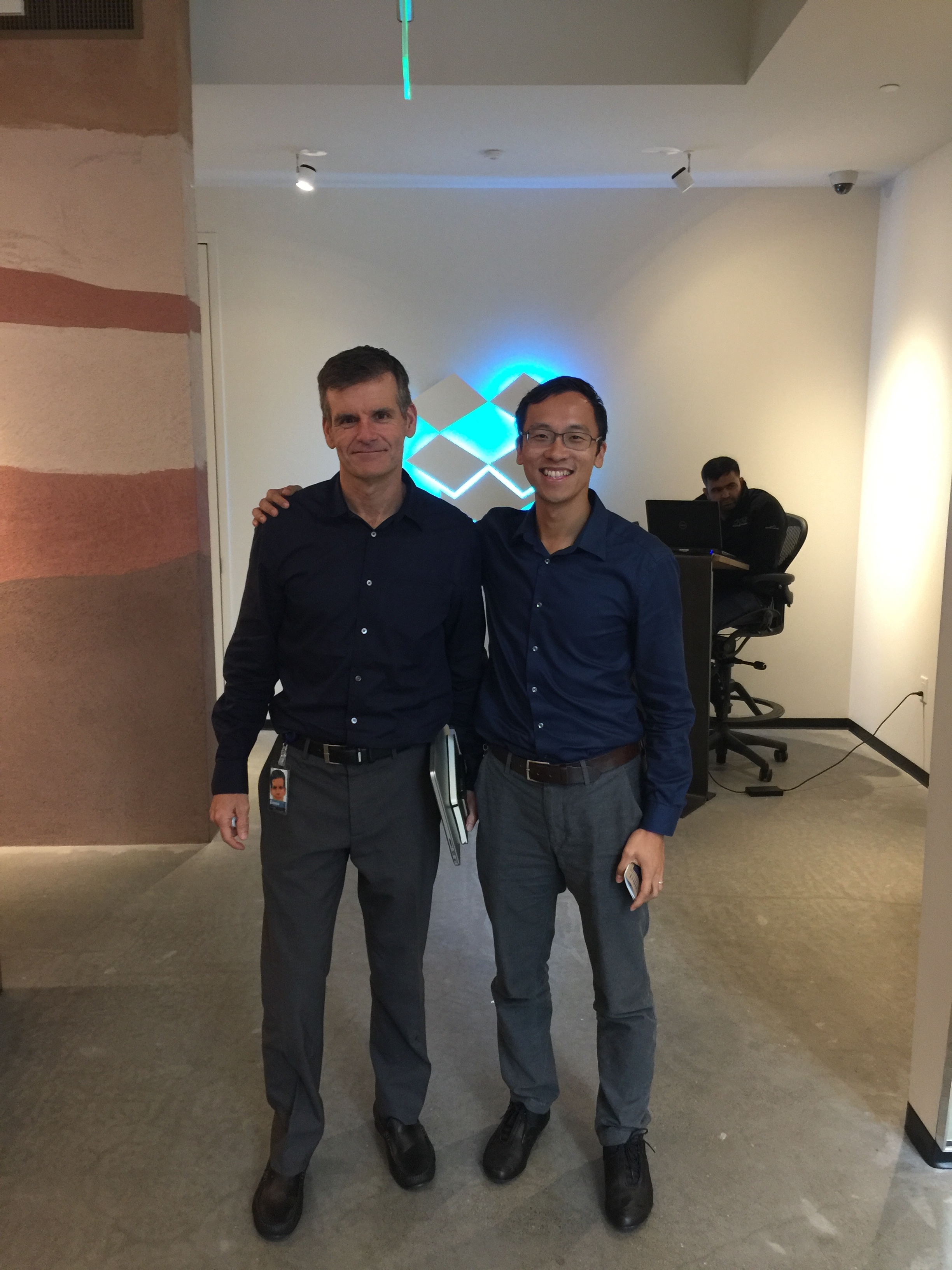
Oliver would spend the next five years building up Dropbox’s B2B business, championing the Product-Led Growth (PLG) methodology to propel the company’s monumental development. In a nutshell, PLG is all about getting the end users of software (students, office workers) to fall in love with the product first, rather than companies pushing it onto its employees.
With a secure customer base to fall back on, the software’s makers can gradually roll out enterprise-grade products to win businesses over. Companies leveraging this winning strategy included the likes of Zoom, Slack, Canva, Figma, and Asana – where OJ would later work.
“Traditionally, software is sold top-down, which means that IT teams have to roll it out to the rest of the company,” Oliver explains. “But PLG is a bottoms-up method of selling, which Dropbox pioneered. I was incredibly lucky to be in the right place at the right time, at the forefront of this action.”
Oliver credits the inspiration for the PLG model to the Apple iPhone. “At first, regular consumers were the primary users of the iPhone,” he says. “And then they started bringing it to work, and they concluded this was a much better way to get technology out there, and on the software side too.”
This framework would go on to become the default model for how new technologies find large-scale success. “Think of how ChatGPT is something people started experimenting with on their own,” he says. “And now companies are adopting ChatGPT for enterprise-level use.”
When Oliver shifted to Asana, he would have the opportunity to test out what he learnt during his time at Dropbox. And once again, he seemed to have struck gold in terms of timing. “I joined when it was still early enough, and so I was able to replicate some of my learnings from Dropbox to drive success, “ he notes. “As a result, we saw thirteen consecutive quarters of accelerating YoY growth, because we implemented the right PLG playbook.”
The makings of a mentor
As Asana’s first Chief Revenue Officer, Oliver was tasked to build and lead the company’s revenue-related teams. Within five years, the business grew from less than $20 million to $500 million run-rate revenue, and had expanded to 10+ countries – a list that included the UK, Tokyo, Australia, Germany, and Singapore.
Having greatly benefitted from access to diverse mentors during his time at Dropbox, Oliver found himself in a position to mentor his own team at Asana. He cites heavyweights like former Dropbox COO Dennis Woodside, LinkedIn COO Dan Shapero, former HubSpot CRO Mark Roberge, and Atlassian President, Jay Simons as direct influences on his development.
“For me, Dennis is the gold standard of what a COO operator is. He taught me how to operate and run big teams, and drive performance,” Oliver shares.
He also mentions Kim Scott, former Global head of Google Adsense, and author of business leadership book Radical Candor, as a major influence on his mentorship style. “She taught me how to lead with empathy, how to manage fairly, and how to nurture talent,” he recalls.
Oliver describes his mentorship style as a combination of learnings from mentors he’s previously worked with. “I spent valuable time with each of the folks mentioned and developed my own style by taking bits and pieces from everyone I worked with. Asana was the place where I was finally able to put my learnings into practice.”
Over time, Oliver arrived at a rather anti-climactic realisation— ‘There is no right way to lead.’
“The only way to lead is your own way,” he advises. “My time at Asana gave me the confidence to trust my own instincts as a leader and not try and map my leadership style to an existing framework.”
Setting his sights on Singapore

Returning to Asia was always on the cards for Oliver, who wanted his children to remain in close proximity to their grandparents. “Asana had just gone public, and I felt like I was being called to Asia,” Oliver recalls. “I was most interested in Singapore because it was home to a burgeoning tech scene.”
Oliver was no stranger to Singapore’s business ecosystem. He helped set up international offices for Asana and Dropbox in the city-state, which he frequently travelled to on assignment as an independent Board Director at Grab, the Southeast Asia-based superapp.
“Relative to other countries, building a globally-focused office in Singapore happened in no time. The government makes it incredibly easy for new businesses to set up shop here. They are also so supportive of nurturing new leaders – and, frankly, in a way that is unmatched by other countries,” says Oliver, who is frequently courted by the likes of the Human Capital Leadership Institute and Economic Development Board to mentor companies.
In 2022, he moved from San Francisco with his wife and children, to the sunny shores of Singapore on a Tech Pass visa and, later, a ONE (Overseas Networks & Expertise) Pass. These passes are designed to help top talent move to Singapore, offering them the flexibility to simultaneously start, operate, and work for multiple companies.
“Singapore is very welcoming of people and talent, and greatly encourages knowledge-sharing,” Oliver explains. “There are a lot of opportunities for companies and leaders to thrive in Singapore and leverage this place as a vantage point to serve all of APAC.”
Before moving on to OpenAI, he spent two years coaching founders and senior executives of high-growth companies in the Asia-Pacific region, including the Founders of Carousell, Glints, BandLab and Borneo.
Helping Singaporean leaders unlock winning mindsets
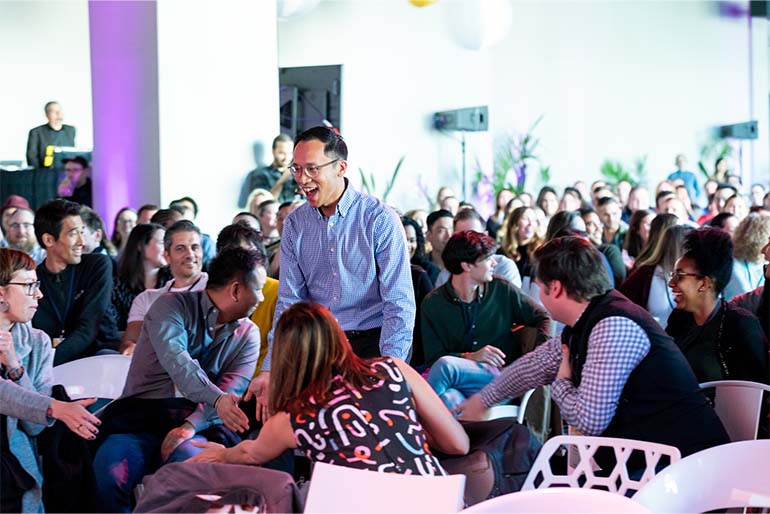
From his experience in working with Singaporean and Singapore-based leaders, Oliver was struck by their “global-mindedness”. “For leaders in Singapore, their first thought is about serving the wider APAC region, or even global markets,” he says. This mindset, which ends up being an asset, is hard to both teach and learn.
“In contrast, I find that tech leaders in the US tend to be focused primarily on the US. For instance, if you’re based in San Francisco, you tend not to think outside of its borders, because the US market alone is substantial.”
Besides global mindedness, Oliver also values Singaporean leaders for their excellence. “Whether it’s academics, or a skill like playing the violin, Singaporean leaders are a class apart when it comes to embodying excellence, which is something that cannot be taught,” he opines.
On the flip side, Oliver has observed that Singaporeans, and many Asian leaders, often prioritise humility, a value deeply rooted in many of the region’s cultures. Oliver’s coaching emphasises encouraging leaders to further develop their confidence and trust in their own instincts, empowering them to take bold steps when necessary.

The missing magic ingredient seemed to be the depth of management experience. In the West, leaders typically spend their time across multiple tech giants, gathering valuable business acumen and growing companies to monumental heights before moving onto the next. In this part of the world, there simply aren’t that many gigantic companies to go around.
Oliver identified this gap as something that could be addressed via coaching.
“Singapore has a lot of good founders and strong technology. Now the question remains of how to scale this? A lot of leaders here haven’t had this type of experience before, which is why they’re a bit more hesitant to move in bolder ways,” he says.
For maximum effectiveness, Oliver worked closely with a handful of founders, serving as a trusted mentor, friend, and confidante, all rolled into one.
“Being a founder is one of the loneliest jobs out there. There are thoughts and conversations that would not be appropriate to have with your management team, or board of investors,” Olive points out. “My approach is to be an ally and trusted partner, and walk them through their challenges.”
Founders have typically approached him with three layers of challenges.
The first related to matters of company strategy (how to price products in a specific market, how to organise teams). The second encompassed a deeper layer of internal strategy (how to create high-performing teams, how to create trust, how to foster a collaborative environment that draws in high performers). The third layer looked at helping the individual develop confidence.
“I spend a lot of time helping founders tackle all three layers. To me, leadership trumps strategy in the long run, so working on the individual and how they manage their teams is a high-leverage activity,” Oliver says.
A supportive family unit
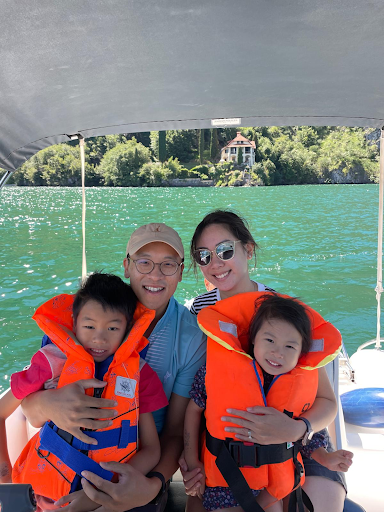
Prior to joining OpenAI, Oliver managed to carve out some time to think about the future. “I want the next chapter of my career to focus on impact,” he shares.
“I’ve spent time examining education, social enterprise, and climate change, and I’ve realised that a technological leap is what you need to fundamentally transform these areas that humans have historically struggled with. And that’s artificial intelligence.”
Oliver credits his wife Vivian to helping him lock in his decision to migrate to OpenAI, calling her a “super partner”. “I’ve been incredibly blessed to have such a great life partner like her,” he mentions fondly.
“Going into this, both of us knew how taxing it would be on the entire family, especially in the short-term when everything is still being set up. But I wouldn’t have been able to take up this job without her blessing and support.”
Despite Oliver’s hectic schedule, he makes it a point to completely switch off during those few precious hours of family time. Outside of work, he and his wife enjoy a full social life, attending church, and participating with non-profit organisations.
“I’m really grateful for the ONE Pass. We can be here for the next five years, with the option of renewing,” he shares. “The children love attending school here, and my wife and I find it really exciting to be a part of the booming tech ecosystem here. I hope I can continue to play a role in elevating this community.”
The stewardship of artificial intelligence
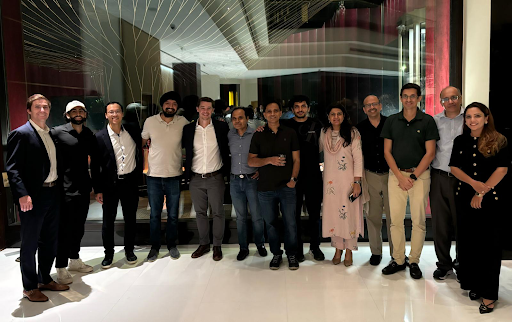
Responsibly bringing AI into the world is a legacy Oliver hopes to leave behind for his children – a seven-year-old son, and three-year-old daughter. “I feel like OpenAI is the best platform to do so, because the mission–to ensure AI benefits as many people as possible— aligns with my own,” he shares.
While Oliver recognises the current climate of fear surrounding artificial intelligence, he draws parallels between other eras of major technological change and issues (Y2K, the Internet, the advent of crypto). “There’s always been apprehension when it comes to change. For a while, people were really scared of cars, as they might get into accidents,” Oliver points out.
“But now, if you go to places like China, you’ll realise there are entire cities where the streets are filled with self-driven or electric vehicles. And there’s a lot of evidence to suggest these tend to be safer than traditional cars.”
Education is the key to people overcoming their fears of these new technologies, according to Oliver. “I took on the opportunity at OpenAI because I want to help bridge the gap,” he says. “How do we responsibly adopt, and adapt to, AI as we evolve, given that the technology is already here? That’s what I’m most excited about.”
Interested in working in Singapore or starting a business here?
Find out more about the new Overseas Networks & Expertise (ONE) Pass as well as other work passes that may suit you.

Meet Oliver
After cutting his teeth growing tech giants like Dropbox and Asana, and mentoring founders and senior executives of high-growth companies in the Asia-Pacific region, he is taking on the mantle of Managing Director of OpenAI in Singapore.
Connect with him here.