By SGN | 12 Feb 2026
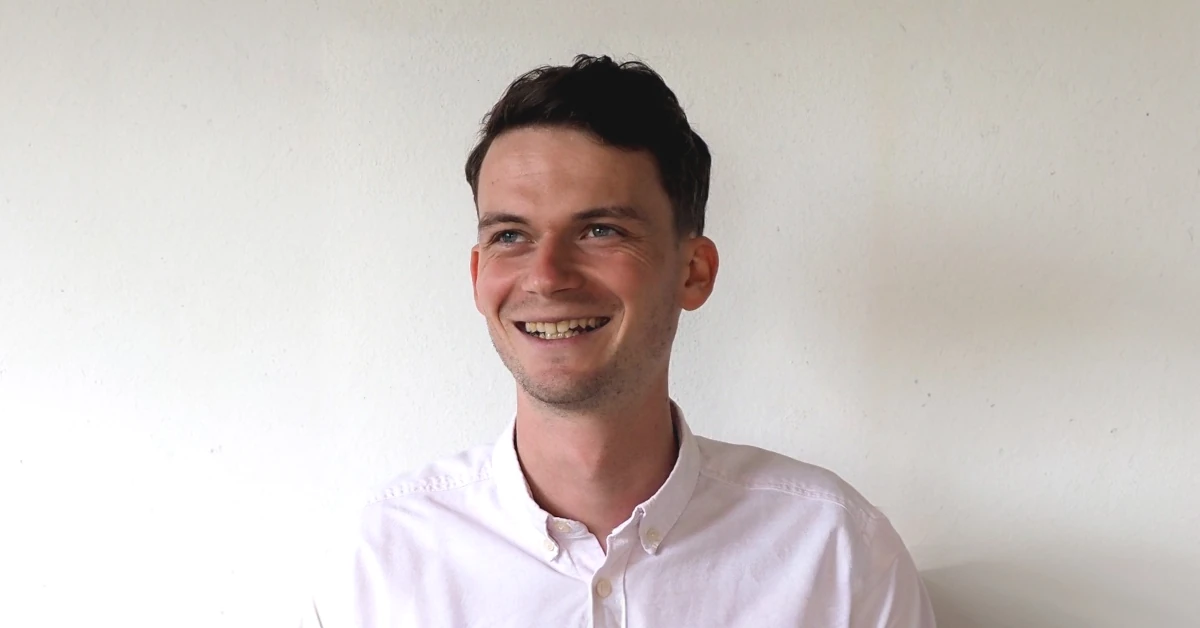
At his research lab, Adrian is used to visitors and newcomers squirming and flinching at the sight of tiny black soldier flies or 10,000 of their writhing larvae feasting insatiably on food waste.
The reaction is only natural. Adrian, too, felt it once.
“Of course in the beginning there is an ick factor, but it was gone within hours,” he recalls. What took over was his amazement at the larvae’s ability to turn trash into “gold”. Their frass, or odorless granules of excrement, are a natural fertiliser. Whereas compost takes months to produce, frass is collected in a manner of days.
“That just changed my perception of them totally,” Adrian says.
Furthering his research career in Singapore
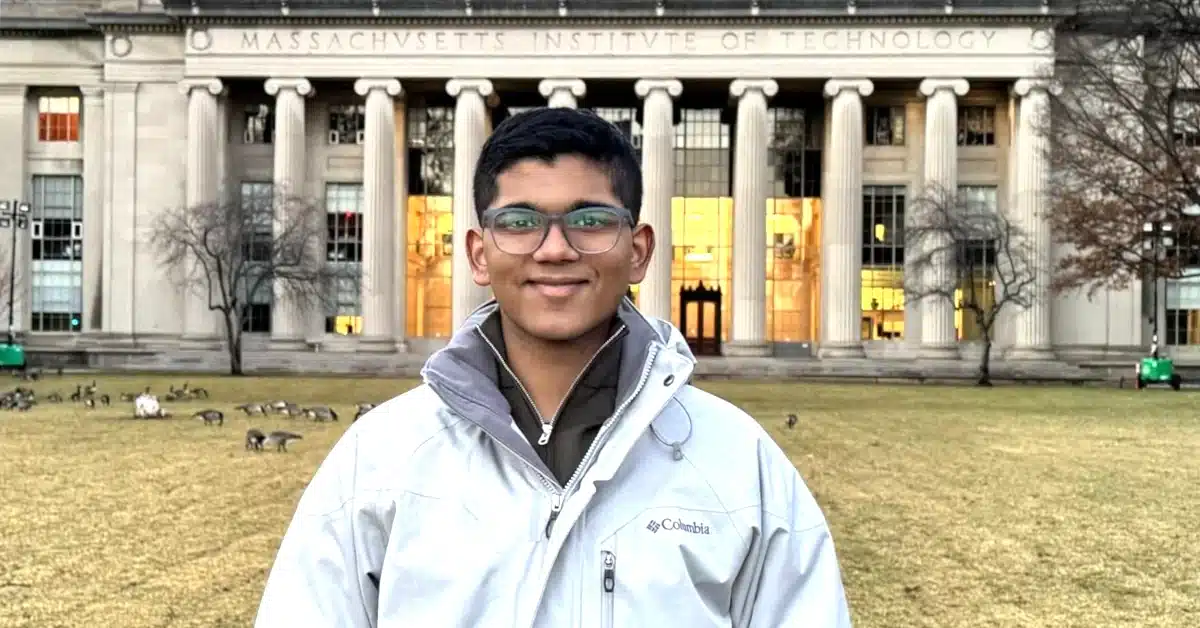
Born in Germany, Adrian grew up near Frankfurt and obtained a Bachelor’s in agricultural science at the Technical University of Munich. He was always drawn to sustainable agriculture, or research that would benefit humanity and the environment. When he did his Master’s at ETH Zurich, he narrowed his focus to insects. “The image of insects in agricultural production is ambivalent, because mostly they’re considered pests. But more recently they’re also considered a livestock,” he says, adding that some species can even produce chemicals with pharmaceutical value.

To embark on his PhD, Adrian relocated to Singapore in 2022. “Singapore is very future-oriented and very open to innovation,” he says. “It has a relatively clear agenda for rethinking food production.” He is based at the Singapore-ETH Centre – an ETH Zurich outpost that is part of the National Research Foundation of Singapore’s Campus for Research Excellence and Technological Enterprise (CREATE) – which largely handled the application for his Employment Pass.
Adrian’s current research looks at the feeding process of black soldier fly larvae and how to optimise levels of heat, moisture, and emissions like ammonia and carbon dioxide. When the environment is too hot, the larvae are smaller and less productive. When it’s too wet, they often try to flee. “We developed a research platform with reactors to track and optimise these metabolic processes on a very fine scale,” he shares.
At the Centre, Adrian collaborates with scientists from Singaporean and international universities, and his work involves aspects of plant science, soil science, entomology, microbiology, waste management and food technology. “It’s a nice mix of disciplines,” he remarks. “That’s what makes it so interesting.”
Adrian helped organise the 2024 Insects to Feed the World conference in Singapore.
How larvae solve a sticky situation
In nature, black soldier fly larvae play a vital role as decomposers, breaking down organic matter and returning nutrients to the soil. Native to the Americas, the black soldier fly has spread across the world but thrives in warmer climates like Singapore’s.
Increasingly, the larvae are prized for their voracious appetites. “They are not picky about what they get at all,” Adrian notes. 10,000 larvae – weighing a mere 40g combined – can process 10kg of food waste per week, during which each larva grows at least 40 times heavier.
This is good news for a nation like Singapore, which generated 784,000 tonnes of food waste in 2024. 18% of it was recycled, the rest incinerated and dumped into a landfill. Processing this waste with black soldier fly larvae instead would reduce greenhouse gas emissions and recycle the nutrients into food systems.
“In Singapore, the main organic waste you have is post-consumer food waste, which is relatively tricky to recycle because it’s very heterogeneous,” Adrian explains. By comparison, waste streams from agriculture or food production – say, corn husks or fruit peels – tend to be more homogeneous.
The magic of black soldier fly larvae is that they present a three-in-one solution. Not only do they cut food waste and make fertiliser, they can also be harvested as feed, rich in fat and protein, for poultry and aquaculture.
At Singapore’s annual Global Young Scientists Summit in 2025, Adrian got to hear from and interact with Nobel laureates.
Mingling with top scientific minds
Adrian says Singapore has a strong reputation as a research hub, thanks to its wealth of scientific expertise and cutting-edge equipment. In 2024, it hosted the biannual Insects to Feed the World conference, and Adrian was on the local organising committee.
“It was a lot of work,” he admits. To line up 150 talks and 80 poster presentations, he and a colleague had to plough through hundreds of submissions, but it was thoroughly rewarding to meet researchers in the same niche from across the globe.
This year, Adrian attended Singapore’s annual Global Young Scientists Summit, where Nobel laureates and other scientific luminaries convene to interact with early-career researchers.
He did a poster presentation and got to speak with esteemed scientists about science, technology and the future of humanity. “It was super inspiring,” he says. “I was lucky to be part of that.”

Singapore and Germany more similar than you expect
Adjusting to life in Singapore was a breeze for Adrian. “Singapore is a very cosmopolitan city with explicit rules so adapting is not difficult. Singapore and Germany are more similar than one might expect,” he says. Like Germans, Singaporeans tend not to engage in small talk and are fairly to the point.
One big difference, however, lies in their passion for food. “Singaporeans love to try new food and are happy with queueing for a long time,” he notices. “I think Germans have a more pragmatic relationship with food.”
When he’s not at the lab, Adrian keeps active and enjoys cycling along park connectors or hiking in Bukit Timah Nature Reserve. For him, Singapore is a “convenience city”, bar none, that feeds his love for experiencing new cultures and making new connections, be it at fairs, exhibitions or cultural events. “I’m always keen to meet people with different perspectives on the world, that have different skills,” he says. “It’s very enriching.”
While he hasn’t decided his next move after completing his PhD in April 2026, Adrian is open to opportunities in Singapore related to innovation in food production or sustainabilty in general. To others considering agricultural science or a move to Singapore, he offers the same advice: “Be open-minded. Give it some time before you judge it or give up.”
About Adrian
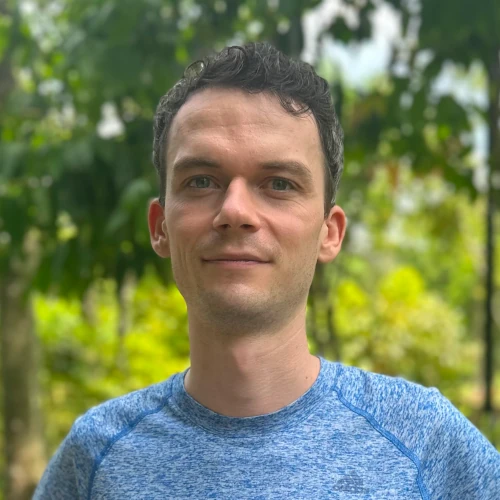
Adrian Fuhrmann is a PhD candidate at the Singapore-ETH Centre and ETH Zurich who studies the use of black soldier fly larvae to process food waste and produce fertiliser in collaboration with the National University of Singapore. The research is funded by the National Research Foundation of Singapore. In 2022, he won a Swiss Forum for International Agricultural Research (SFIAR) award for his Master’s thesis.
Connect with him here.