By SGN | 24 Jun 2024

As a teenager growing up in New Jersey, JP had his worldview profoundly impacted by the September 11 attacks.
“I thought I would end up in diplomatic or humanitarian work,” he says. “I really wanted to contribute to building better relations between the US and the rest of the world and making sure that we’re working together to build a bright future for everyone.”
Venturing abroad, he sought new perspectives and learnt a slew of languages: French in Paris, Italian in Florence, German in Berlin, Chinese in Beijing, and Hebrew in Haifa. Wherever he went, JP immersed himself in the local culture, often living with a host family. He also took courses in topics such as Chinese political philosophy and Middle Eastern conflict.
After completing a BA in International Affairs and a joint Master’s in France, he still hungered for more knowledge. His next stop: Singapore.
Learning from Singapore
“I’d heard of Singapore as a place where people from across the region come together,” JP recalls. “And I really wanted to learn from Singapore, which had tackled a lot of the issues that other parts of the world were facing, like eradicating homelessness and building a competitive economy.”
Enrolling at the Lee Kuan Yew School of Public Policy in 2009, he obtained his third Master’s degree. “I had a really great experience,” he says. “The LKY School builds strong cohorts and really supported our academic aspirations.”
While the tropical heat took some getting used to, JP found it a joy to study and live in close proximity to the lush Botanic Gardens. On weekends, he would head out to experience local food and visit museums (“One time, I even walked with a classmate across Singapore from one end to the other,” he reveals) or jet off to explore a neighbouring country.
His stay in Singapore lasted only a couple of years, but it left an enduring impression. “Singapore is like a movable feast, in that you take those high standards you experience with you wherever you go,” he says. “When you leave Singapore, you notice very quickly why it is such a fantastic place.”

Entrepreneurship for change
At the Lee Kuan Yew School, JP began to see how public institutions are not the sole avenue for impact, and that there is power in supporting founders to solve issues that they understand best.
“I came to the realisation that entrepreneurship is a powerful medium to create change,” he shares. “This was right after the financial crisis, and a lot of aid for developing countries was drying up.”
After completing Stanford Ignite, an intensive entrepreneurship course sometimes known as a “mini MBA for graduate students”, he flew across the Atlantic to Ghana, determined to make a difference. There he co-founded Impact Hub Accra, part of the global collective of more than 110 centres supporting entrepreneurs for social impact.
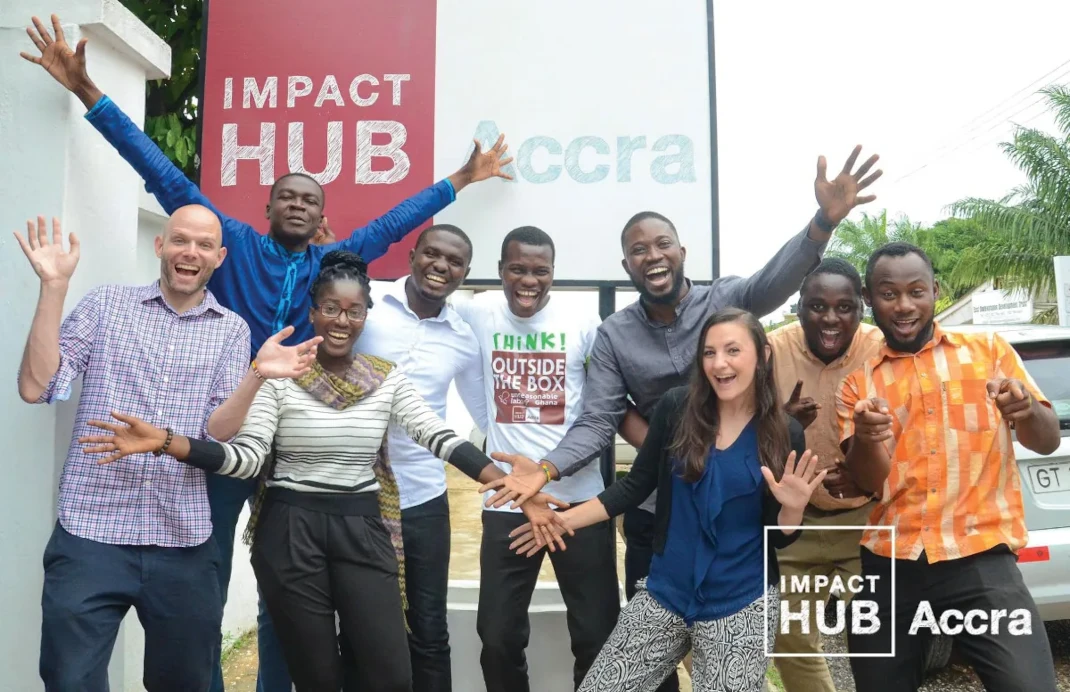
As he engaged and collaborated with locals, JP was moved by how community-focused West African culture was. “There’s a very strong social fabric,” he observes. “They think of community a lot more intentionally and deeply. Everybody knows everybody, and people often help each other get by and get their ideas off the ground.”
Young Ghanaians in particular were eager to embrace new technologies to create a positive impact. When Impact Hub Accra held Africa’s largest-ever hackathon, health issues by far garnered the most attention. These included e-health, access to medication, and fundraising to cover patients’ medical costs.
In response, JP’s team ramped up health innovation programming and began to connect founders to health ministries, organisations and professionals. “Eventually, that work spun out to become the African Health Innovation Centre,” he says.
Returning to New Jersey
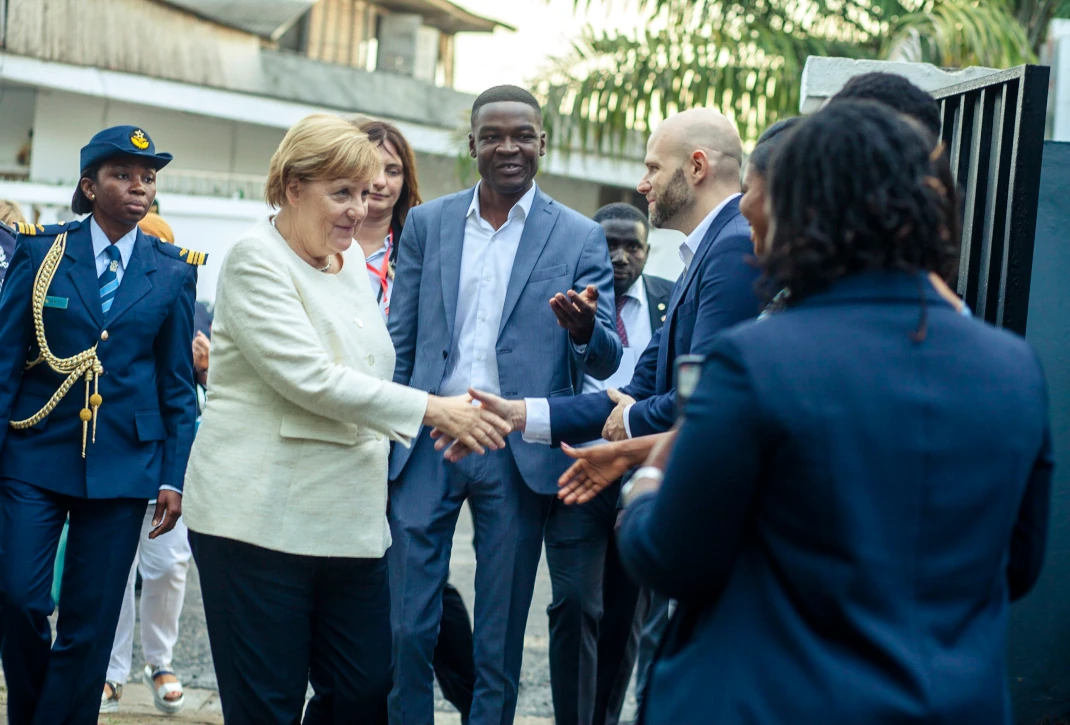
In 2016, JP returned to New Jersey, in large part because his late mother’s health was in decline. He also felt it was the right time to empower the local team at Impact Hub Accra to take over the reins and fulfil their dreams for the region.
At the time, New York had an Impact Hub of its own. When it closed down in 2018, JP leapt at the opportunity to apply for the licence to bring Impact Hub back to the city. Plans to set up a physical space were stalled by the pandemic, however, and only realised years later. In September 2023, his team proudly opened the doors to their new hub in the heart of Midtown Manhattan, a stone’s throw away from Bryant Park and the Empire State Building.
Impact Hub is a space for social innovators to connect and collaborate.
For social innovators – entrepreneurs, nonprofits, creatives and investors – Impact Hub is an innovation centre that curates and accelerates their initiatives to protect people and the planet in line with the 2030 Sustainable Development Goals.
“We’re running a programme with Adidas to support entrepreneurs in sports and wellness, particularly from African American and Latino communities,” JP shares as an example. “We’re also planning a few incubators for founders from any sector with a climate angle. Climate change is one of the biggest challenges of our time, and we believe everyone has a role to play in decarbonising.”
The hub also supports the wider social impact community, having already hosted more than 100 events, often for external groups. Branching out from the Manhattan location, JP is in the early stages of building a hub-and-spoke network of centres across the New York Metropolitan Area, which stretches into New Jersey, Connecticut and Pennsylvania.

Why passion never fails
Having supported the good work of thousands of innovators through the Impact Hubs in Accra and New York, JP is all too familiar with the pitfalls they face.
“The cost of starting a business is extremely high,” he says. “And many people start companies thinking that everything will work out rather quickly. But the fact of the matter is, it could take years to build a successful business.”
For aspiring founders, JP points out that building networks is key. “And New York is such a large city that it can be overwhelming to understand where to go or who to work with,” he says. “What Impact Hub does really well is helping people navigate the ecosystem and build their own communities.”
His number-one advice? Follow your passion – it’s a path that rewards without fail.
“Choose the area that you’re most passionate about, not necessarily where you think you’ll make the most money,” he says. “Because even people who don’t succeed in their initial startup leverage that experience to start another company or work in a related organisation. They become experts and bring a lot of value to the conversations and the action around those problems.”


Singapore ties remain strong
JP still visits Singapore from time to time, catching up with friends and the LKY School while travelling the region. In New York, he maintains close ties with Singaporeans, not least those in the US alumni chapter, of which he is a past president.
“More of my former classmates live in New York than in Singapore, because the programme is so global and many of us end up based in New York. I probably see them more than anyone else outside of my family and colleagues,” he reveals.
And though the Impact Hub in Singapore exited the network in 2018, JP is hopeful of its return. “There has been interest in re-opening one in Singapore,” he says. “I have been supporting those efforts, because I believe Singapore is a great place for social entrepreneurship.”
Interested in working in Singapore or starting a business here?
Find out more about the new Overseas Networks & Expertise (ONE) Pass as well as other work passes that may suit you.
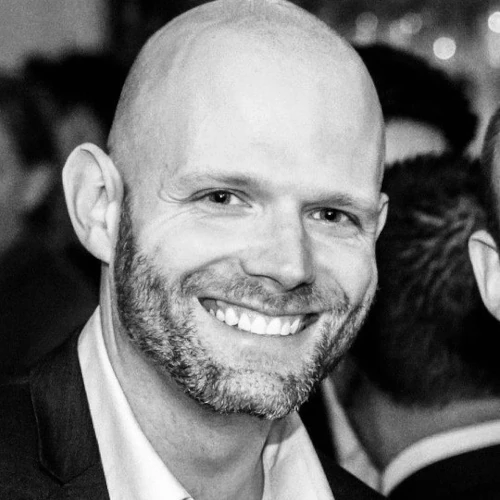
Meet JP
JP is the co-founder and CEO of Impact Hub New York Metropolitan Area and the co-founder and board chair of Impact Hub Accra. He is a graduate of Stanford Ignite and the Lee Kuan Yew School of Public Policy.
Connect with him here.