By SGN | 22 Jan 2025
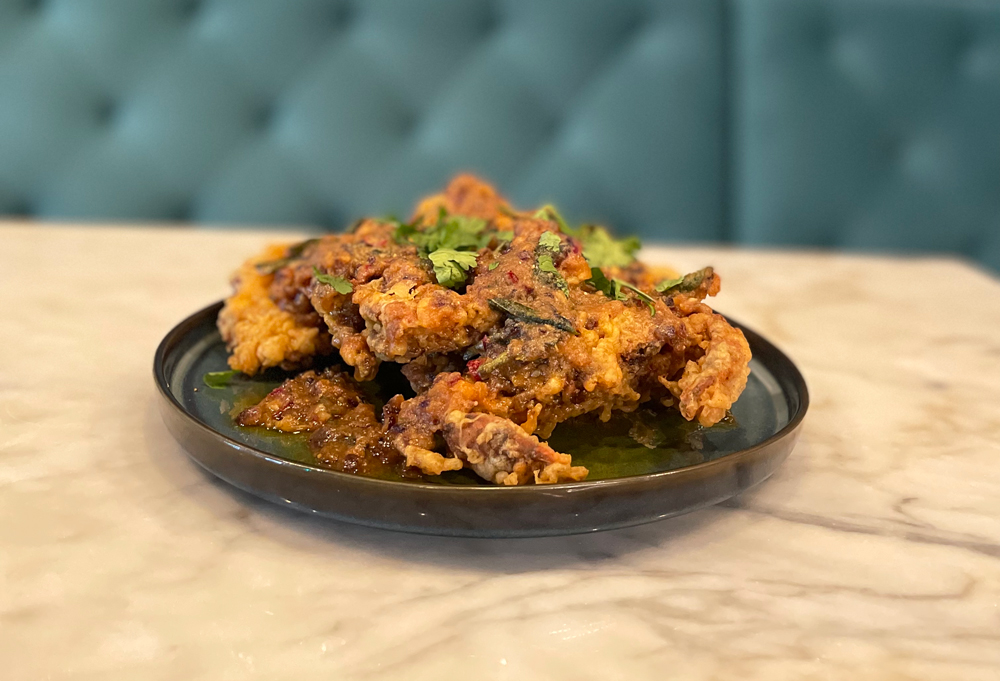
Salted Egg Yolk Soft Shell Crab By Chef Sophian Hoe
Owner of Makan Madiera in Funchal, Portugal

As the founder of Makan Madeira, Sophian discovered that the further he ventured, the more deeply he felt the need to stay rooted to his heritage, especially during Lunar New Year.
“Lunar New Year is a time to pause and reflect and to celebrate the bonds we have,” Sophian shares. “Even if I’m miles away from home, these reunion meals anchor me strongly to my roots.”
“Crabs symbolise wealth and prosperity for Lunar New Year. Putting a spin on Singapore’s iconic black pepper soft shell crab, here’s my recipe for Salted egg yolk soft shell crab.”
Ingredients:
Part 1 – Soft Shell Crab
- 4 soft shell crabs
- 3 tbsp shrimp paste
- 1 tbsp sugar
- 2 tbsp Chinese Shaoxing wine
- 1 tsp white pepper
- 1 egg
- 100ml cold water
Part 2 – Batter
- 80g all purpose flour
- 80g tapioca flour
- 1/4 tsp bicarbonate soda
- 1/4 tsp baking powder
Part 3 – Salted egg yolk sauce
- 6 salted egg yolks or 4 tbsp salted egg yolk powder
- 3 tbsp butter
- 4 cloves garlic, diced
- 1 onion, diced
- 3 sprigs curry leaves
- 4 bird’s eye chillies, finely sliced (more if you like to make it spicy)
- 1 tbsp sugar
- 1 tsp salt
- 1 cup milk or evaporated milk (optional)
Instructions:
- Soft shell crabs are normally found in the frozen section in Asian supermarkets. Defrost the soft shell crabs and clean.
- Prepare part 1, part 2 and part 3 in separate bowls.
- Heat oil in a fryer, wok or pan to 180C or medium heat.
- Dip soft shell crabs in wet batter mix (part 1) followed by dry batter mix (part 2).
- Dip the marinated soft shell crab into the fryer, wok or pan and fry for about a minute or two.
- Ensure both sides are cooked well. Set cooked crabs aside.
- In a separate wok, turn the stove on to medium heat.
- Add vegetable oil and let it set for a few seconds before adding onion and garlic using a wooden spoon. Stir it for a minute or until onions are softened.
- Add butter and swirl lightly around the wok so it can melt a bit faster. Turn the heat down to medium low so the butter will not caramelised.
- Add bird’s eye chillies and curry leaves and continue stirring.
- Stir for another 3 to 5 minutes until you are able to smell the curry leaves fragrance.
- Add sugar and salt to taste and balance the flavours. Mix well.
- Turn off the heat. Plate the cooked soft shell crabs.
- Drizzle the salted egg yolk sauce, garnish with coriander and ready to serve.
Prosperity Yu Sheng by Chef Kaylin Eu
Owner of Ma-Makan in Berlin, Germany

Growing up in Melbourne with few Asian friends, food became Kaylin’s bridge to her roots. Her parents ran a market stall selling Singaporean and Malaysian snacks like curry puffs, fried spring rolls, and ice kacang (shaved ice with red beans). Later, her father became one of Australia’s first tofu producers.
Now living in Berlin, Kaylin continues to honour Lunar New Year traditions. “I usually gather with fellow Chinese and Asian friends who celebrate, as well as those curious to join in and learn more about the festivities,” she explains.
Preparing her beloved Lunar New Year dishes in Berlin presents Kaylin with some challenges, particularly when it comes to sourcing ingredients. “It’s harder to find certain items, and they’re more expensive,” she explains.
Although her version of yu sheng may not be entirely traditional, Kaylin takes great pride in sharing this dish, which symbolises good luck and prosperity, with her community. Here’s Kaylin’s Prosperity Yu Sheng recipe!

Ingredients:
- 200g smoked salmon
- ½ Daikon, julienned
- 1 Carrot, julienned
- ¼ Purple cabbage, finely shredded
- ¼ Pomelo, segmented and separated into small pieces
- 1 Cucumber, seeds removed and julienned
- 2 Tbsp Japanese pickled ginger
- 10 Wonton wrappers, cut into 2cm x 2cm squares
- ½ Lime, into wedges
- 4 Tbsp Coriander
- Cooking oil, for frying
Plum sauce
- 4 Tbsp Plum sauce
- 2 Tbsp Apple juice
- 1 Tbsp water
Other ingredients
- 1 Tbsp Neutral vegetable oil
- 30g Roasted peanuts, ground
- 1 Tbsp Sesame seeds, roasted
- 1 tsp Chinese five spice powder
- ½ tsp white pepper
Instructions:
To make wonton chips. Preheat about 5cm of cooking oil in a pot or wok. Check that the oil is hot by poking in a wooden chopstick. When is starts bubbling, it is hot enough. Lower heat then fry the wonton strips until they are crispy and slightly golden. Keep aside until ready to plate.
Use a mandolin, hand held vegetable shredder or knife to shred the vegetables. Keep them aside separately.
For the plum sauce, mix all ingredients together well.
To plate, use a large round plate. Arrange the carrots, daikon, and cabbage in small handfuls around the plate. I like to make sure there is colour contrast. Leave a small space in the middle of the plate. For example, I put 2 small handfuls of daikon opposite each other, then same for the carrots and cabbage. Then, arrange the coriander, cucumbers, pickled ginger and pomelo around the shredded vegetables.
Smoked salmon – arrange in a rose shape by overlapping the slices then rolling up to form a rose. Place into the middle of the plate.
When you are ready to eat, with everyone around the plate, add the wonton chips, plum sauce, oil, spices, peanuts, sesame seeds and lime, saying with each ingredient the auspicious greeting as you add it.
Mix well with chopsticks and enjoy!
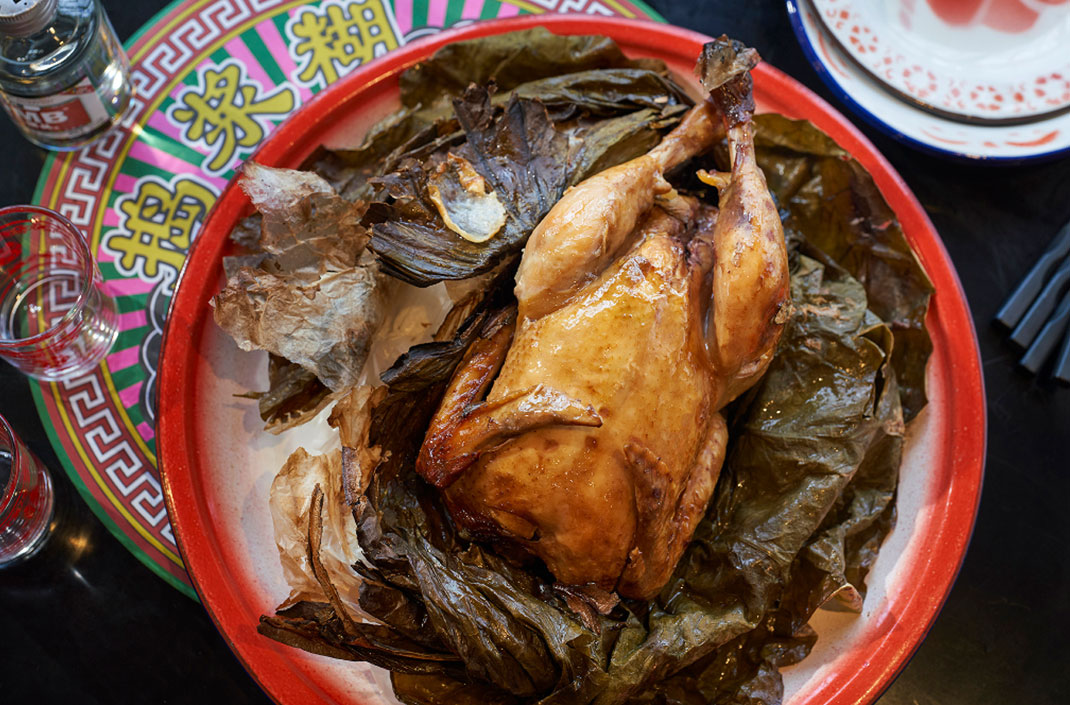
Lotus Chicken By Chef Betty Liu
Owner of Ginger Modern Asian Bistro in Shanghai
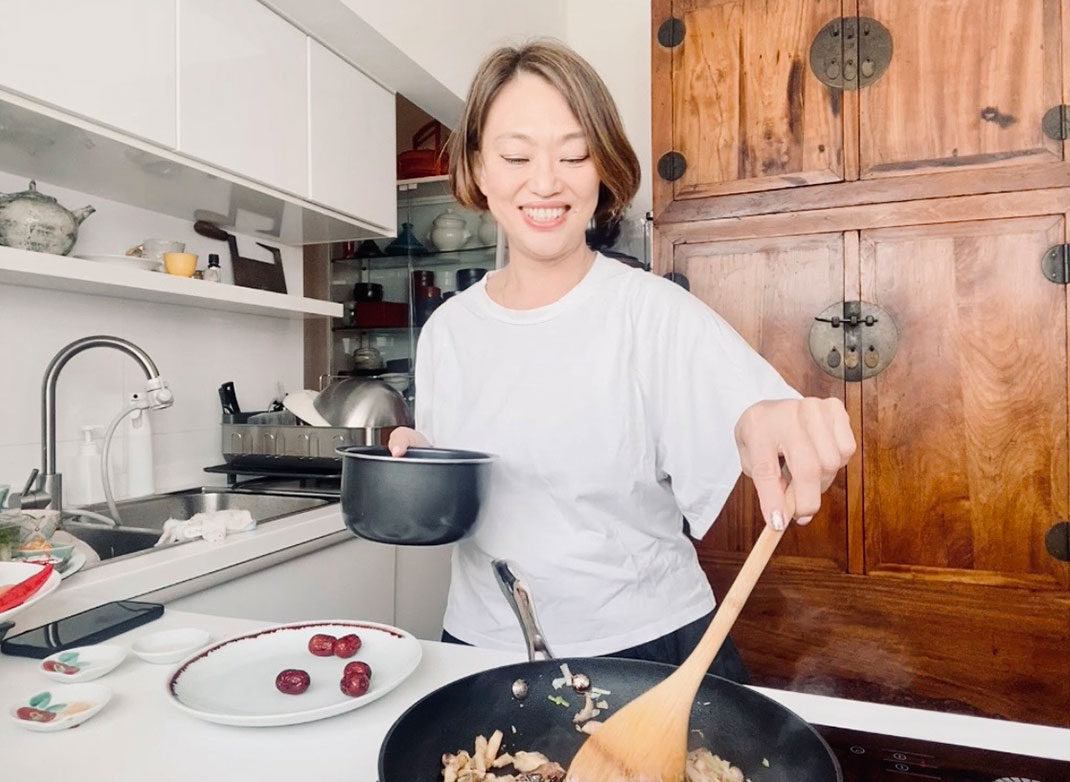
As an avid traveller and seasoned expatriate, Chef Betty’s culinary creations are inspired by her global adventures. Having spent a decade in Tokyo before relocating to Shanghai, she immerses herself in local cultures by attending cooking classes wherever she goes, infusing her dishes with the rich flavours and techniques she encounters.
“Every dish on the menu is one I truly love to eat, all served in a setting that feels deeply personal to me. I guess you could say that every dish in Ginger comes from my heart!”
Serves 6 – 8pax
Ingredients:
Main
- 1.5kg chicken
- Dried Lotus Leaves (soaked & dried before using)
- Baking paper
Brine
- 1 litre water
- 15gm sea salt
Marinade
- 1Tbsp shaoxing wine
- 1Tbsp sesame oil
- 10gm salt
- 1Tbsp light soya sauce
- 1Tbsp dark soya sauce
Smoking
- 1 Tsp black tea
- 1 Tbsp rice
- 2 Tbsp sugar
Stuffing
- 50g chopped leek
- 3 shredded mushrooms
- 30g shredded ham
- 5 red dates
- 1 Tbsp of oil
- Some white pepper
- ½ cup (90g) soaked sticky rice
- 8g sesame oil
- ½ Tbsp light soya sauce
Dip
- 30g fresh ground sesame
- 45g sesame oil
- 3g salt
Instructions:
- For the brine, dissolve salt in water. Brine chicken for 2 hours or overnight to allow chicken to absorb water and some salt. The bird will be juicier after cooking. (optional)
- Pat chicken dry and marinate chicken with ingredients (B) for 30 minutes ~ 2 hours.
- Stuffing: Wash sticky rice and soak in the rice cooker for 30 minutes, add water into the pot to ½ cup water level marking. Sautee leek and ham with oil and sesame oil till fragrant. Add shiitake and pepper for stir for another 3 minutes. Add to the sticky rice and cook.
- Smoke Chicken: Arrange a piece of parchment paper in your wok, add ingredient (B) and place the smoking rack over it, cover with a lid. Turn on heat, let it begin to smoke. Place chicken on the rack, replace cover and smoke for 3 minutes. Turn off heat and keep it in the wok for 5 more minutes and then remove.
- Stuff chicken with (3) into cavity. Secure with toothpick and twine.
- Wrap chicken with a lotus leaf and then wrap another layer of parchment paper. If you can’t find lotus leaf, just use the parchment paper.
- Place on a tray and bake in preheated oven at 100C for 2.5 hours, add a tray of water at the bottom rack of oven.
- Before serving, remove parchment paper and place whole chicken on a large platter, unwrap the lotus leaves to reveal the chicken, if you like to add some colours and decorate the sides with some halved mandarin oranges and red packets.
- Serve hot with the sesame dip.
Ang Ku Kueh by Chef Deborah Ong
Chef and co-owner of Masak Masak in Melbourne

Growing up, Deborah tucked into two very different feasts at each Lunar New Year. “Mum’s side is Peranakan, and would have buah keluak, kari kapitan, babi pongteh,” she shares. “Dad’s side is Hainanese, and would have steamboat and Hainanese chicken rice.”
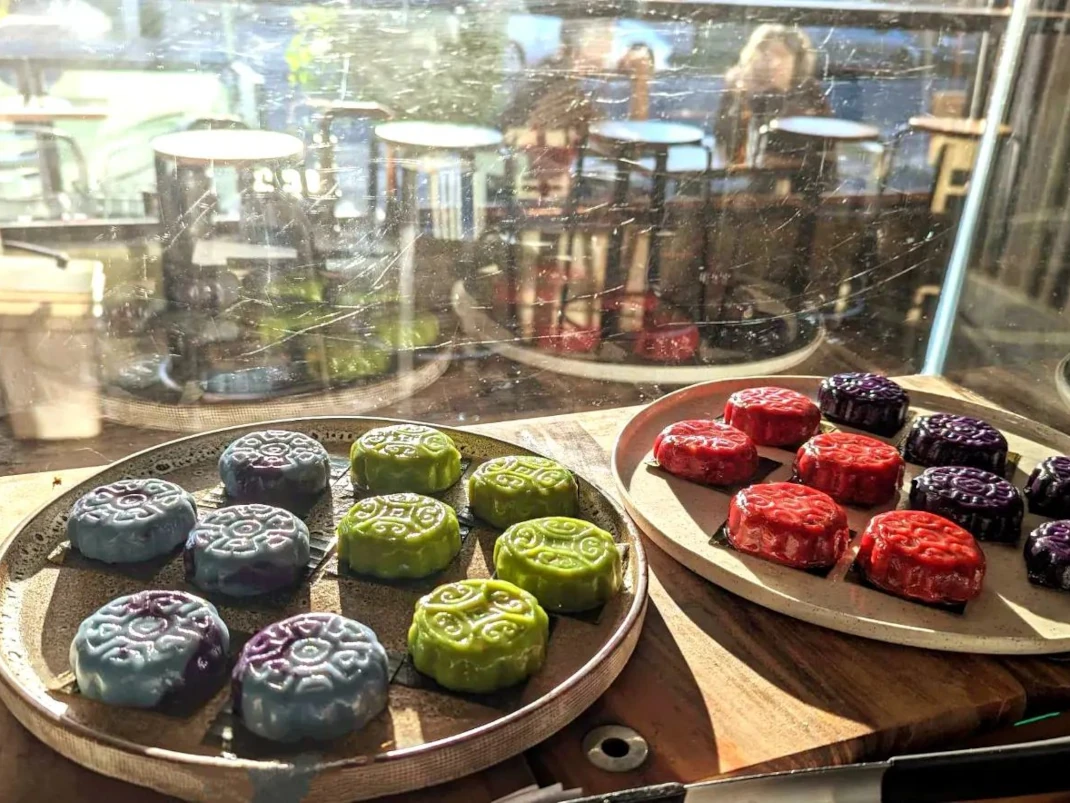
In Melbourne, she and Julien celebrate at home with mostly non-Asian friends from work. For the past couple of years, she has enlisted young colleagues in the production of popiah, kueh pie tee and ang ku kueh. The last of these is a particular favourite, one that she makes fresh every morning at Masak Masak, filled with peanut, mung bean, taro or inti (sweetened coconut).
“Ang ku kueh is the kueh I enjoy making the most because it’s festive and very easy to make. It’s even more fun if you do it with friends.” The process, she says, is like moulding Play-Doh and steaming it – the true spirit of masak-masak captured in a tortoiseshell-shaped delicacy.
Ingredients
For the skin
- 230g glutinous rice flour
- 150g water
- 80g coconut milk
- 30g tapioca flour
- 1 tbsp caster sugar
- 8g red yeast rice powder (or 2-3 drops of dark red food colouring)
- ½ tsp salt
- 130g orange sweet potato (steamed and mashed)
- 25g vegetable oil
For the filling
- 200g split mung beans (skinned)
- 20g pandan leaves (cut into short lengths)
- 80g coconut cream
- 100g caster sugar
- Pinch salt
- 20g oil
You’ll also need
- Kueh moulds (wooden or plastic)
- Fresh banana leaves (cut into rectangles slightly larger than moulds)
- Tapioca starch for shaping
- Extra oil for brushing
Method
- Mix glutinous rice flour and water together to achieve a damp, crumbly texture. Cover and chill overnight (or at an absolute minimum of 4-6 hours).
- For the filling. Soak mung beans in water for 2-3 hours, until plump. Then steam until soft and mash with a fork while hot.
- In a heavy-bottomed pan, on low-medium heat, combine pandan leaves, coconut cream, sugar and salt. Once sugar is melted, add in mashed beans and oil. Continue stirring over low-medium heat for 5-6 mins until the mixture comes together and looks like mashed potatoes. Transfer into a small bowl and cover with cling wrap to prevent a skin from forming.
- For the skin. Sieve glutinous rice flour mix into a large bowl to break up any lumps.
- In a small non-stick pot, combine coconut milk, tapioca flour, caster sugar, red yeast rice powder. Stir constantly over low heat until mixture comes together into a sticky blob. Scrape into the large bowl with the sieved glutinous rice flour and let cool.
- Once cool, add mashed sweet potato and oil to the bowl. Mix until combined and ingredients come together into a ball. Knead together till the dough has the texture and look of plasticine. Adjust with more glutinous rice flour or water if needed. Wrap dough and let rest for 20-30 mins.
- Set up your steamer.
- For kueh production. Take your mould and fill it to the brim with dough. Weigh the dough and divide the number in half. This number is the portion weight for both dough and filling (1:1) for each kueh. Divide both dough and filling into balls of this calculated weight.
- Lightly brush banana leaf rectangles with oil.
- Lightly dust your hands with tapioca starch. Take a ball of portioned dough and flatten it in the palm of one hand. Place a ball of the filling in the middle and wrap the flaps of dough over the top to seal. Be careful to not trap any air in it.
- Roll the filled dough ball gently between your palms to ensure a tight seal. Lightly dust the mould with tapioca starch, then press the ball into the mould with the heel of your palm.
- Invert the mould and tap the handle at a 45° angle on the corner of your work bench to release the kueh. Place the kueh on an oiled banana leaf rectangle. Follow suit with the rest of the dough and filling.
- Place kuehs in steamer, leaving 1-2cm between them as they will expand when cooking. Steam kuehs over medium-high heat for 5 mins, and then briefly lift the lid of the steamer to release trapped steam. Steam for 5 mins more.
- Once kueh is cooked, transfer to a tray to let cool for 2-3 mins, then brush with oil.
Extra Tips
- If you’re using new wooden moulds, rinse off any dust and air-dry a few days before use. Then, generously brush and rub with food-grade oil and let stand in the open. You may have to do this a few times as wood takes on quite a bit of oil.
- If you prefer a peanut filling, pulse 100g of roasted peanuts with 20g of peanut oil, 30g of caster sugar and a pinch of salt in a food processor until you get the texture of wet sand.
- Dough and filling can be made up to two days in advance and stored in the fridge. Wrap dough tightly in cling-film and store filling in air-tight containers.
- Finished kueh is best eaten on the day and should not be refrigerated, as chilling will cause the skin to slowly harden.
Satay by Chef Jolene Sng
Based in Houston, Texas

Former Singapore Airlines stewardess and Development Manager at the National Museum of Singapore, Jolene has always cherished her deep connection to her Singaporean heritage. In 2010, she left it all behind to move to Houston, Texas, with her family and two children. Today, she stays connected to Singapore in the most quintessentially Singaporean way – through her love of food.
“There is so much about Singapore that I miss. From quick service options at the hawker centres to more sophisticated restaurants, I often reminisce about them when we get together with family and friends.”
“One Singapore classic food that I love to make is Satay. These little handheld meat skewers are such a versatile dish. I like to marinate the meat the night before and skewer the meat the next day before grilling them over my Satay grill, which is a long rectangular grill using charcoals.”
“I hope my Satay recipe will help you recreate memories of Singapore!”

Makes approximately 200 Satays
Ingredients:
- 3 1/2 lbs Beef Filet Mignon or Chicken Thighs
- 8 oz Shallots
- 6 cloves Garlic
- 1 1/2 inch slice of Turmeric
- 1/4 inch slice of Galangal
- 4 1/2 stalk of Lemongrass (white portion, sliced thinly)
- 1 1/2 tbsp Coriander Powder
- 1 1/2 tsp Cumin Powder
- 1 1/2 tbsp Tamarind Extract
- 1 1.2 tsp Anise Seeds
- 6 tbsp Sugar
- 3 tsp Salt
- 6 tbsp Vegetable Oil
- Skewers (soaked in water for 20 min)
Basting Sauce ingredients
- 1/3 cup Coconut Milk
- 4 1/2 tbsp Vegetable Oil
Instructions:
- Cut beef and/or chicken into small 1/4 inch cubes and set aside.
- In a food processor, blend the shallots, garlic, turmeric, galangal, lemongrass, coriander powder, cumin powder, tamarind extract, anise seeds, sugar, salt and vegetable oil until a smooth paste is formed.
- Mix the marinade with the meat and allow it to marinate for 3 -4 hours or overnight if time permits.
- Prepare the charcoal grill, use charcoal sparingly as too much heat will burn the Satay easily.
- Skewer the marinated meat and prepare the basting sauce by mixing the coconut milk and vegetable oil together.
- Cook the Satay over the grill, flipping frequently to ensure even cooking and baste it with the coconut milk and oil mixture. Lightly char it, if desired.

Whether you’re hosting a feast or enjoying a cozy family dinner, these dishes capture the essence of Singapore’s rich culinary heritage and bring the spirit of the Year of the Snake to your table.
Here’s to a prosperous and flavourful new year ahead! 🧧🍊