Housing Options
There are four major types of residences in Singapore to consider:
- Public housing (also known as Housing Development Board flats – HDB flats)
- Condominiums
- Landed properties
- Serviced apartments
Public Housing (HDB Housing Estates)
The term ‘public housing’ might carry certain connotations elsewhere, but in Singapore, it’s quite the opposite!
Built by the Housing and Development Board (HDB), these flats are home to around 78% of Singaporeans (SmartWealth Singapore). Renting one is a wallet-friendly way to experience everyday life like a local. You’ll be living among Singaporeans from all walks of life, in lively neighbourhoods full of charm, convenience and community.
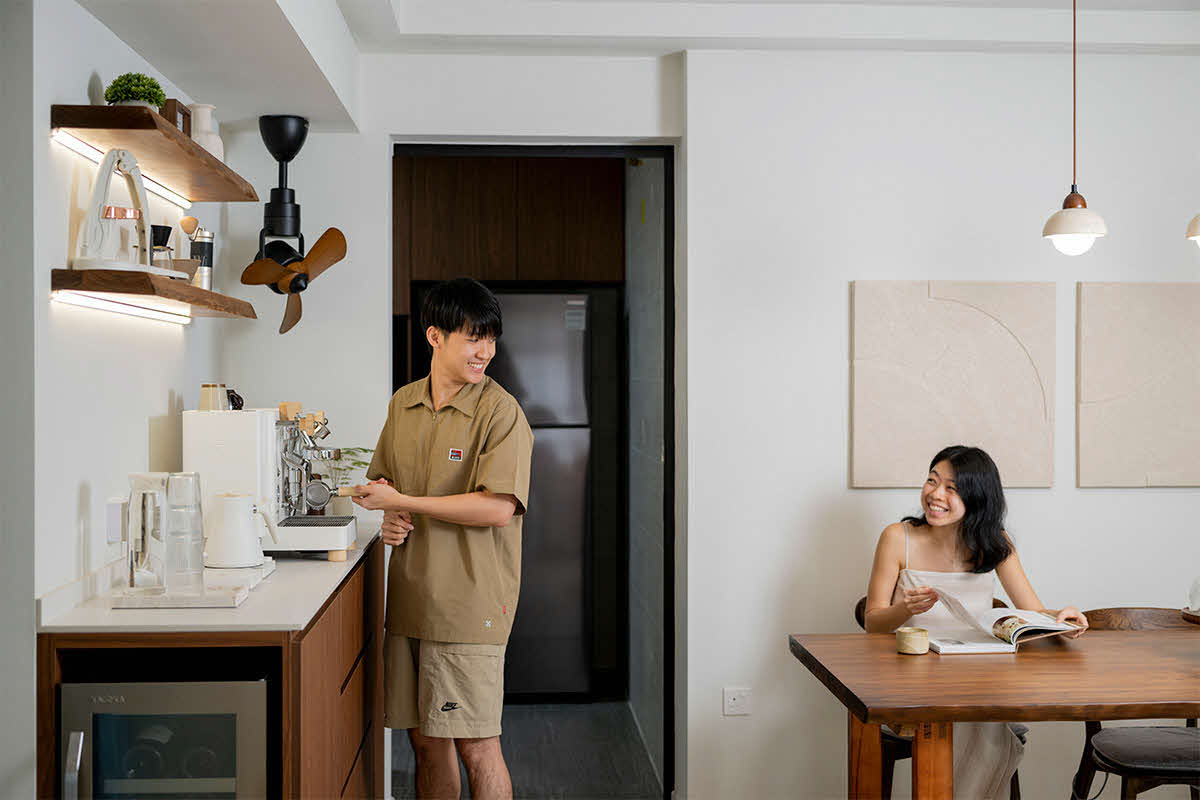
HDB flats come in all shapes and sizes, from cosy one-bedroom units to spacious three-bedders. Some even have executive layouts that offer extra space for a study, balcony or a larger living area. These are great if you work from home or simply enjoy having more room to relax.
You might also come across charming older HDBs with unique layouts, such as two-storey maisonettes that are a rare find these days. Rental prices can vary depending on whether you’re renting a single room or the entire unit. Location and condition usually have the biggest impact.
Curious about how much to budget? You can explore historical median rates by district here.
HDB flats are designed with convenience at their core, often located near hawker centres, parks, markets, malls and public transport. Many are also close to healthcare facilities and scenic green corridors. They are just as well-connected as private housing and offer one of the most authentic ways to experience everyday life in Singapore.
Private Housing (Condominiums / Private Apartments)
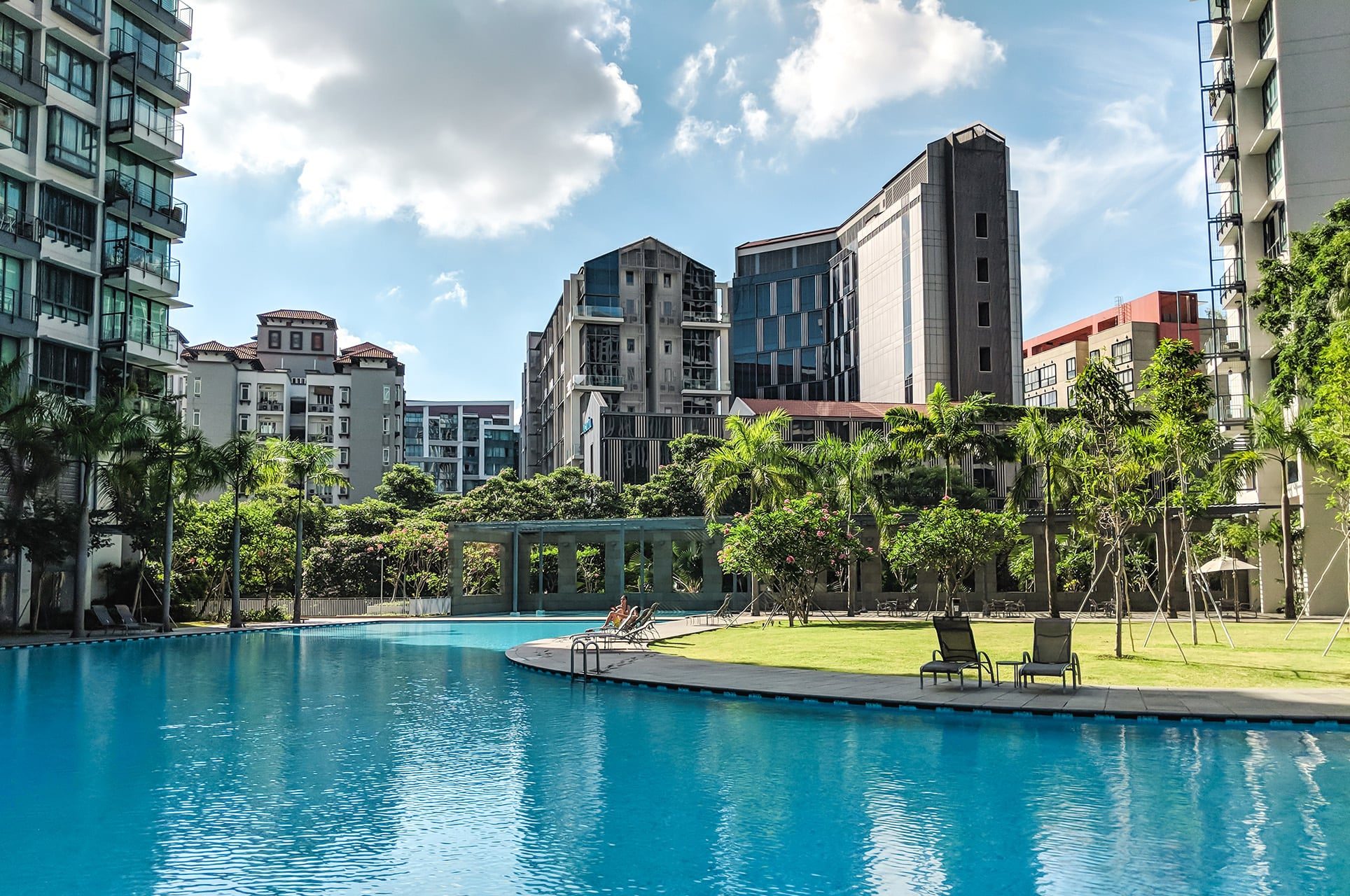
Condos are a top pick among expats in Singapore, thanks to added security, pools, gyms, tennis courts and even function rooms.
Popular spots include buzzing areas like Orchard and Bukit Timah, quieter central neighbourhoods like River Valley and Newton, and scenic waterfront enclaves such as Tanjong Rhu and East Coast.
Monthly rent for a 3-bedroom condo in the city starts at about S$5,000 (US$3,700) and can go up to S$15,000. On the city fringe, you’ll find places ranging from S$4,000 to S$7,200 (US$2,900–5,400). If you’re after luxury homes in upscale neighbourhoods, be prepared to pay up to twice the usual rate.
Studios range from S$1,300 to S$7,000 a month (US$960–5,170), but sharing a bigger place with housemates often gives you more space for less cost.
Serviced Apartments and Co-living options
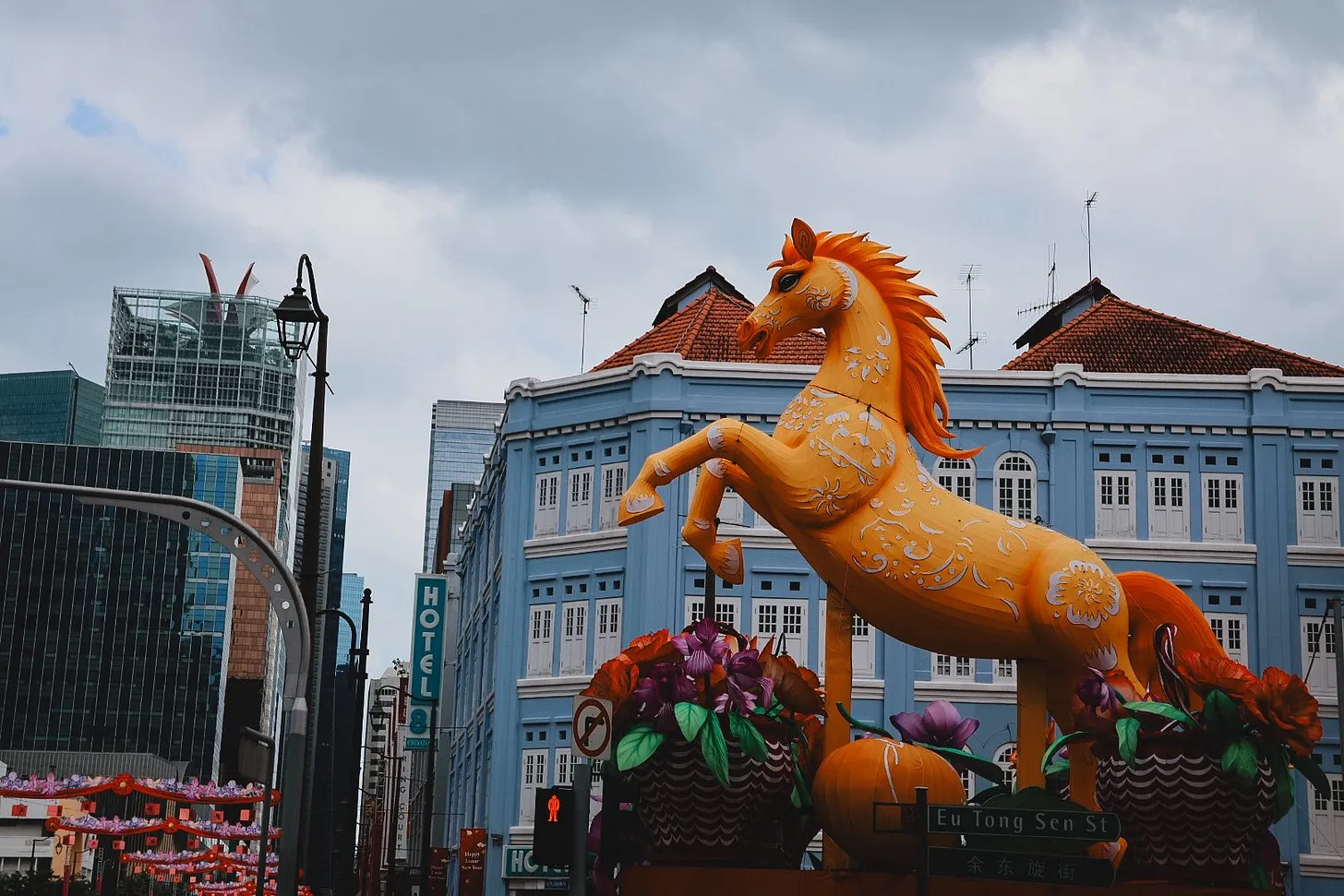
Serviced apartments are a great option if you’re staying for less than a year. Usually found in the city centre or charming historic areas, they come fully furnished and offer hotel-style perks like housekeeping, concierge, and even babysitting.
Prices for a studio typically start around S$2,800 and can go up to S$8,000 (US$2,100–6,000), depending on the location and facilities. Larger, premium units will cost more.
For solo travellers on the move, co-living offers a more affordable alternative with spaces designed for socialising and community. Take a look here:
Landed Properties
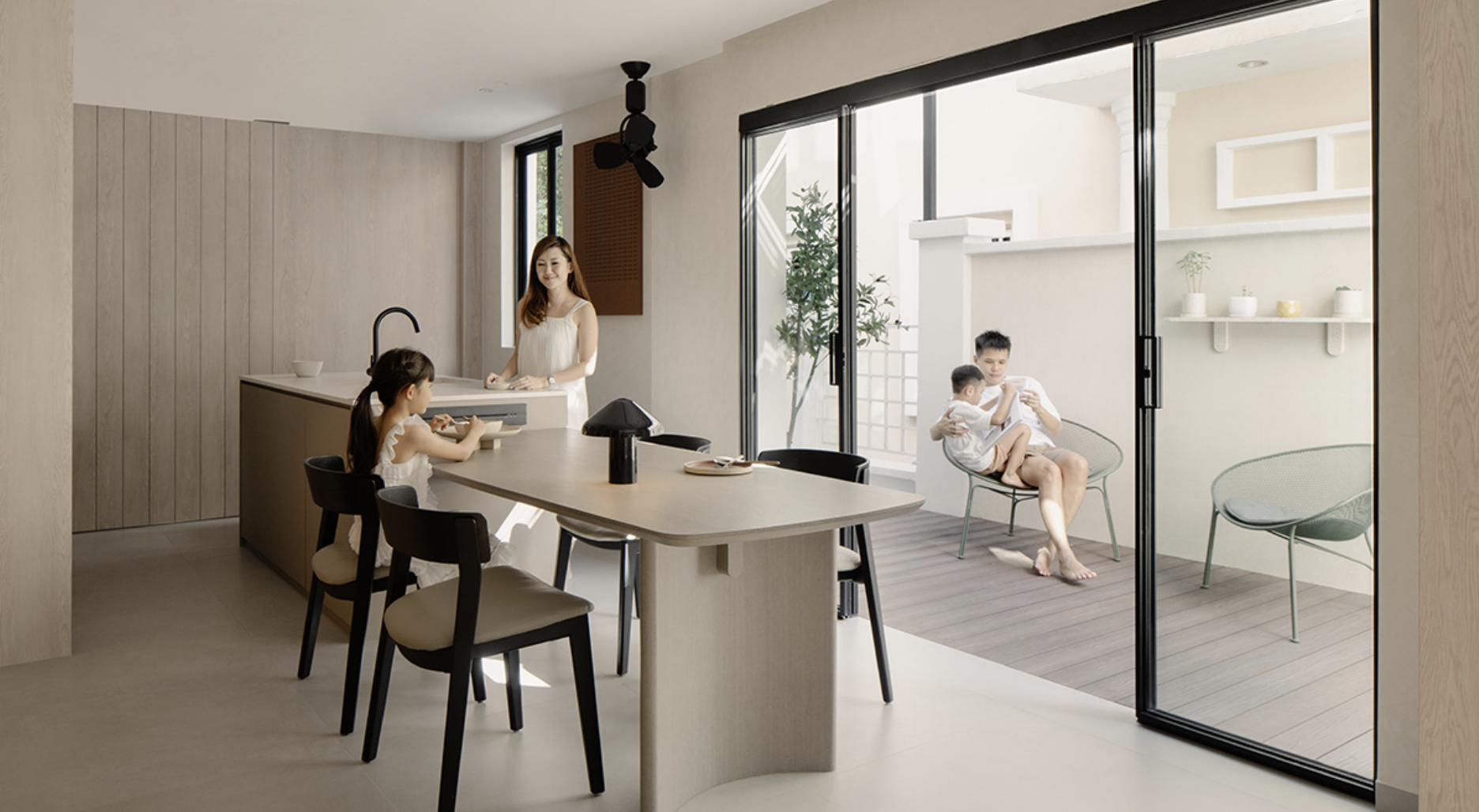
For expats with larger families or anyone craving extra space and privacy, landed properties offer a wonderful lifestyle with generous gardens, room for outdoor activities, and peaceful surroundings.
Living in a detached bungalow in a central location means enjoying plenty of space and comfort, with monthly rents typically ranging from S$18,000 to 28,000 (US$13,000–20,200). A 4-bedroom bungalow is usually available for around S$15,000 to 27,500 (US$10,800–19,900). Semi-detached and terraced houses offer a cosy alternative, renting for approximately S$8,000 to 13,000 (US$5,700–9,800) per month.
Popular neighbourhoods like Serangoon Gardens, Bukit Timah, and Holland Village attract many expat families thanks to their excellent international schools and family-friendly vibe.
Of course, all these benefits come at a price, but for those who value space and lifestyle, landed homes provide a rewarding living experience.
Essential Things to Know Before You Start
To rent any property in Singapore, you must be a legal resident — this includes being a Singapore Permanent Resident or a holder of long-term passes such as an Employment Pass, S Pass, Work Permit, Student Pass, Dependent Pass, or Long-Term Social Visit Pass. For everything about work passes, refer to our article here.
Tourists on short-term visas are not permitted to rent residential properties.
Once this legal residency requirement is fulfilled, consider the following key points:
Public Housing
- You can only rent an HDB flat or room if the landlord has approval from HDB. Ask to see the approval letter during your viewing.
- If you are renting a room, the flat must meet the official rental quota for non-citizen tenants.
- The minimum lease is 6 months and can go up to 2 years.
- Subletting is not allowed, so make sure you are renting directly from the approved landlord.
Private Housing
- Leases must be at least 3 months, but landlords often prefer contracts of 1 to 2 years for greater stability.
- Prices vary greatly depending on the neighbourhood you’re looking at. Refer to our neighbourhood guide to narrow down your options.
- Subletting private property is legal, subject to the landlord’s approval. There are also minimum durations and occupancy limits, which you can check here.
How To Access Rental Properties
A month or two before you land in Singapore, it’s a good idea to start thinking about what matters most in a home, including:
- Budget: Include rent, utilities, and deposits.
- Lease Duration: Standard leases range from 12 to 24 months.
- Space Requirements: Number of bedrooms, size of the unit.
- Furnishing Preferences: Fully furnished, partially furnished, or unfurnished.
- Location: Proximity to work, schools, and amenities.
- Accessibility: Distance to public transport, roads, and essential services.
- Neighbourhood: Safety, community vibe, and nearby conveniences.
To get a feel for prices and what’s out there, start browsing online property sites. They come with handy tools like map views, market trends, and rental comparisons to help you explore your options:
It’s best to wait until you’re in Singapore to sign anything. This way, you can view the place in person and avoid any surprises from listings that don’t quite match reality.
Finding a Trustworthy Agent
When looking for a place to rent in Singapore, you can search on your own or work with a property agent. Getting help from an experienced agent can make the process smoother as they’ll know how to get you a good deal and handle all the paperwork too.
Many landlords also prefer going through an agent rather than managing viewings themselves. A good way to start is by checking in with your company’s HR team, asking around among colleagues or other expats, or joining our community portal to connect directly with others who’ve been through the process — just sign up here.
Pro Tip: Before engaging an agent, always verify their credentials, awards, and past transactions on the Council of Estate Agencies (CEA) Public Register.
Since most agents access the same property listings, it’s usually best to stick with just one. Or, if you do engage a few, make sure they focus on different neighbourhoods or types of homes. The clearer you are about your budget, must-haves and nice-to-haves, the easier it’ll be for your agent to find the right fit and save everyone time.
There’s no fixed commission rate, as it can depend on the deal’s complexity or urgency. But here’s a general idea of what you can expect:
Red Flags to Watch Out For
It’s always good to stay alert when renting a home, especially if you’re new to Singapore. Here are a few warning signs that something might not be quite right:
- Pushy agents: If someone’s rushing you to sign a lease without giving you time to think or see the full picture (like the property’s past condition), it’s okay to walk away. You should never feel pressured.
- Double-dealing: Agents should only represent one party, either you or the landlord. If it feels like they’re playing both sides, or not putting your needs first, that’s a red flag.
- Vague contracts: Contracts should be clear and upfront about commission and responsibilities. The Council for Estate Agencies (CEA) has standard templates that agents should follow. If the terms feel murky, don’t be afraid to ask questions.
- Handling money: Agents aren’t allowed to collect rent or deposits on behalf of the landlord. All payments should go directly to the landlord or through proper channels. If an agent offers to “hold” your money, be cautious.
- Fake agents: Unfortunately, scams do happen. Watch out for people pretending to be agents, especially those asking for payment before you’ve even seen a property. Always check their licence on the CEA Public Register.
Trust your instincts; if something feels off, it’s worth taking a step back and double-checking before you commit.
Next Steps to Renting a Home in Singapore
Hooray! You’ve ticked off your checklists, done your research, and found the right agent — now what?