By SGN | 17 Jul 2024
Although Alvin is fully immersed in Peranakan culture today, he didn’t always feel secure or comfortable in his identity. “I grew up in a time where being Peranakan was looked down on. People called me ‘eleven thirty’ in Hokkien,” he shares, the expression implying that he was ‘shy of twelve o’clock’, or not fully Chinese.
As a child, Alvin often felt out of place among his peers. “I spoke English, they spoke Mandarin. I watched Hollywood movies, while they loved Hong Kong dramas. I knew I was different, but I was clueless about Peranakan culture,” he recalls.
During the 1960s and 70s in Singapore, the government launched a policy of bilingual education. Besides English, all Chinese Singaporeans were encouraged to learn and speak Mandarin, one of the country’s four official languages.
This feeling of exclusion was heightened when he went to watch a Peranakan play with his parents, staged by the Gunong Sayang Association.
“They were laughing, crying, giggling, and thoroughly enjoying themselves. I remember feeling so lost as I did not understand the Baba Malay language, and there were no subtitles,” Alvin admits.
“Luckily, I managed to grab a VHS copy of the play, and I watched it repeatedly, completely enthralled by the language. I noted all the nuances of the Peranakan culture – the relationship between mother-in-law and daughter-in-law, the small-mindedness of Peranakan men when their wives oversaw household affairs.”
This formative memory left teenage Alvin with a burning desire to immerse himself in his culture – which manifested in the form of antique collecting.
The accidental museum owner

Alvin never imagined becoming a museum owner and curator, let alone turning his home into one. But as his collection of Peranakan antiques grew, he stumbled upon a terraced house in Joo Chiat, the historic Peranakan enclave.
At lunch with a friend who had moved to Joo Chiat, Alvin remarked how nice it would be to live in the neighbourhood. “He mentioned that his cousin was selling a property, and asked if I was keen to take a look. I visited the house the next day, and the deal was sealed,” he says.
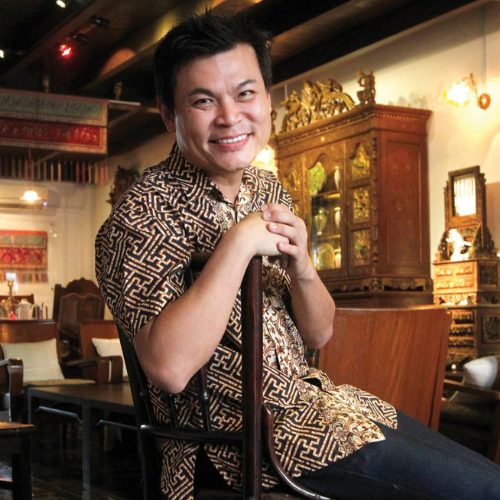
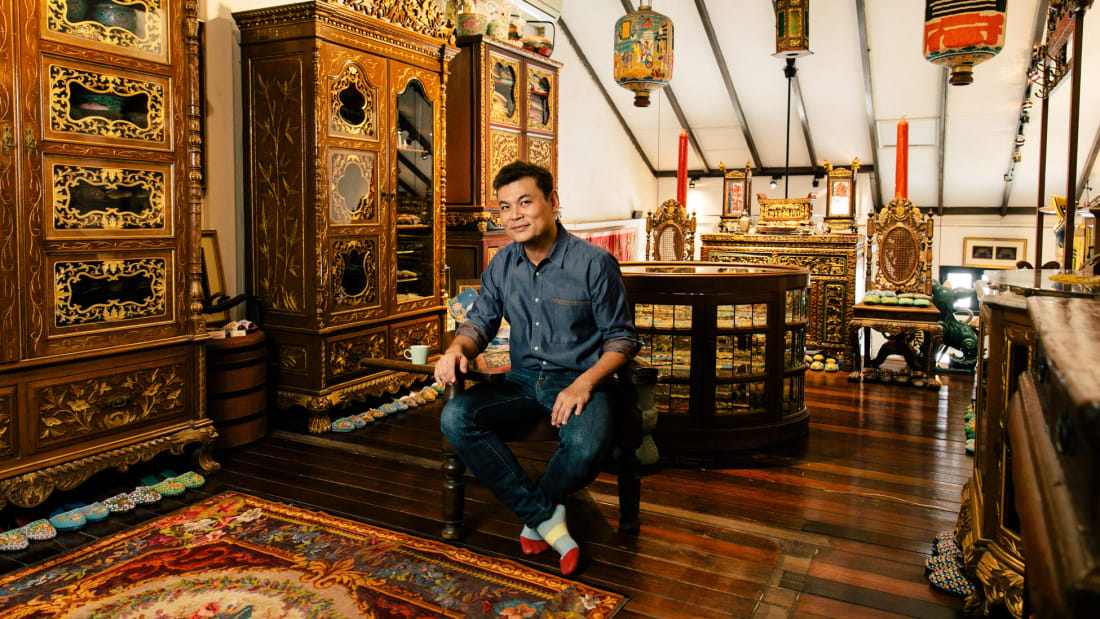
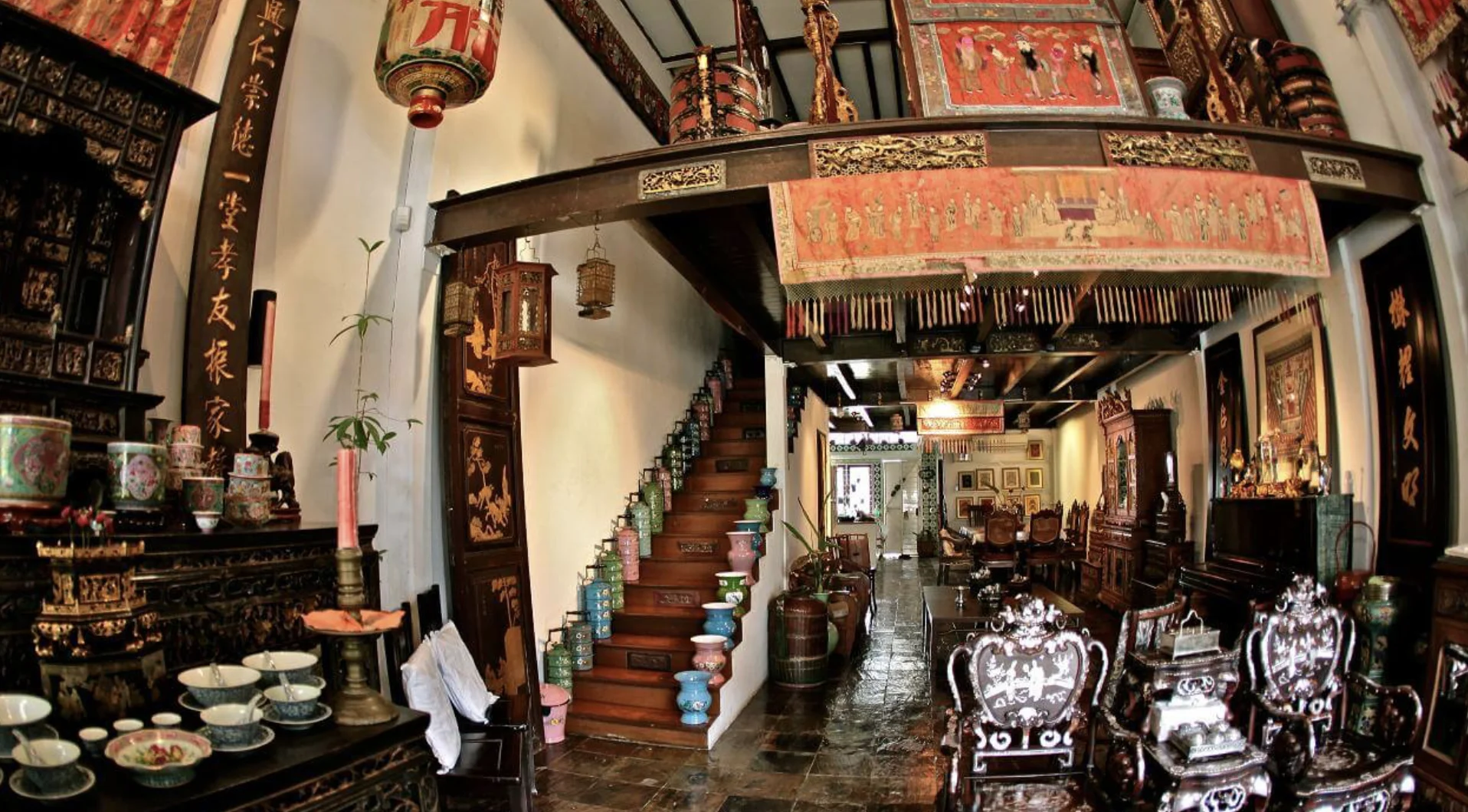
After renovations, Alvin started moving his antique collection in, mindfully curating the space in a manner reflective of an authentic Peranakan house. “Mother-of-pearl chairs at the front of the hall tells you that we are Chinese, with some European influences. The second level of the house, where photography is prohibited, contains intimate artefacts like wedding pieces, fashion, and jewellery.”
The Intan sets itself apart from other heritage homes in one significant aspect.
“It’s the most unique museum in the world because the owner is still alive, and continues to reside here,” Alvin says, contrasting The Intan with other house museums like Bangkok’s Jim Thompson House Museum and the UK’s Sir John Soane’s Museum, where the owners have passed on.
Unlike typical museums, The Intan lacks glass showcases, signage, or audio guides. Alvin likens the experience to scuba diving, saying, “At The Intan, you can debate, discuss, and explore what Peranakan culture is. We’re constantly pushing the boundaries of what it means to be a museum because we offer so many immersive experiences like private dining, tea, jewellery making, wellness sessions, popiah making, even sound baths!”
Alvin attributes The Intan’s commercial sustainability to these efforts, which were born out of his desire to delight customers. “I had no five- or ten-year plans for The Intan, but I knew I wanted to deliver a stellar end-to-end visiting experience. I learned this during my time at Singapore Airlines, when I picked up critical skills related to operations, branding, and customer service,” he says.
A treasure hunt spanning decades
Alvin’s vast collection of Peranakan antiques began nearly 40 years ago. But his journey has been far from smooth. “My experience wouldn’t be complete without my fair share of mishaps. I’ve bought fakes or pieces that weren’t even Peranakan,” Alvin shares.
“My very first piece, a planter’s chair, turned out to not be Peranakan, even though the seller convinced me that it was,” he chuckles. “I later learned that these chairs are often a fixture in Peranakan homes. In fact, my grandfather had one that he would often lie on after a long day’s work.”
Besides his own collection, Alvin often has people reach out to him to willingly hand over family heirlooms. He will never forget the Indonesian-Chinese woman who sold him an exquisite porcelain piece shortly before her untimely death, or the elderly gentleman who passed Alvin a series of family portraits to safeguard because he had no family to hand them down to.
Eventually, he hopes to pass on much of his collection to overseas museums and collectors, believing that this could even serve to strengthen bilateral relations with other countries. “Imagine if Peranakan beaded shoes ended up at The Louvre, or if Chinese museums took an interest in my porcelain pieces.”
While collecting antiques might seem like a poor investment – they’re easy to buy but hard to sell – Alvin has found it to be deeply rewarding. “The friends I’ve made, the smiles I’ve seen, and the memories I’ve created make antique collecting the best investment I’ve ever made,” he says.
Taking The Intan online
During the COVID-19 pandemic, the Singapore Tourism Board approached Alvin to conduct virtual museum visits. While the idea of people paying for an online experience baffled him, he decided to take the plunge.
However, the first couple of virtual sessions proved to be a steep learning curve. “I wasn’t confident on camera. People didn’t laugh at my jokes. I often had to wake up very early or stay up late to accommodate virtual visitors from the USA and Europe. I was about to give up,” he says.
Eventually, Alvin found his stride. As public interest in his online tours surged, he started presenting to groups of students and the elderly.
“I ate nonya kueh on camera and described the tastes and textures. I even took song requests, and played it on my piano,” he recalls.
These actions struck a chord with the elderly, whose caregivers provided glowing feedback. Some even danced along to his songs!
Courting local and international attention
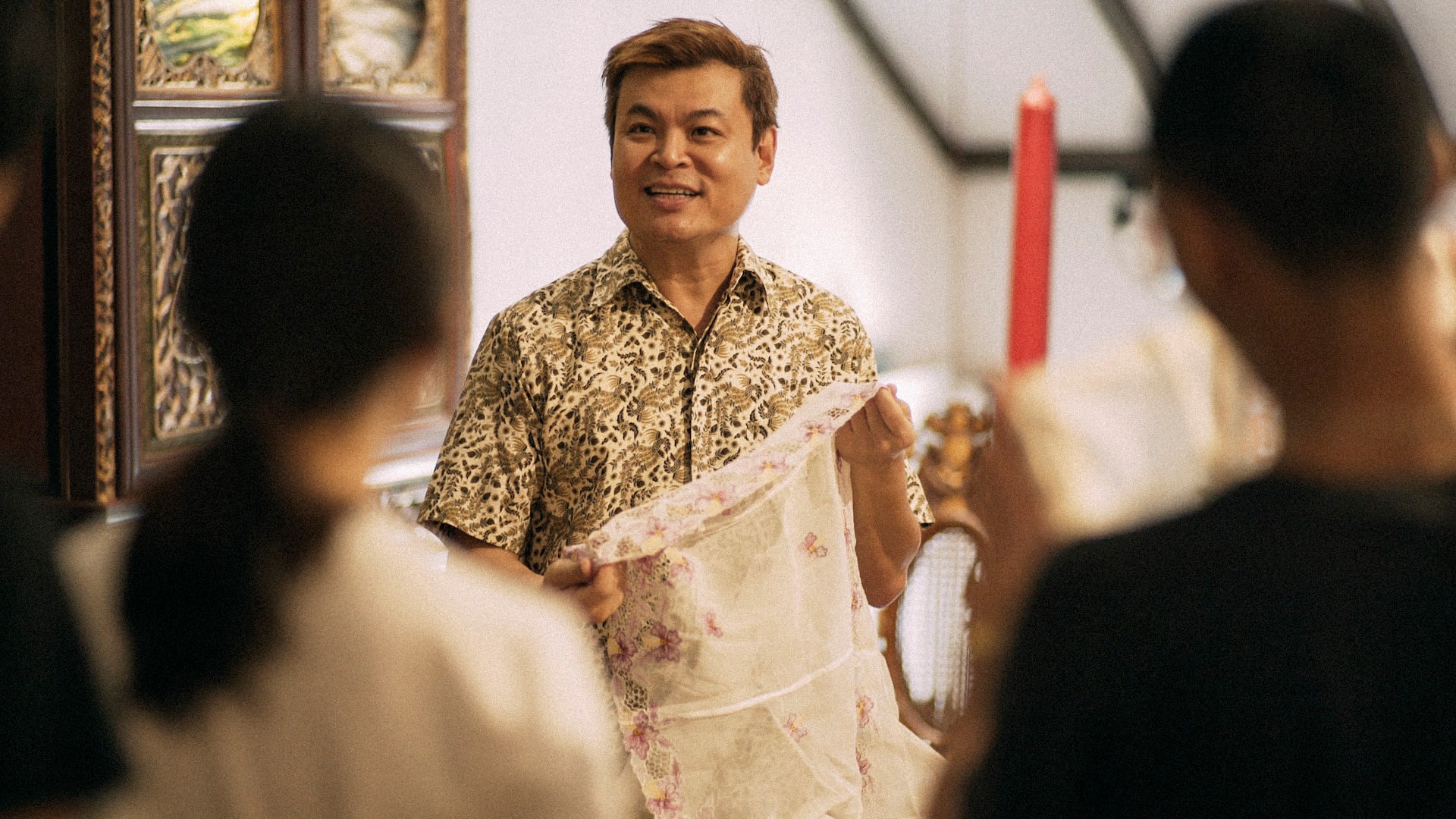
Since its inception in 2010, The Intan has received prestigious accolades that catapulted the museum to greater visibility and success. These include Best Tour Experience at the 2016 Singapore Tourism Awards and Best Overall Experience at the inaugural Museum Roundtable Awards in 2011.
The Intan boasts an impressive client list, with brands like Raffles Hotel, Mandai Wildlife Reserve, and Jewel Changi Airport. The museum has appeared in Singapore Airlines’ iconic safety video and on the giant screens of Suntec Singapore Convention & Exhibition Centre, as well as collaborating with Starbucks to launch a limited-edition merchandise collection depicting old Peranakan shophouses.
Through partnering the Singapore Tourism Board, Alvin has also had the opportunity to bring The Intan to international audiences. “I’ve been to Paris, Barcelona, Shanghai, Amsterdam, and Vegas! We’ve done exhibitions, cooking demonstrations, and so much more,” he fondly reminisces.
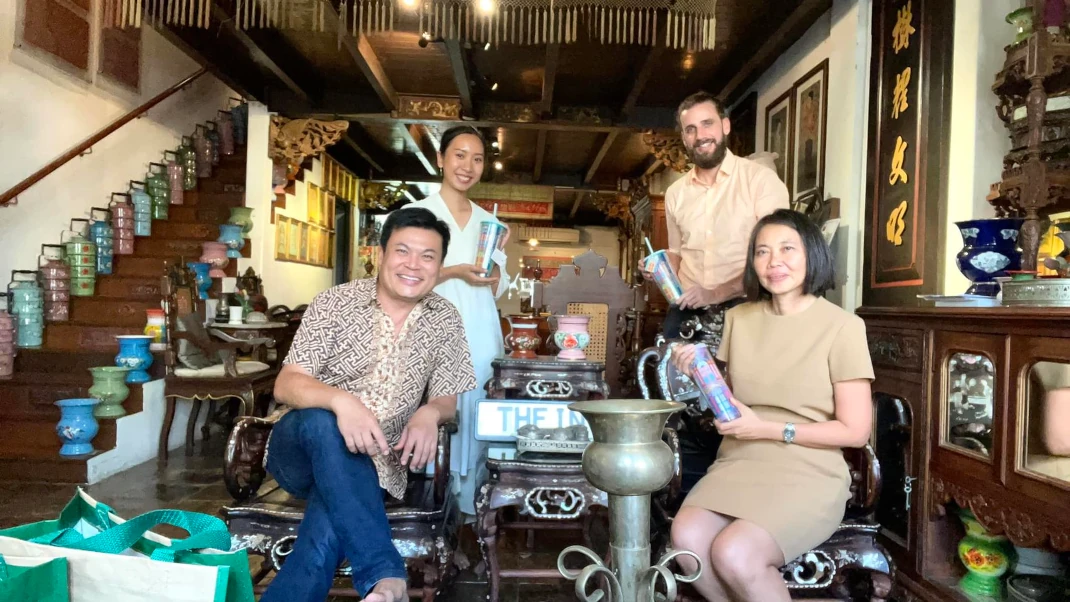
Over the years, Alvin has hosted several luminaries at The Intan, like the Ambassadors of Japan and France in 2023. “I must be well-dressed and keep the house clean, because you never know who will show up. On two separate occasions, I’ve had our former President Tony Tan and Madam Ho Ching drop by without their security details!”
A labour of love for the community
The Intan is entirely volunteer-run, Alvin says. There is no government or corporate funding, and no board of directors to answer to. “Every step of the way, I am the one making all key decisions. This includes creating new programmes and initiatives, bringing in new artefacts, managing finances, volunteers, and, most importantly, managing myself.”
The only full-time employee is Alvin, who is always looking for new volunteers. “If you have a passion for copywriting, creating content, or just have a crazy idea that you want to execute, I’m always down to try something new,” he proposes.
Nowadays, Peranakan culture is wholeheartedly embraced, a far cry from what he experienced in his youth. Alvin even routinely encounters people who either want to become Peranakan or claim to have some Peranakan ancestry.
“At the end of the day, I’m not interested in converting anyone or turning them Peranakan. My only wish is to contribute to the wider community by using Peranakan culture as the vehicle.”