By SGN | 29 Apr 2024

Zhihan’s heart for social impact traces its roots back to his childhood, when he witnessed the struggles of his grandmother first-hand.
“My grandmother was illiterate and worked mainly as a nanny,” Zhihan shares. “I still remember her bringing me along to look for work in Chinatown. Our family wasn’t doing well financially, so she desperately needed a job.”
After hours and hours under the sweltering sun, Zhihan’s grandmother eventually managed to find a job as a dishwasher in a Korean restaurant.
The salary wasn’t high, but it paid the bills. However, after years of hard work, things took a turn for the worse. “My grandmother contracted lung cancer and passed away shortly after,” Zhihan says, “It affected me deeply.”
“My grandmother was someone with a lot of potential,” Zhihan says, “But unfortunately, the Singapore that she grew up in didn’t have the right opportunities for her.”
The ordeal left Zhihan questioning the conventional Singaporean career path. “I don’t want to wake up in the morning one day at 50 or 60 years old, wondering: ‘What have I done with my life?’”
From volunteering trips to start-ups
Fuelled by a desire to make an impact, Zhihan immersed himself in social work to create opportunities for individuals, much like his grandmother, who possessed immense potential but lacked the means to realise it.
This drive led Zhihan to actively participate in volunteering trips to Thailand and Laos during his days at the National University of Singapore (NUS).
He also volunteered at the Singapore Buddhist Lodge and played a leadership role in organising youth volunteering projects supported by the National Youth Council.
However, Zhihan soon recognised the limits of such temporary one-off projects.
“I revisited the village in Laos where we had built a library during a volunteering trip, only to find that it wasn’t in use due to disputes within the community,” Zhihan reveals. “It felt all the time and money I spent had been for nothing.”
In search of more sustainable, long-term solutions, Zhihan applied for the NUS Overseas Colleges (NOC) entrepreneurship programme.
Overseas social entrepreneurship

During his time with the NOC programme, Zhihan embarked on diverse experiences, from interning at a biomedical startup to being part of an orchestra and organising social entrepreneurship programs in Stockholm.
“I helped to organise these events because I wanted to learn as much as I could about social entrepreneurship,” Zhihan shares. “Witnessing the impact of these initiatives and the passion of the individuals involved truly inspired me.”

Following his stint in Sweden, Zhihan continued his exploration by undertaking another NOC opportunity, this time in the rural outskirts of Bangalore, India.
There, he observed the remarkable transformation of youth who rapidly acquired skills for various job roles such as data entry in just seven or eight months.
“I watched these young men and women transform their lives in such a short span of time,” Zhihan recalls. “They went from being illiterate to securing jobs that paid them above the minimum wage, enabling them to vastly improve their families’ lives.”
This experience inspired Zhihan to co-found the social enterprise BagoSphere to empower others with similar opportunities for growth and employment.
“To solve or eradicate poverty, we must educate young people for the future of work,” Zhihan says.
The birth of BagoSphere
BagoSphere was founded in 2013 in Bago, a small city on the island of Negros in central Philippines.
But why the Philippines? “My co-founders were already deeply involved in volunteering there,” Zhihan explains, “Besides, the Philippines has an English-speaking population, a young demographic, and a demand for entry-level talent.”
Just as nurturing the Bago tree (the plant after which BagoSphere was named, known as melinjo in Indonesia) fosters growth, Zhihan envisions BagoSphere as a platform to cultivate the potential of youth in Southeast Asia. “We want to ensure that they are holistically healthy and thrive in every aspect,” he says.
BagoSphere empowers rural and underserved youth by building confidence and human capabilities through training and community support to secure stable employment.
Through partnerships with companies like Grab, Alorica, Negros Women for Tomorrow Foundation, and Digital Divide Data, BagoSphere opens doors to opportunities that may have otherwise been out of reach.
With a commitment to training 1,000 to 2,000 students annually, the firm offers youth the support and skills needed to thrive in today’s competitive job market.
Human capabilities over technical skills
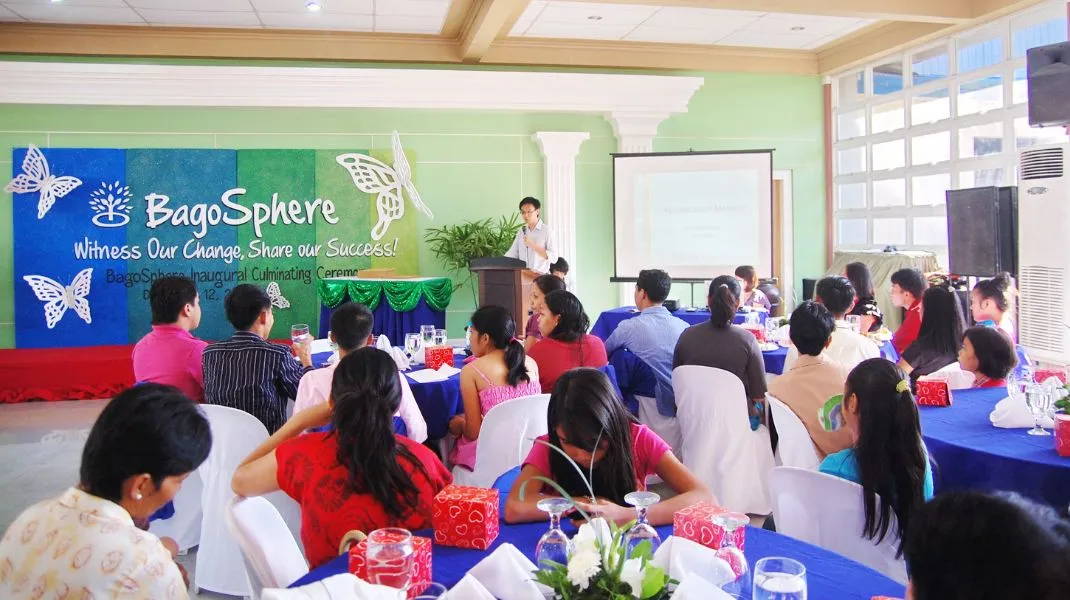
What sets BagoSphere apart from traditional corporate training is its emphasis on cultivating human capabilities over technical skills.
This distinction is especially vital today, where young people overwhelmingly grapple with the rising cost of living, self-doubt, and the continuously changing nature of jobs.
“Many young Filipinos suffer from low self-esteem due to the lack of parental and societal guidance,” Zhihan explains. “The education system, like in many other parts of the world, continues to focus on rote learning.”
“It does not help that the country’s main export is people,” Zhihan continues. “With mothers and fathers often working in places like Singapore and Saudi Arabia, their children’s fundamental needs for guidance, love, and connection are often unmet.”
This lack of nurturing can profoundly impact young Filipinos’ confidence and outlook on life, as well as their job prospects. Moreover, Zhihan found many employers frustrated by their lack of critical thinking skills, values, and resilience.
“The answer to addressing youth unemployment is not by having more technical skills, but by fostering and building a strong foundation in human capabilities,” Zhihan emphasises.
Building talent by developing career pathways
BagoSphere’s approach to developing talent is structured around three distinct programmes, each tailored to a different stage of career development.
The Aspiring Professionals programme helps unemployed youth secure jobs by working closely with employer partners to train and match them with suitable roles.
Next comes the Emerging Professionals programme, which provides coaching and training for young employees as they navigate the early stages of their careers.
“In many companies, the onboarding process tends to be very transactional. It often only involves handing out handbooks and standard operating procedures,” Zhihan remarks.
“The Emerging Professionals programme fills the gap by focusing on individuals’ aspirations and challenges, fostering self-awareness and confidence in their new roles.”
Finally, the Grounded Leaders programme is intended for professionals at a later stage in their careers seeking to improve their leadership skills.
Not always a smooth road ahead
Navigating through challenges, BagoSphere faced its share of setbacks, especially during the pandemic, when businesses across the board were significantly impacted.
“We lost quite a lot of our revenue,” Zhihan shares, “It was so bad that we had to close some of our training centres. We were going to open a new one in Metro Manila in 2020, but it didn’t happen due to COVID-19.”
In the face of adversity, Zhihan’s team remained resilient. They restructured BagoSphere and pivoted to adapt to the challenges brought by the pandemic.
“We decided to transform into a remote-based company to stay productive and run our programmes online,” Zhihan explains. “While some programmes are still in person, we’ve managed to keep a lot of them going virtually.”
While primarily working from Singapore since the pandemic, Zhihan frequently travels back to the Philippines to oversee BagoSphere’s operations and ensure its smooth progress.
The future of BagoSphere
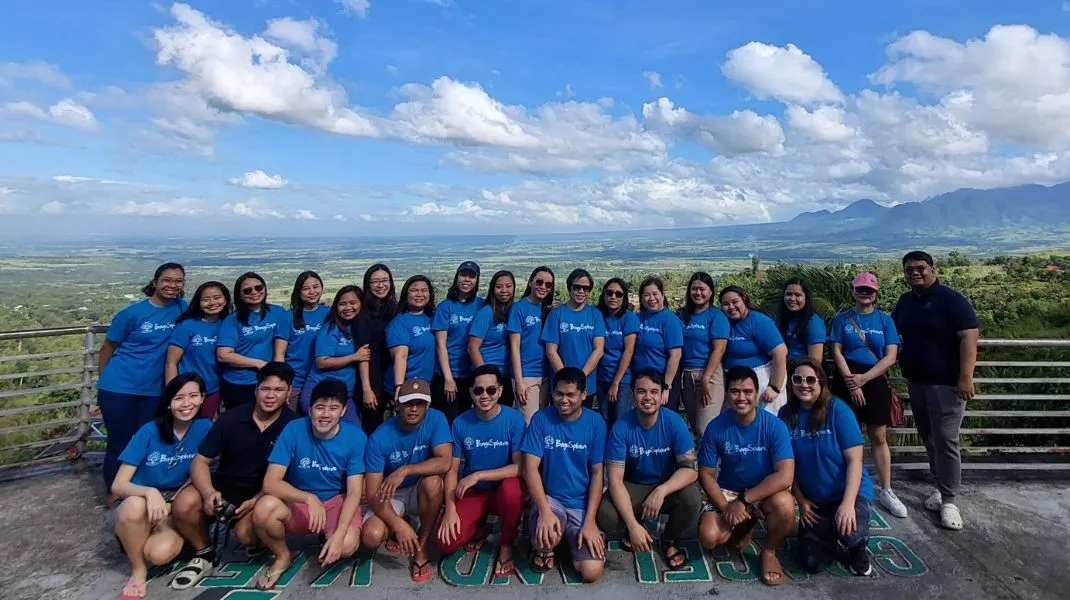
Though an engineering undergraduate, Zhihan didn’t pursue a conventional engineering career. Instead, he sees himself as an engineer of a different kind.
“While others engineer mechanical, aerospace, civil, or environmental solutions,” he explains, “I engineer human transformation.”
The Philippines is just the beginning for Zhihan. He envisions expanding BagoSphere’s reach to other ASEAN countries such as Malaysia and Indonesia. In fact, he is currently working with a client in Cambodia and exploring partnerships with a Family Service Center working with low-income households in Singapore.
Zhihan’s vision is grounded in the belief that the future of work is human. He stresses that the worldwide frontline workforce of 2.7 billion is undergoing unprecedented change due to automation and AI.
“At the end of the day, what does it mean to be human?” Zhihan muses. “We know what makes a life meaningful beyond just survival; it’s human connection and service to others. Ironically, the more embedded technology becomes in our lives, the more we need to embrace our humanity.”
“That’s why the most powerful technology of our era isn’t AI,” he emphasises, “but rather our ability to harness it with our human minds.”
“Let’s not lose sight of our humanity and become mere automatons in AI’s shadow,” Zhihan concludes. “Remember, we’re all humans, not just numbers on a spreadsheet.”
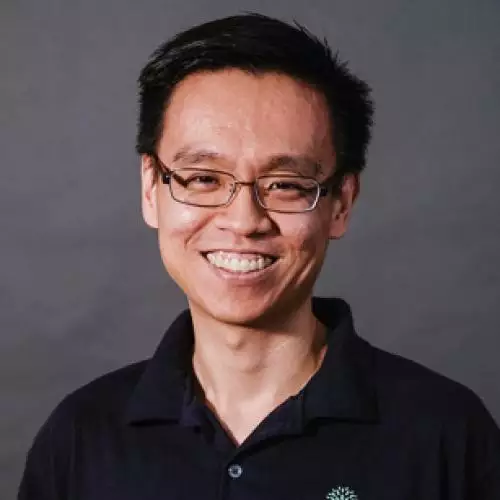
Meet Zhihan
Zhihan is the co-founder and Group CEO of BagoSphere, a school that develops frontline workers with mindsets, skills & human capabilities.
Connect with him here.