By SGN | 9 Apr 2026
- The Pass, launched in 2021, will be replaced by the ONE Pass (AI and Tech) track starting 1 Jan 2027. This new work pass is a five-year work pass, renewable for five years each time, matching the duration of the broader ONE Pass.
- For Employment Pass holders, the minimum qualifying salary will increase from S$5,600 (US$4,400) to S$6,000. The financial services sector will maintain a higher minimum qualifying salary, which will increase from S$6,200 to S$6,600.
- For S Pass holders, the minimum qualifying salary will increase from S$3,300 to S$3,600. In the financial services sector, the minimum qualifying salary will be raised from S$3,800 to S$4,000.
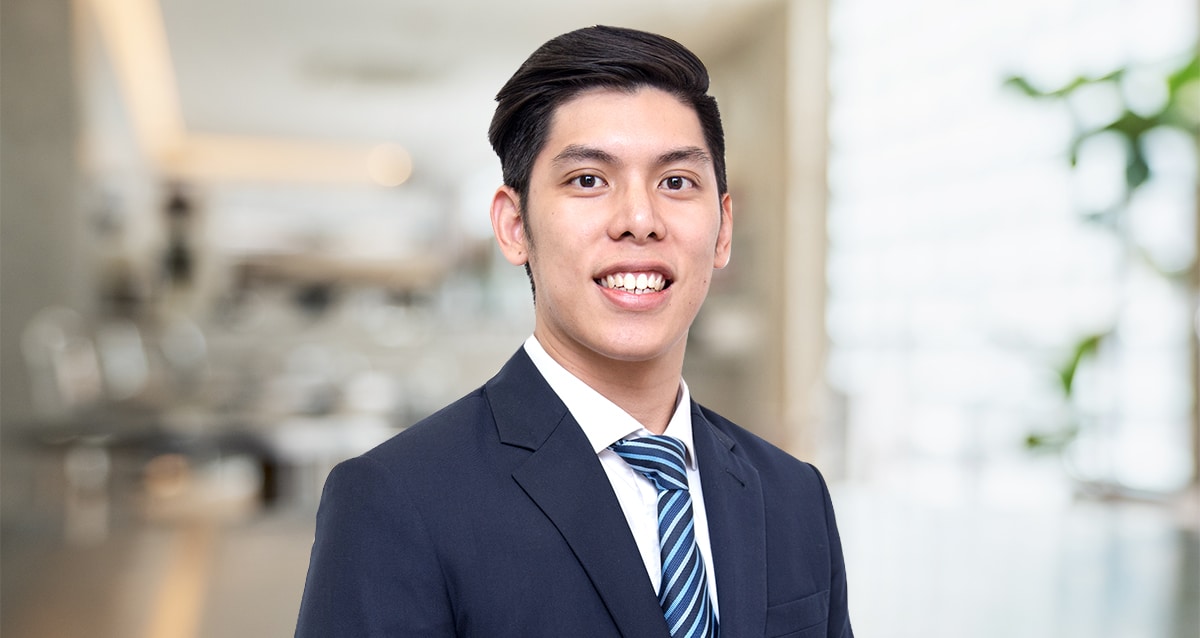
We speak to Andrew Zee, Executive Director at Phaidon International, who breaks down what this means for talent looking to move to Singapore, and what you can do to make the most of these changes.
Singapore has raised the qualifying salary thresholds for both the Employment Pass and S Pass. What are the implications of this for talent looking to make a move to Singapore?
This has been expected for a while now. From January 2025, the EP minimum increased to S$5,600 for most sectors and S$6,200 for financial services, and renewals are now catching up to those same numbers from January 2026. They’ve already flagged the next round too — S$6,000 and S$6,600 from 2027. The S Pass is moving similarly, hitting S$3,600 from July 2026.
What Singapore is essentially saying is: we want people who are genuinely in demand, not just filling a gap.
From our perspective as a recruiter, that’s actually a good thing for strong candidates. If you’ve got a real specialism in the key areas of tech, financial services, life sciences and engineering, these salary thresholds should not be a hurdle.
The trickier part is for people in their mid-30s to early 40s. Because of how age progressive the salary criteria works, the actual number you need to qualify can be significantly higher than the headline minimum — we’re talking S$7,000–9,000+ in some cases.
In fact, we are facing this ourselves for our own internal hiring too. Hence, I would advise such talent to speak to someone who knows the market and can tell you exactly where you stand. We have seen good candidates get rejected simply because the numbers were not aligned from the start, and this should now be avoidable.
The COMPASS framework is probably the last factor that is thrown into the mix. It’s about your overall profile and the potential employer to see if the minimum requirements are met.
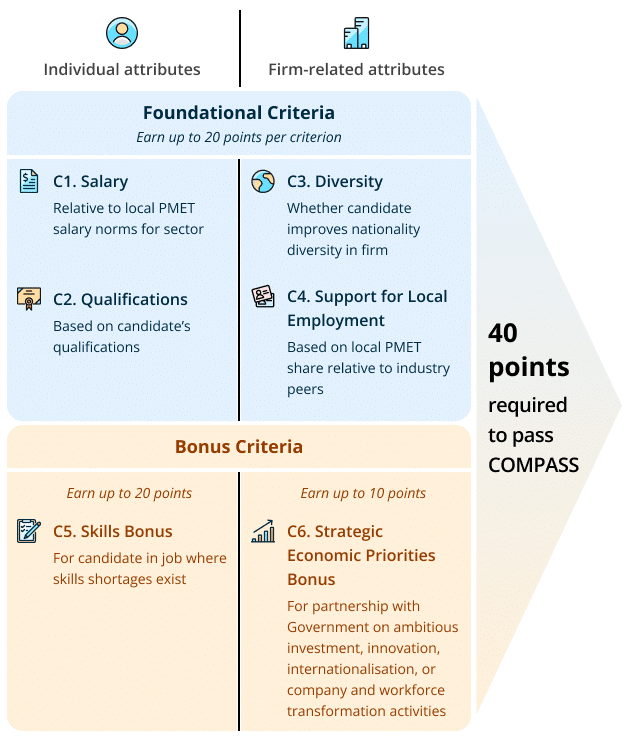
When COMPASS first started, trust us – that every employer felt that this was extra paperwork. However, as time passed, we see that most employers and candidates now see it as a good thing, as you can model your outcome before you apply, which removes a lot of guesswork for both candidates and employers.
The Tech.Pass is being replaced by the ONE Pass (AI and Tech) track from January 2027. How do you see this affecting top talent in these fields?
The competition for AI talent specifically has gone to another level — and the way these people get paid has changed as well.
Many top AI researchers and deep-tech founders aren’t earning their value through base salary alone but also through a huge chunk of equity. What we understand is that the previous pass didn’t really account for that, which made it harder to attract exactly the people Singapore was trying to get.
With the new pass, such talent can now meet the S$30,000 monthly threshold through a mix of at least S$22,500 fixed pay and vested equity — ESOPs/Shares. We do believe this will definitely help attract the talent pool that Singapore is looking for.
Furthermore, the recent ManpowerGroup Employment Outlook for Q2 2026 reveals that AI capabilities are the most challenging to hire for in Singapore right now, with global demand is outpacing supply by about three to one. This pass is a direct response to that, and Singapore is clearly signalling for this talent pool to come onboard.
What should candidates weigh in deciding to relocate to Singapore, vis-á-vis other global cities?
Singapore’s strengths are well understood, a competitive tax regime, excellent healthcare and schooling, safety, political stability, and its strategic location within Asia‑Pacific.
The most common and justified concern remains cost of living, particularly housing. During COVID, rental prices rose sharply and, while they have moderated, they have not returned to pre‑COVID levels.
From our experience advising candidates relocating to Singapore, when you factor in rent, international school fees, and general living costs, these might meaningfully offset the tax savings. As a result, relocating to Singapore requires weighing lifestyle and longterm career opportunities alongside pure financial considerations. Those who settle here do so not just for the role itself, but for the broader ‑quality‑oflife factors—safety, healthcare, education, and ‑longterm‑ stability.
In a global context, the UAE, particularly Dubai, is Singapore’s closest competitor for this type of talent. The introduction of the Golden Visa has made entry relatively low‑friction, and the financial proposition remains attractive.
However, given recent developments in the Middle East, we’re seeing some candidates who were previously weighing Dubai and Singapore more equally now placing greater emphasis on stability, long‑term security, and geographic positioning; areas where Singapore continues to differentiate itself. That said, this is more likely to result in a recalibration than a mass shift. Dubai’s financial appeal hasn’t fundamentally changed.
What we expect is that for talent already considering Asia, or for those sitting on the fence between the two destinations, the recent environment may tilt decision‑making in Singapore’s favour. Singapore, for its part, will continue to remain selectively open to the right kind of global talent.
The UK and Canada are also popular alternatives, but both have faced growing backlash around immigration and involve significantly more documentation and uncertainty. For candidates who value speed, clarity, and predictability, Singapore tends to come out ahead.
What advice do you have for mid-senior professionals who are serious about building a career in Singapore?
Do a few pre-qualification checks and have an angle you want to specialize in
Singapore is a small, specialist market. It's unlike moving to London or New York, where there's demand across the board. The hiring is concentrated across financial services, tech, life sciences, engineering. Consider: is your specialism generally in demand?
Also check and understand your EP eligibility upfront — your age, your salary bracket, your COMPASS score. This will allow you to have a clearer understanding on your chance in moving to Singapore.
More companies are using Singapore as a HQ/Asia HQ
They need people who can operate across Southeast Asia and Asia. So if your CV only talks about what you did back home, you're missing the point. Think about how your experience translates across markets and your exposure to Southeast Asia or Asia. That's what makes the difference in interviews here.
Get a good recruiter in your corner early — before you think you need one
So many of the best roles never get posted publicly. They go through networks. A specialist recruiter who knows Singapore and your sector can open doors that you won't find on LinkedIn, and they'll also give you an honest read on whether the market is ready for you or whether you need to build a bit more first. At Phaidon, across our brands — Selby Jennings, Glocomms, EPM Scientific, DSJ Global, LVI Associates — we're having these conversations every day.
What are some challenges you foresee for talent looking to find jobs in Singapore, and how can these be mitigated?
- Cost of living is still a major consideration. Employers are highly conscious of internal equity, and Singapore’s continued push to prioritize local hiring means the days of generous, cushy expat relocation packages are largely behind us. More importantly, it’s worth speaking to people who have actually made the move—the SGN community is a great resource for this. As mentioned earlier, there are far more factors to weigh up than just headline tax rates.
- Competition is significantly fiercer than many candidates expect. This is not a market where a “decent” CV is enough. The bar is high, and you’re competing with a deep pool of global talent, which makes being strategic and precise in how you position your experience absolutely critical.
- COMPASS is often overlooked. Your application isn’t assessed solely on you as a candidate—it’s also evaluated based on your employer’s profile. Even strong candidates can struggle if the hiring company has weaker diversity ratios or lower COMPASS scores. A good recruiter should flag this early, but it’s important to be aware of it upfront to avoid unnecessary disappointment.
- If you’re relocating with a working partner, there are multiple pass options to consider. It’s far better to think this through and manage it in parallel rather than leaving it until the final stages.

Looking ahead at the job market in Singapore and Southeast Asia, where do you see the key shortages and the biggest opportunities?
- AI remains one of the hardest skill sets to hire for in Singapore today. Banks, healthcare providers, industrial firms, and professional services firms are all competing for AI talent that can operate at a true production, hands‑on individual contributor level.
- Financial services continues to see sustained demand, particularly across wealth management, quantitative finance, risk transformation, and digital assets. Singapore’s position as the regional hub for family offices and private wealth continues to drive strong hiring activity in this space.
- Sustainability is also quietly becoming one of the busiest hiring areas. Across carbon markets, green infrastructure, ESG advisory, and renewables, organizations are moving beyond commitments and now need people who can actually execute. Singapore is very well positioned as a regional hub for this transition. We have a team of consultants who specialize specifically in sustainability and climate‑linked hiring across Asia, and we’d be happy to introduce them if helpful to share deeper market insight.
- Stepping back, Southeast Asia is genuinely on a strong growth trajectory. Vietnam is building impressive native tech talent depth, Malaysia is scaling meaningfully in areas like semiconductors and cloud, and Indonesia’s digital economy still has significant runway ahead. From that perspective, Singapore remains a powerful regional base,not just in its own right, but as a launchpad to access and capitalize on broader Southeast Asian growth.

About Andrew
Andrew Zee is the Executive Director of Phaidon International, a global specialist recruitment firm operating across Asia, Europe and the US. Andrew leads the leam across financial services, technology, life sciences, supply chain, engineering, and regulatory & legal sectors.
Connect with him here.