By SGN | Updated 29 Jul 2025
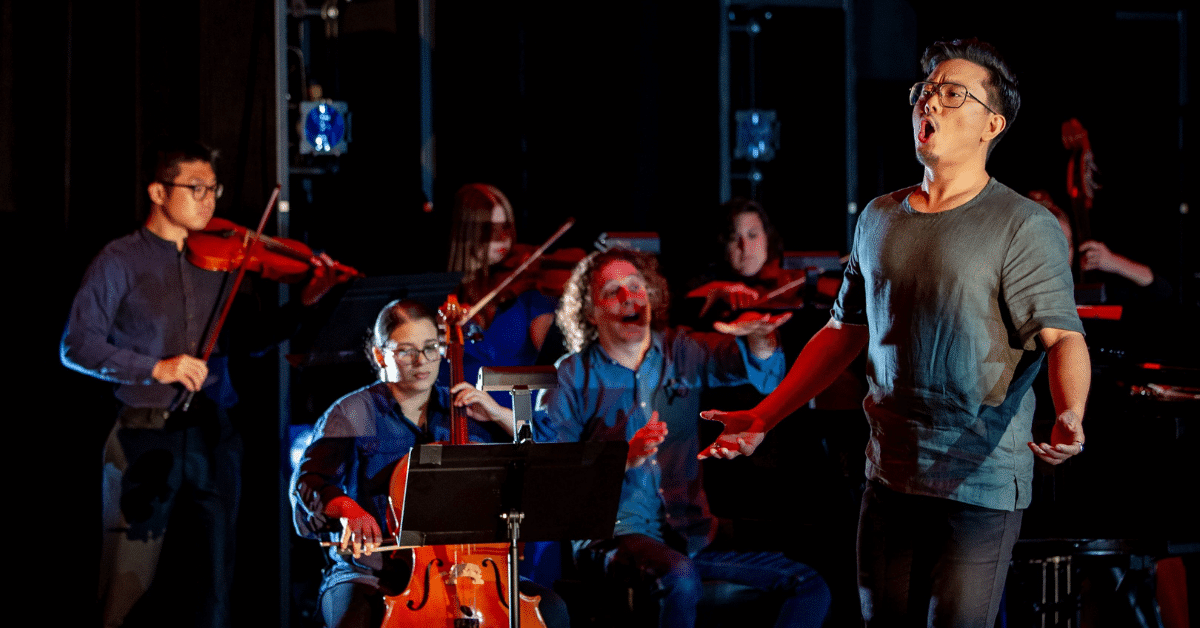
Most people would not have found their calling in a centuries-old Western classical artform. Then again, most people are not David Charles Tay.
For the past two decades, this Singaporean opera singer, director, and educator has performed in venues spanning several continents, adroitly handling some of opera’s most psychologically complex characters. He has now found the time to set up his own company, The Opera People, to nurture the next generation of Singaporean opera talent.
With a voice resounding enough to fill an opera house, and a vision that promises to redefine what Singapore opera is capable of, David is shaping what opera can connote within a local context.
The making of a budding opera singer
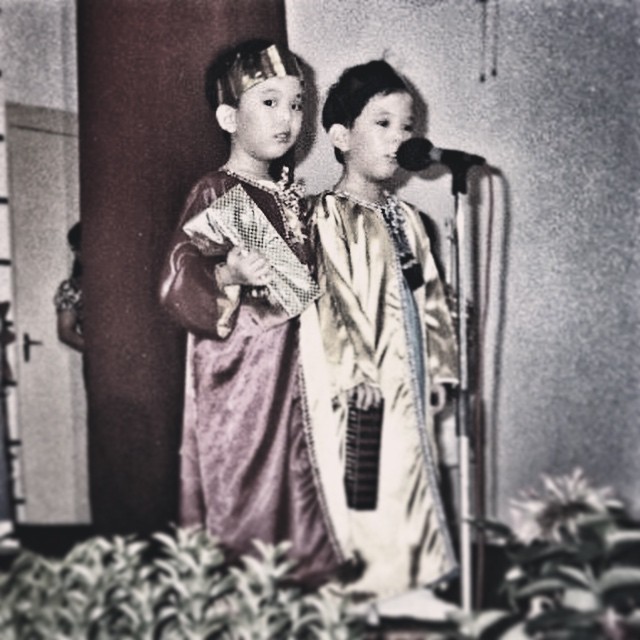
It started with the 1998 Singapore run of Andrew Lloyd Webber’s Joseph and the Amazing Technicolour Dreamcoat. David, along with his twin brother, performed in the children’s choir section of the musical, singing their hearts out at the now-defunct Kallang Theatre.
This experience stayed with him, planting a seed that would grow in the most marvellous of ways. Over the years, he became increasingly entrenched in the music scene. He was a part of the Anglo Chinese Junior College Choir for several years, and later, during his national service days, in the army a capella group.
“Of all musical genres, I was drawn to opera the most, for its beauty and depth,” he smiles, likening the style to a fleshed-out version of musical theatre. “Opera has this incredibly expressive power and showcases the capabilities of the human voice like nothing else.”
Now older, he appreciates opera for its encapsulation of the human tradition. “Opera reflects our emotional and social constructs, who we are, in a nutshell, he explains. “Of course, this applies to all theatre, but opera mirrors the zeitgeist of the people and the culture at any given time.”
Having grown up in a pre-YouTube Singapore, he was hooked on CDs of legendary opera singers like Pavarotti, Montserrat Caballé, and Mirella Freni, being exceedingly impressed by their remarkable vocal agility.
In secondary school, yet another avenue of appreciating opera opened to David as he began learning songs in a number of foreign languages – German, Italian and French. Of course, most operas are written in these languages.
Somewhere during the process of repeatedly learning and falling in love with music and with opera, David decided to pursue it professionally. “I realised that my voice was working well, and I had some talent in this regard,” he says. “So, I asked myself, how far can I take this?”
Prior to leaving for the States, specifically the Manhattan School of Music, to pursue an education and career in opera and music, he taught (at several choirs of varying levels of skill and proficiency, including the SAF Band (the Singapore Armed Forces’ musical arm), and secondary and tertiary-level choirs.
“I wanted to show my parents that I could take care of myself, that I could be industrious and creative,” David says. In turn, his parents were supportive of his artistic pursuits – showing up for all of his musical performances – and of his decision to pursue opera, academically and professionally.
A musical education in the Big Apple
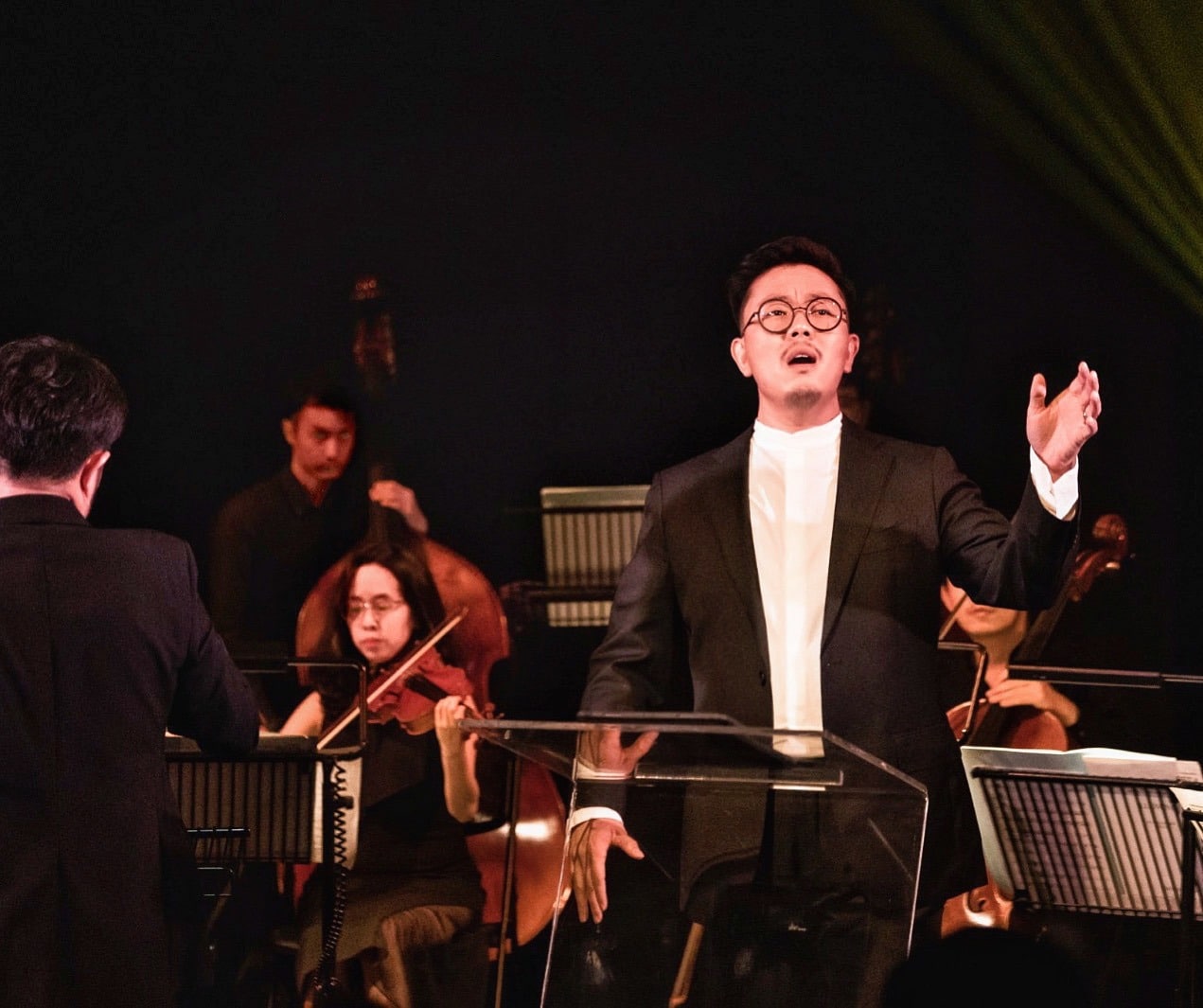
The decision to attend music school in the US was a pragmatic one. “It was either the States or Europe, where I would have had to spend a year learning German,” he laughs.
“Of course, the Manhattan School of Music came highly recommended from my mentors. Another consideration is the type of teachers and instruction, and that’s what drew me to the US.”
For those unfamiliar with opera requirements, every country or region looks for a certain “sound” in their opera students. “Italy, Germany, France, UK – they all have their own preferences,” he explains. “America does too, but the training is broader and they teach you all the different “sounds”. And I wanted to be able to sing anything and everything.”
Only once David moved to New York was he able to immerse himself in the rich, storied world of opera, soaking up knowledge about its traditions, techniques, languages, cultures, and styles.
He counts English composer Benjamin Britten among his favourite composers, particularly his three-act opera, Peter Grimes. “I’ve performed a lot of his war operas and have studied his works in detail. Knowing something well makes you fall in love with it more,” he explains.
His instructors included the likes of legendary American tenor David Rosenshein, who had a thirty-year career performing at historic opera houses like La Scala (Milan), Metropolitan Opera (NYC), and Paris Opera. “He was my first teacher, and we remain very close,” he recalls, mentioning how, on occasion, he still takes private lessons with Rosenshein.
Besides receiving instruction from the very best that the world of opera has to offer, David was also immersing himself in the venerable tradition of witnessing live opera. And while in New York, he had the privilege of experiencing the opera greats – German tenor Jonas Kaufmann, French soprano Natalie Dessay, and Peruvian tenor Juan Diego Flórez, live at the Met.
One particular performance that left a lasting impressing was the Zeffireli production of Verdi’s La Traviata at the Metropolitan Opera House, which happened to be Jonas Kaufmann’s NYC debut. “The performances were jaw-droppingly beautiful,” he recalls. “Over the years, I’ve seen so many excellent performances, so that makes it hard for me to choose a favourite.”
David’s own debut came in 2011 in the US premiere of Pasquale Anfossi’s Nina. “The rehearsal process was immensely long; all of us in the cast were quite young, and so it took a lot of vocal training for us to get to where we needed to be,” he recalls.
He would later go on to perform at several notable opera venues across the US including the Bronx Opera Company and the Bare Opera NYC, where he played the title role in Mozart’s La Clemenza di Tito and the tenor solo in Thomas Cabaniss’ Firesongs, respectively.
But no matter how far his career took him, he always carried Singapore with him.
Playing deliciously grey roles
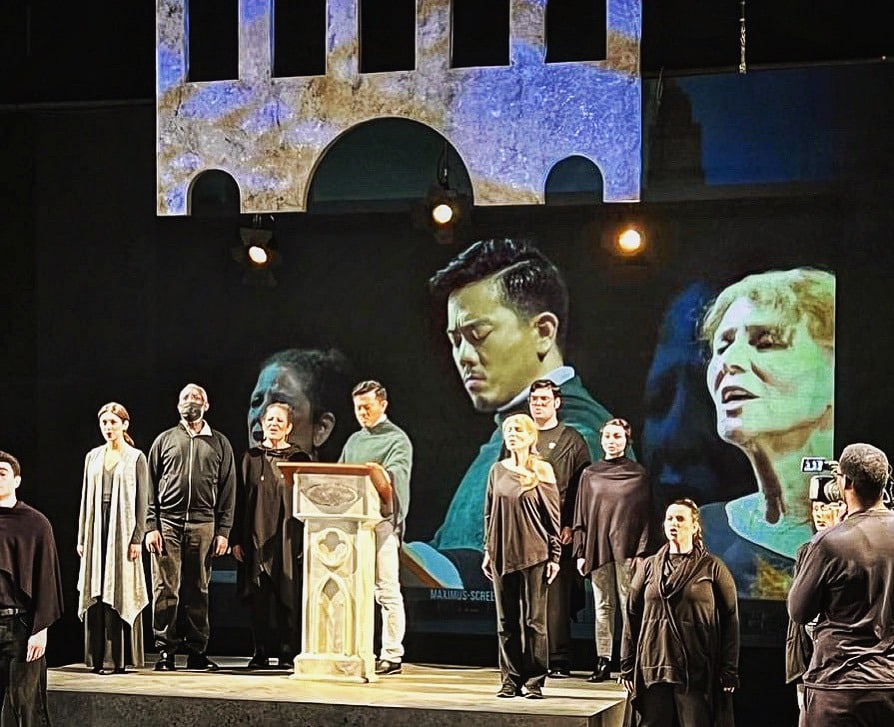
Though he jokes about playing “unfaithful husbands” more often than not, David’s roles are anything but one-note. From Jason in Medea, to Peter Quint in Britten’s The Turn of the Screw, he gravitates towards characters that necessitate psychological depth.
“Playing villains are fun, especially if you are not one in real life,” he admits. “They’re more fun than the dumb, bright-eyed lover who is ready to get down on one knee. It gets a bit one-note after a while. Villains are complex. And vocally, they can be incredibly demanding.”
His preparation process is equally meticulous. First comes the text — spoken, not sung. Then he applies the layers of language, rhythm, emotion. Only once those are internalised does he begin to layer in the music.
“I approach the role like an actor. If the role is in a foreign language, I first speak it through,” he explains. “Then, I work with a vocal coach to learn the flow of the language, including how it is sung, because the way you speak it is not the way you sing it.”
Opera, with a Singaporean twist

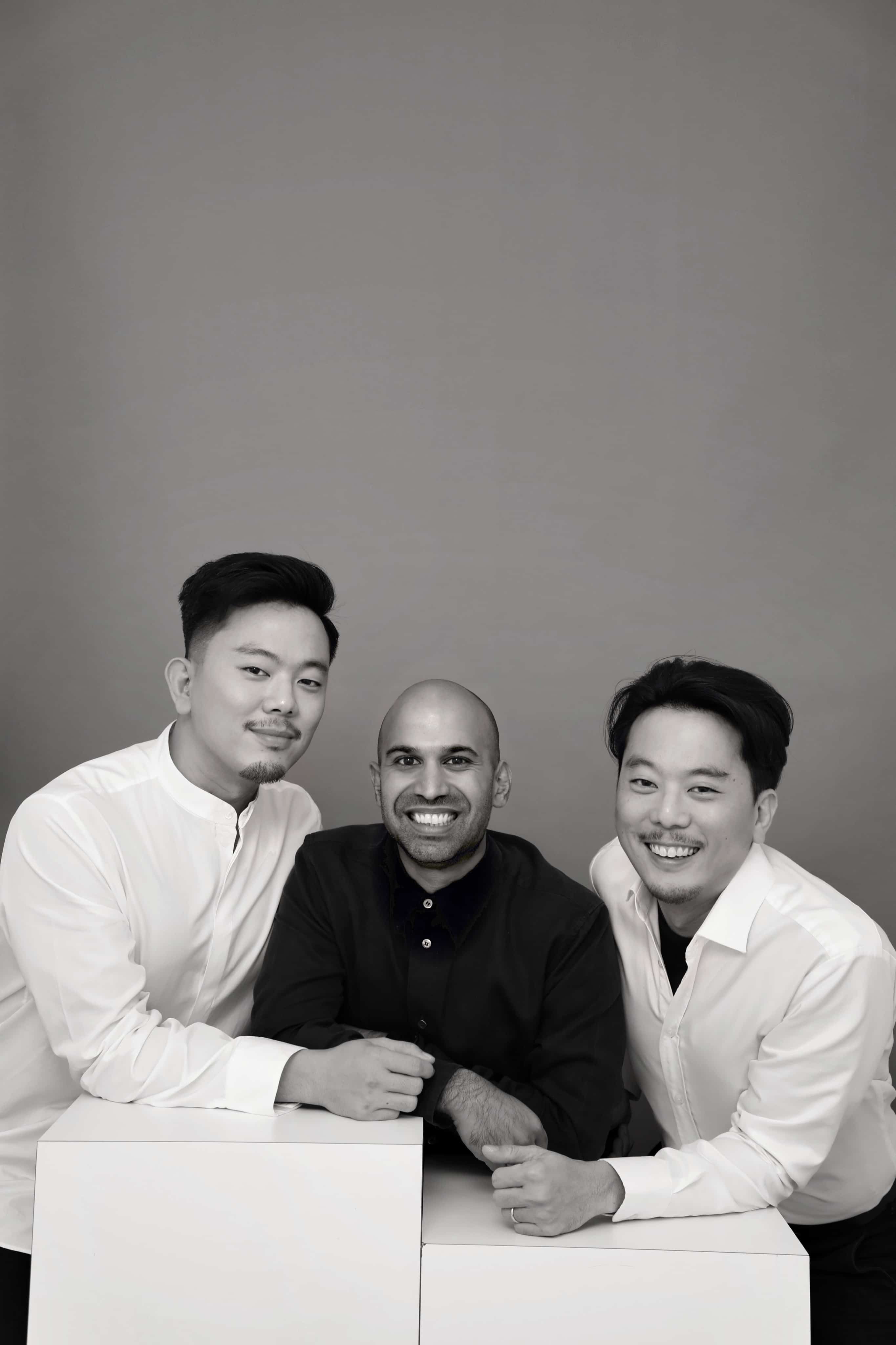
Locally, David is best known for his work with The Opera People, the company he co-founded with his twin brother and longtime collaborator Sridhar Mani. Their aim? To create opera that speaks to Singaporeans, in language, temperament, and relevance.
“Through our efforts, we want to serve two things – Singaporean society and the Singaporean community of singers and musicians,” he says. “We don’t want to randomly fly people in – that defeats the point of what we’re trying to achieve. And while we do have singers who come here from all over the world – Korea, Australia, China – they’re all based here, and are a part of our community.
“As far our local talent is concerned, we want to represent them, and put them in roles that showcase them in the best way possible. If you come to audition for us as a singer, we will ensure you find a way to shine.”
As a Singaporean producer and director, David is also keen on uncovering how opera might look from a Singaporean perspective.
“I want to see stories that go beyond just slapping on a localised coat of paint. A Chinese instrument and an HDB set do not a local opera production make,” he asserts.
“How we can respect the opera craft and tradition, by increasing the skill and training of the Singaporean singers? Creating opera that speaks with and to a Singaporean voice is something I’m interested in.”
This vision came to life with The Opera People’s 2019 production of Alexander Zemlinsky’s haunting one-act opera, Der Zwerg (The Dwarf). “Playing the Dwarf was extremely emotionally vulnerable, because night after night, I would have to be rejected,” he says.
For those unfamiliar with the story – here is a quick rundown. The eponymous dwarf, who imagines himself to be a handsome prince, is gifted to a princess for her birthday. As the only time he looks at his reflection is in his sword, he imagines himself to have been possessed by a demon. When he finally professes his love for the princess, she rejects him, citing his ugliness as a reason.
The princess shows him his reflection in an actual mirror and, unable to grapple with the horrors of his appearance, he decides to take his own life.
However, The Opera People’s 2019 rendition of this classic story reframed it as a tale about social class. “The dwarf wasn’t physically different — he was just poor,” David explains. “It was about being seen as lesser.”
The physicality of playing the Dwarf introduced a whole new dimension of challenges for David. “Night after night, I’d have to run around with my knees stuck to shoes,” he recollects. “This struck a chord with a lot of people.”
Another impactful production was The Opera People’s staging of The Rape of Lucretia, which was staged in partnership with AWARE, to spark conversation about gender and power dynamics.
Later this year, David and The Opera People will be staging Iphigénie en Tauride, a rarely performed French opera by Gluck, as part of the wider arts festival vOilah! It is a part of their broader effort to expand Singapore’s operatic tastes and vocabulary beyond the oft-enjoyed works — and a continued examination of tragic women, including Medea and Lucretia.
Living on two continents
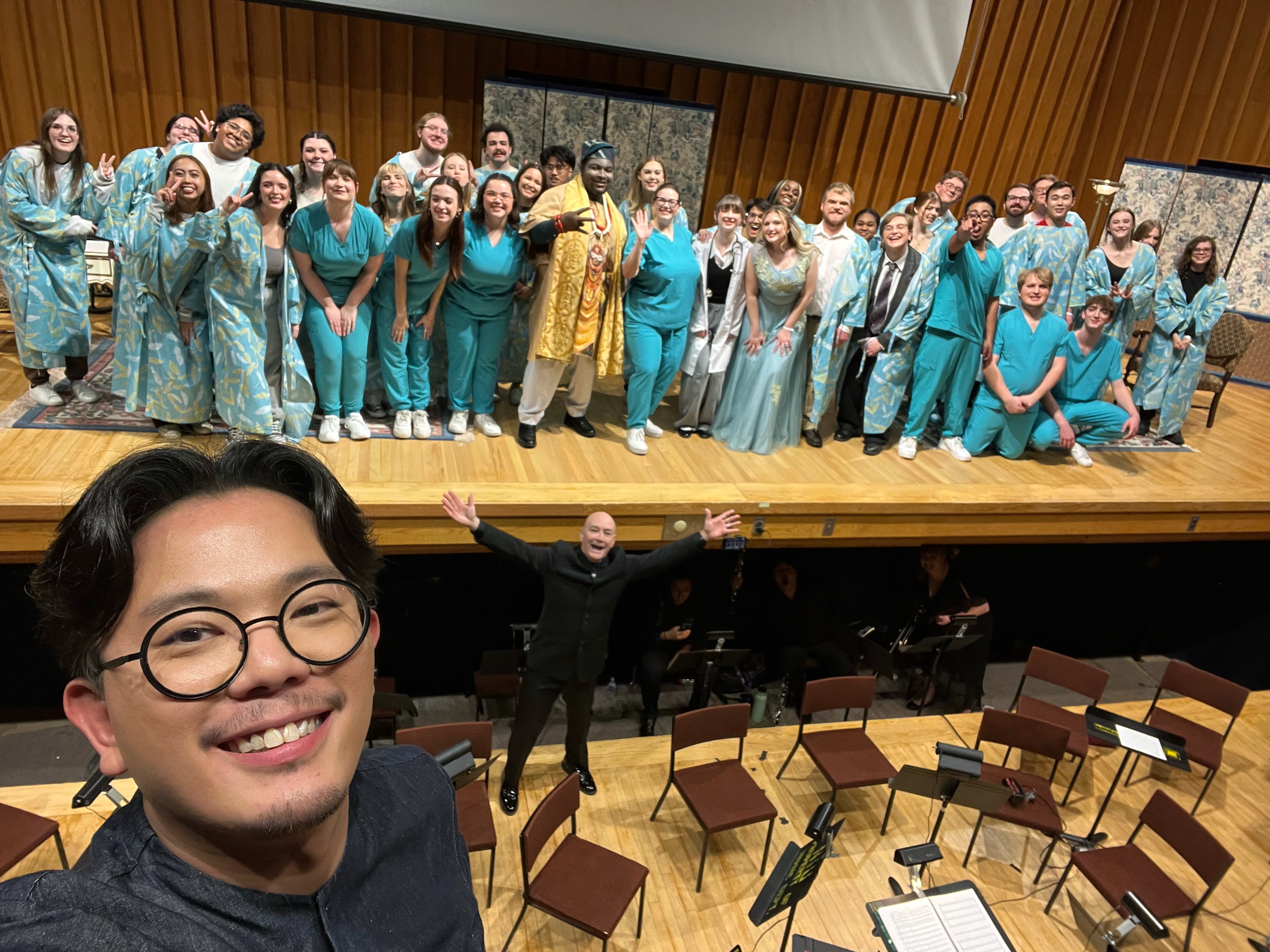
David now juggles life between the US and Singapore. He is an Instructor of Voice at the Northern Illinois University, where he trains aspiring opera talents, while continuing to direct and perform globally. His schedule sees him conducting Zoom rehearsals at 5am Chicago time before heading to teach at university.
“It’s brutal,” he laughs, “but when you care about something, you find a way.”
Despite living in the US for 17 years, Singapore is still home—and not just in the sentimental sense. David returns regularly to stage productions, perform, and teach.
“There’s a myth that Singapore doesn’t have good singers,” he says. “That’s not true. Sometimes, they’re just singing the wrong material. Our job is to help them shine.”
The work that lies ahead
To young creatives wondering if there’s a future in the arts, David’s message is equal parts firm and encouraging.
“Yes, pursuing a career in the arts is hard,” he says. “Especially in a foreign market. If you go overseas, you’ll have to work harder than everyone else.”
But being from a small country, he insists, is special. “If you are a young creative in a place like the US, and become really good at what you do, nobody will know who you are. However, if you succeed, your small country will celebrate you.
His advice for making it in a foreign market? “Don’t try to blend in. You’re not there to disappear — you’re there to stand out. Don’t pretend to be something you’re not.
“Blending in will not help you succeed. You’ll eventually find your people and your support network.”
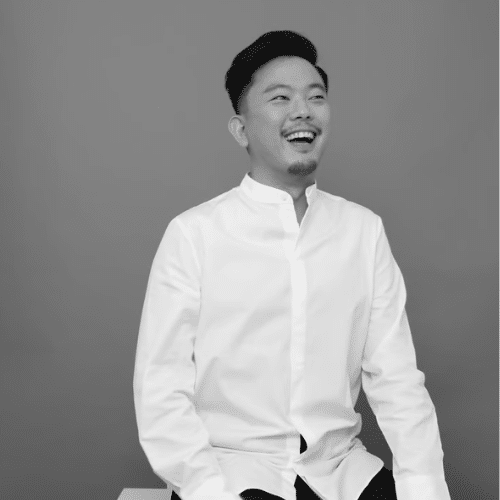
About David
A classically trained tenor, director, and educator and Manhattan School of Music alum, David’s operatic journey has taken him from school choirs in Singapore to the stages of New York.
He is a co-founder of The Opera People, a performing arts company that aims to reframe classical work via a contemporary socio-cultural lens. Keep a lookout for their upcoming show – Charpentier’s Médée, which is staged in collaboration with Les Épopées (France) and Red Dot Baroque, as part of the vOilah! French Festival Singapore.
Connect with him here.