By SGN | 11 Sep 2025

When James was growing up, travel was an unreachable luxury. “My family was not well off,” he shares. For vacations, they would simply cross the Causeway to Johor Bahru in Malaysia.
As a computing student at the National University of Singapore, James had to constantly seek ways to earn extra cash. He co-founded a company to coach school robotics teams, tutored four times a week, worked in his professor’s research lab, and took up all sorts of freelance gigs – building websites and databases, programming the hit Singaporean video game Autumn Dynasty, even fixing networking problems at an airbag factory. “Through the years of being poor, I learned that I always have to hustle to maximise my income,” he muses.
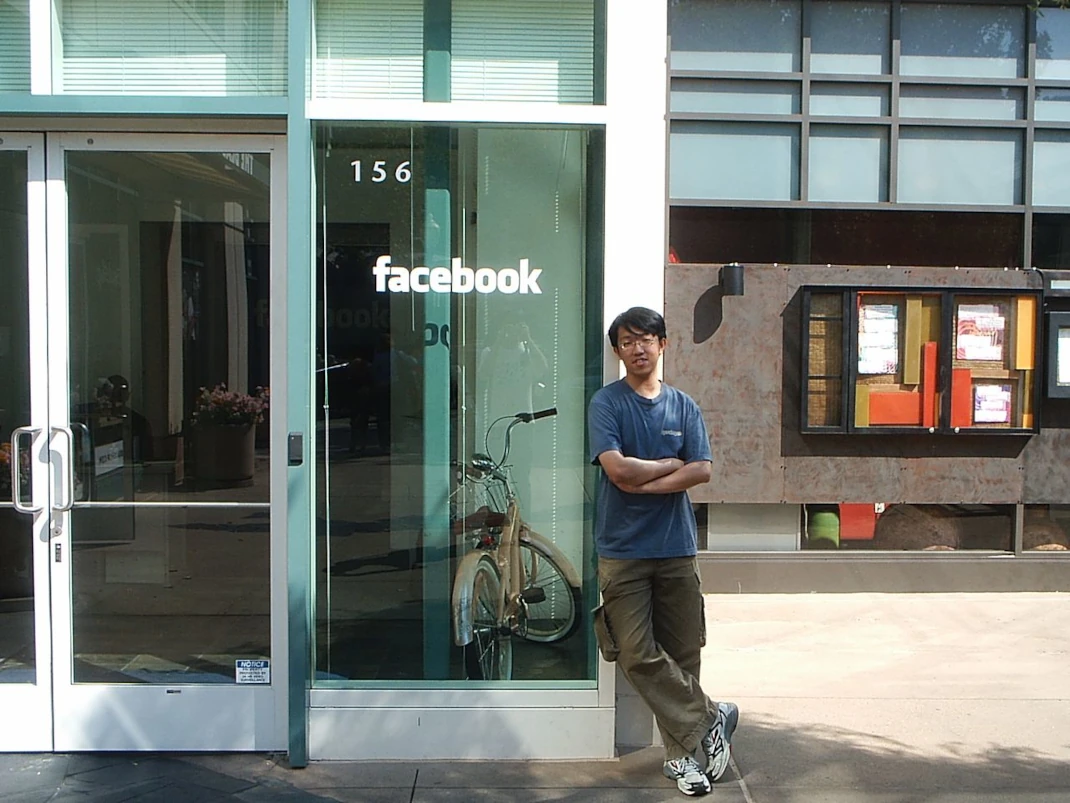
During that time, one of his first flights abroad was to the San Francisco Bay Area. He visited the still-tiny offices of Facebook and was stunned by the “hotel-quality buffets” at Google’s headquarters. At Stanford University, he viewed an exhibit that described how innovation has shaped the course of history. The entire experience blew his mind, revealing to him the limitless potential of technology.
The road to Roblox
After graduating in 2011, James decided to seek better prospects overseas. Between a job offer in Hong Kong and another in Silicon Valley, he chose the latter, relocating halfway across the globe with two suitcases and $5,000 in his bank account. Adjusting to his new environment took time. “I came here without a driver’s licence,” he recalls. “Riding a bicycle and getting frostbitten was definitely an experience.”
At the time, James lacked the confidence to apply for positions with tech giants. Instead, he joined VSee, a video conferencing startup that he had interned for. When he left the company after six years, in 2018, it was time to set his sights higher.
There was no lack of opportunity. After dozens of interviews, he was ready to settle on one of four offers. Then a recruiter reached out with an open role at Roblox. Curious, James looked up the company online. “The funny thing was, back then Roblox had no media coverage, no marketing,” he says. “When I tried to Google their website, I got a generic landing page.”
Upon further digging, he found that the gaming platform had a cult following, with scores of streamers posting videos on YouTube, yet it hadn’t expanded beyond the Americas. As he saw it, the company had tremendous potential. Soon, James received his fifth job offer, and it was the one he would accept.

Rethinking game development
After working on a video game back in college – what he describes as “a lot of hard work for very little payoff” – James swore never to work in the industry again.
Yet here he was, back in the game. In his defence, James points out that Roblox introduces a radically different model, taking the drudgery out of developing and publishing games. On the platform, users can easily create games, find an audience, and plug into built-in infrastructure for hosting sessions and processing payments, be it subscriptions or microtransactions.
When COVID hit, Roblox exploded in popularity, especially among children. Towards the end of 2020, American rapper Lil Nas X staged a weekend of virtual concerts on the platform that drew an audience of 33 million. A year later, the company went public at a value of $45 billion. Today, Roblox is worth $89 billion, boasts over 85 million daily active users, and it recently moved its San Mateo headquarters to bigger premises.
As a principal software engineer, James leads a team of 60 that builds the systems for virtual items bought with Robux, the in-game currency. Over the last few years, the team has implemented a collectible system that emulates NFTs without the use of blockchain, as well as a more sophisticated search function that incorporates promotions and recommendations.
In everything they design, future scalability is key. “It’s like laying a road so that many types of vehicles can pass through, rather than designing a road purely for a horse-drawn cart,” James explains. “Otherwise, we have to spend a lot of time refactoring and rebuilding.”

Layoffs are not a bad thing
In Silicon Valley, James says there is great access to capital and talent, and it’s “just another day” for a tech juggernaut to lay off thousands of employees. “In Singapore, if you say there’s a layoff of 3,000 or 4,000, I would think the market has crashed,” he quips. James speaks with new candidates for his team at a rate of two to three a week, or hundreds per year. This includes many former employees from Google, Meta or X – the very companies he didn’t dare work for.
The environment in Southeast Asia is vastly different. “Singapore has established itself as the startup hub of Asia, with good corporate governance, incentives and infrastructure,” he says. “Being a small country, it is expected that both the addressable market and hiring talent pool must be global instead of local. Tech companies need to learn how to work in a distributed manner to leverage regional and international resources.”
Across Silicon Valley, the fiercest wind of change is clear. “There is a major shake-up in the industry when it comes to AI,” James says, noting the aggressive hiring by OpenAI, Anthropic and Meta Platforms, with compensation packages running into the tens and hundreds of millions of dollars. On the flip side, companies are quick to drop less profitable products and teams. “I don’t take layoffs as a bad thing,” he remarks, “because the industry has to move and remain relevant.”

Once a hustler, always a hustler
James considers himself an introvert. When he first arrived in the Bay Area, he didn’t know anyone apart from several co-workers. Inevitably though, his social circle expanded, thanks in part to groups like SingaporeConnect and Singapore Global Network. He flies back to Singapore two or three times a year.
As ever, James is quite the multitasker. For the past decade, he has been mentoring and investing in startups, including the Singapore fintech Xfers, which has since merged with PayFazz to form Fazz Financial Group.
In another full-circle moment, James has returned to robotics coaching. Roped in by a co-worker (and former intern) at Roblox, he mentors the team at Menlo-Atherton High School, where many parents are founders with one or more exits under the belt. “Robotics competitions here are on a different level,” he says. Moreover, Bay Area kids are more technologically inclined, and some are already interning at software companies.
No matter how far his career advances, James has never lost the hustle mentality or the desire to apply his skills in new avenues. “If there’s an opportunity and you think you can accomplish about 50%, just say yes first, then figure out the rest,” he advises. “Whoever asks for help, evaluate their needs and find a way to make yourself valuable. I think this mindset has helped me a lot in life.”

About James
James is a principal software engineer at Roblox leading the development of systems for the publishing and purchasing of virtual items. He is a startup mentor and investor, and has been based in the San Francisco Bay Area since 2012.
Connect with him here.