By SGN | 6 Mar 2026

When Anuka was in the ninth grade, she did something few her age would do – join a political movement.
She had joined the Arizona Democratic Party as a youth volunteer. After school, her father dropped her off at the campaign offices, where she answered phones, and assisted with outreach and absorbed the mechanics of grassroots politics.
Her early exposure to grassroots work was a result of growing up in water-scarce Arizona. Inundated with messages about water conservation, melting polar ice caps, and the decline of the Amazon rainforest, she was tired of feeling helpless.
She had also seen firsthand the adverse impacts of resources misallocation: underserved communities suffering from lack of access, while advantaged communities reaped the benefits of excess.
“I felt a sense of protectiveness over the environment, because I had learned not to take anything for granted,” she says.
Striving for progress via policy

Given Anuka’s premature political aptitude, it was clear that she was destined for a career in policymaking.
Her experience as a research intern at the Washington DC-based think tank Woodrow Wilson Center was her introduction to the world of academia and government-related research.
Following this watershed internship, Anuka took up several similar roles in other public policy institutes. She dabbled in conservation policy at the Center for American Progress as an Energy and Environment intern, and authored a report on marine sanctuaries, which elaborated on how the US government collaborate with indigenous tribes to safeguard these vulnerable ocean ecosystems.
Anuka’s endeavours in policy research and academia continued into her university days. She helped author a book detailing how terrorist organisations weaponised water security issues as a means of recruiting people into their organisations and even embarked on a research project that took her back to her mother’s hometown in India.
As a recipient of the prestigious Fulbright Scholarship – an American cultural exchange programme founded with the goal of improving cultural diplomacy – Anuka worked on a fully-funded research project with Goa University that studied the impact of climate disasters on coastal communities in India.
“This was the first time I’d experienced living in India all by myself, with no relatives nearby to reach for,” she says.
Anuka spent her first three months in Goa in linguistic isolation, getting by with a rudimentary understanding of the local languages spoken there.
“I didn’t talk to anyone, and had to teach myself how to ride a scooter, because that was the only way to get around,” she laughs.
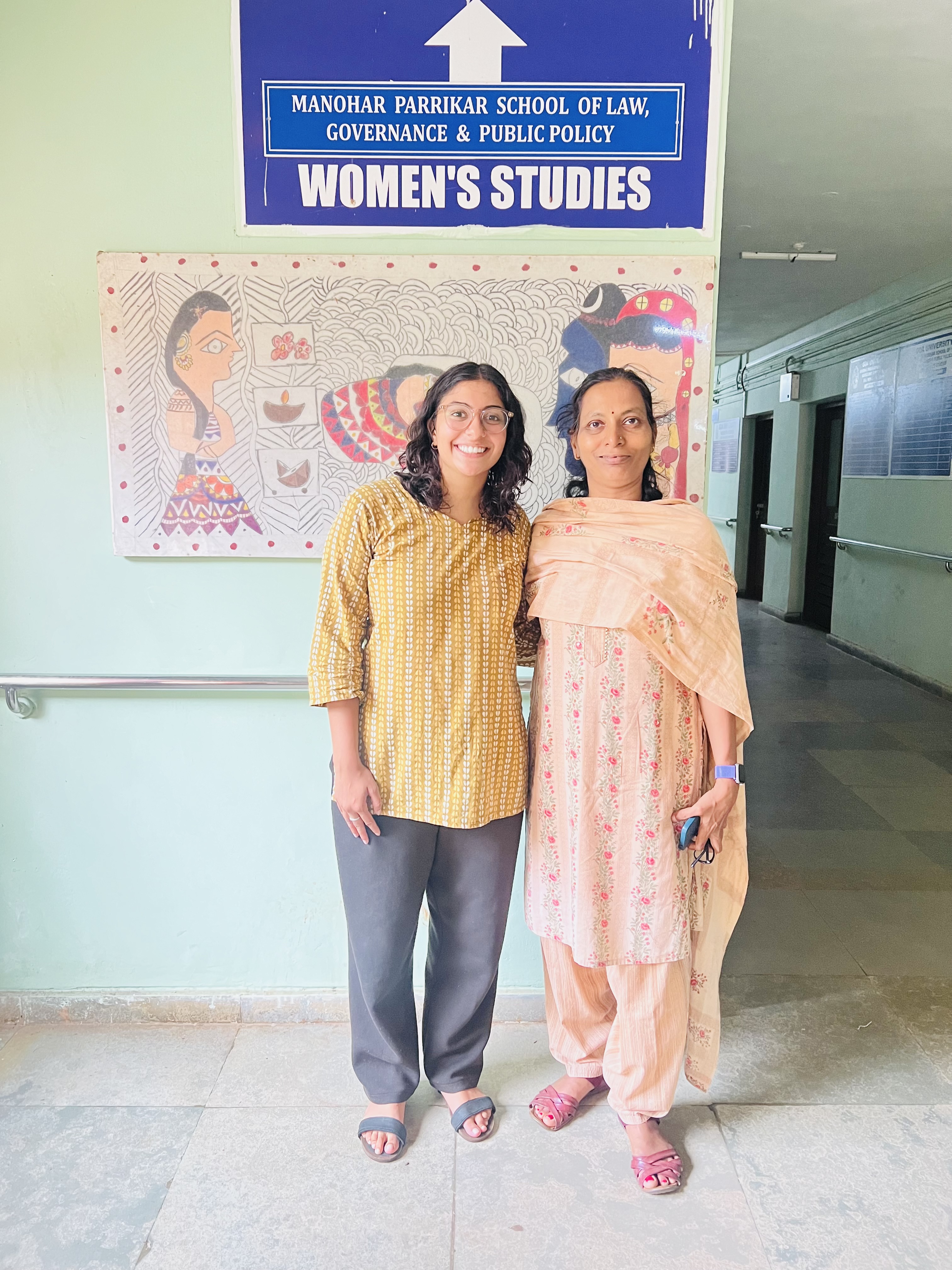
“I grew a lot as a person, and I don’t think I would have been able to leave the US and migrate to Singapore, had I not spent time in India,” she says. “That experience taught me I can survive and adapt anywhere.”
Working closely with fisherwomen in Goa’s coastal communities also provided her with a front-row seat as to how climate change was affecting people directly in its line of fire.
“These women commanded a lot of concealed power, because they were the ones sorting, processing, and selling all the produce that the fisherman acquired,” she reveals.
Anuka’s experience in India cemented her decision to attend the prestigious Columbia Climate School.
“I wanted to learn more about climate science, specifically atmospheric science, risk projections, and data analytics,” she elaborates. “Not only would this make me a more well-rounded expert on climate issues, but it would help me frame the science in a way that’s digestible to all, especially when it comes to policies.”
During this time, Anuka also worked with the Chilean government through the National Center for Disaster Preparedness, helping local municipalities devise their climate action plans.
Spending time at Washington DC’s most hallowed political institutions

As eventful as Anuka’s extracurricular policy projects were, as far as policymaking was concerned nothing was as illuminating as studying in an institution three blocks away from the White House.
“My entire undergraduate experience was shaped by the fact that I lived in Washington DC, with access to world-class institutions,” she shares.
Because of this, Anuka was in the unique situation of being able to work at government agencies right after school, where she juggled classes during the day, and rushed off to the White House or Congress in the evening.
“If you attend George Washington University, you’ll know that Washington DC feels like your playground,” she reveals.
“Being 18 years old and living in Washington DC, with these towering institutions within walking distance is a formative experience. There are so many opportunities to engage with international policymakers.”
In her second year, Anuka interned at the House Foreign Affairs Committee, which was her first real-world exposure to foreign policymaking, and the machinations of diplomacy. “This is where I got to understand how international policy is actually made,” she shares.
“I spent a lot of time writing policy briefs on international gender policy, and the carbon border adjustment mechanism. Just being in that environment – surrounded by Congressmen and women, frantically taking notes, was exhilarating,” she shares. “It helped shape my perspective on how to approach international relations,” she explains.
Serendipitously, Anuka was working at the White House at a pivotal moment during the Biden administration. Two bills had just been passed, with over USD $400 billion allocated to climate policy and initiatives.
“My role was to dissect each line of the bills, and to reframe how we implement specific policy measures with specialised councils,” she shares. “I spent a lot of time liaising between different parties, writing policy briefs, and training legislative officers.”
Viewing diplomacy through the lens of climate change in ASEAN

Today, Anuka works at the US-ASEAN Business Council in Singapore. But long before she moved to the country, it has been intertwined with her story. Her parents, originally hailing from India, had lived in Singapore for a decade before she was born. Her father, an architect, had played a hand in major architectural landmarks like the Marina Bay Sands and the Esplanade coming to life.
After the 2008 global recession, when opportunities in the United States had dried up, Singapore offered her parents the promise of stability and opportunity.
A young Anuka split her time between America and Singapore. “I would travel via the MRT alone when I was just nine,” she recalls. “I maintained a connection to Singapore, even though I wasn’t from there.”
Decades later, she would return to the country where she’d spent so many summers, but this time on the Work Holiday Pass, a pass which allows eligible young students and graduates to live, work and holiday in Singapore for up to 6 months, with no salary requirements attatched. Applicants are also not required to secure a job to qualify for the pass.
She had learned about the Pass from another American friend, Maggie, who had also been on the Work Holiday Pass and enjoyed her stint in Singapore.
“The application process was very easy, and took an hour to complete. All I had to do was submit my master’s transcript, prove I was a student, and wait for four weeks for the visa to come through,” she explains.
Anuka applied for a position at the US-ASEAN Business Council once she secured her Work Holiday Pass. “I reached out to a George Washington University alumni, Sarah Lessing, who worked there,” she recalls.
At the US-ASEAN Business Council, Anuka works with the American private sector and ASEAN governments. For instance, if an American tech company were interested in expanding to an ASEAN country with strict local laws, the US-ASEAN Business Council would help mediate, and create policy solutions beneficial for both parties.
“The work I’m doing here echoes my past experiences of working with the US government,” she shares. “I get to apply my knowledge and understanding of policymaking to the way governments, businesses, and private sectors operate.”
The Council also offers Anuka avenues to hone her interests in the environment and energy sector.
For instance, the 2025 edition of the Singapore International Energy Week was a milestone memory for Anuka, who helped with briefs, talking points, and administrative tasks. The event was well-attended, with Minister for Manpower Tan See Leng providing the opening remarks.
“We partnered with the Singapore Energy Market Authority and the US Department of Commerce, and explored conversations on nuclear energy,” she shares. “The event felt like a convergence of all my interests – environmental goals like NetZero and reduced emissions, and the diplomacy and policymaking aspects.”
Life in Singapore
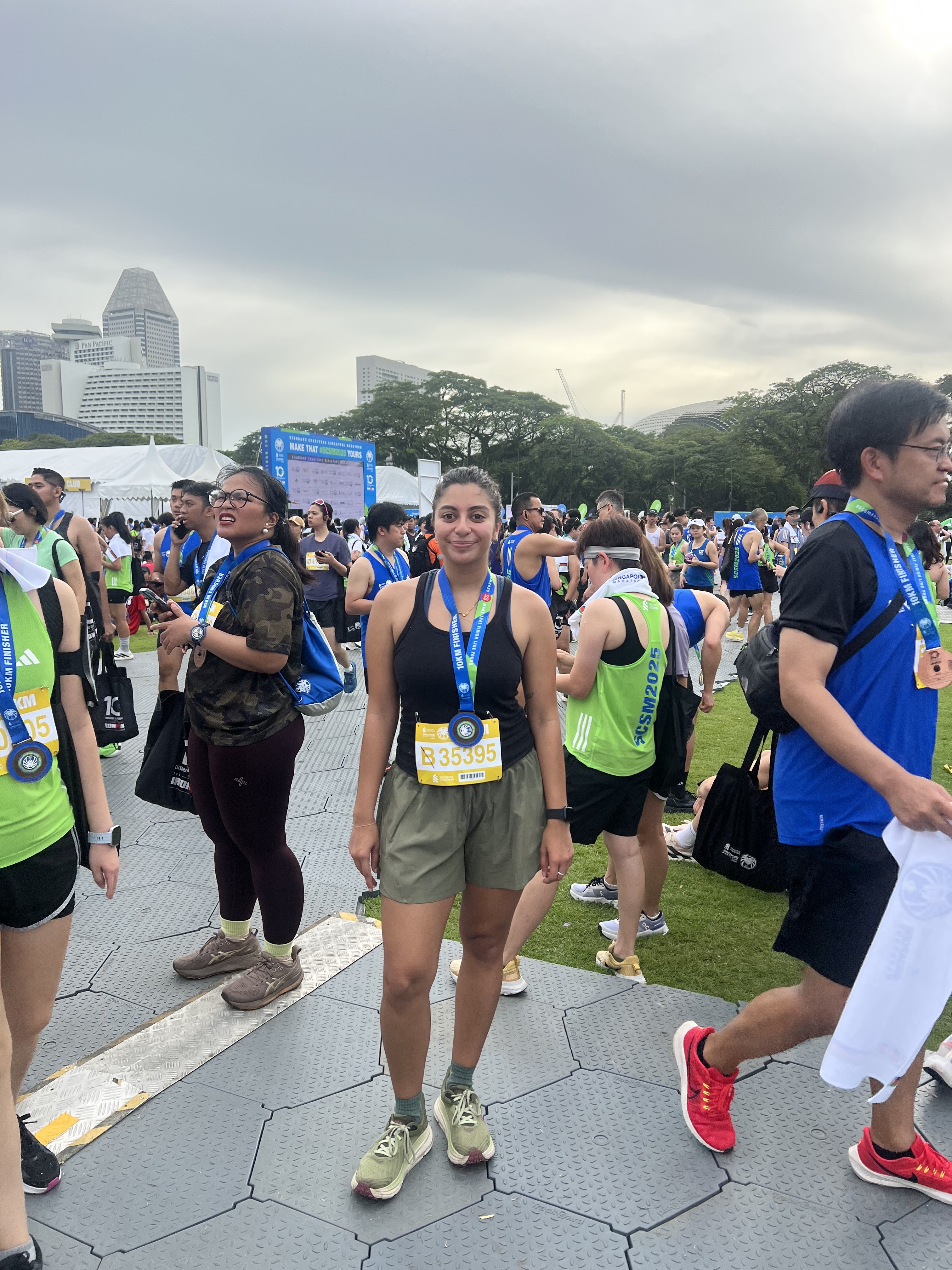
When not at work, Anuka leads a life just as active as her work in climate change and policy. She loves road cycling, scuba diving, and is currently training to compete in a triathlon.
“When I feel like life is beyond my control, I train obsessively for sporting events,” she shares. Community, she says, took time. “The first few months were lonely,” she admits.
“But I’ve found my people through co-living arrangements, work, and hobbies. Singapore feels less transient now.”
Anuka hopes to stay in Singapore, and build a meaningful career within ASEAN’s regulatory, political advisory, and sustainability landscapes.
“I want to play my part in accelerating the energy transition process in ASEAN,” she shares. “I’m confident that my skills, which lie in diplomacy, navigating regulations, and policy formulations can help in this regard.”
Cultivating hope amidst chaos
Working in climate policy can be emotionally taxing.
During her master’s programme, Anuka found herself grappling with the realities of discouraging data, reneging of major environmental commitments, and the failure to commit to crucial targets. “It was one of the saddest days of my life,” she says, speaking of a pivotal election moment.
To cope, she focuses on small wins and institutional resilience. For those outside the policy world, she recommends looking beyond sensational headlines, conducting meaningful personal research, and engaging in critical thinking.
“Instead of falling for sensational headlines, interrogate the statistic,” she says. “Take a couple of minutes to understand the source and its biases. Instead of mainstream news, look to university research centres and think tanks publishing credible, up-to-date research on climate change.”
“Actively seek out stories of people who are moving the needle in this field.”
For young people interested in these lines of work, Anuka’s advice is clear: have strong writing skills.
“With the AI boom, it’s become more important than ever to have a distinct tone-of-voice, and not rely solely on AI for writing and research, she shares. “Engage critically with the world around you, and ask questions. Don’t take every piece of information at face value. Read, interrogate, and you’ll see how quickly solutions to problems emerge.”
“Questioning the status quo will be on one of your most important skills.”
Interested in working in Singapore?
Learn about our Work Holiday Pass and how to get started.
About Anuka
A graduate of George Washington University and Columbia Climate School and recipient of the Fulbright-Nehru Scholarship, Anuka is currently a Policy Fellow at the US-ASEAN Business Council, where she specialises in energy and ICT policy.
Connect with her here.