By SGN | 14 Jan 2026

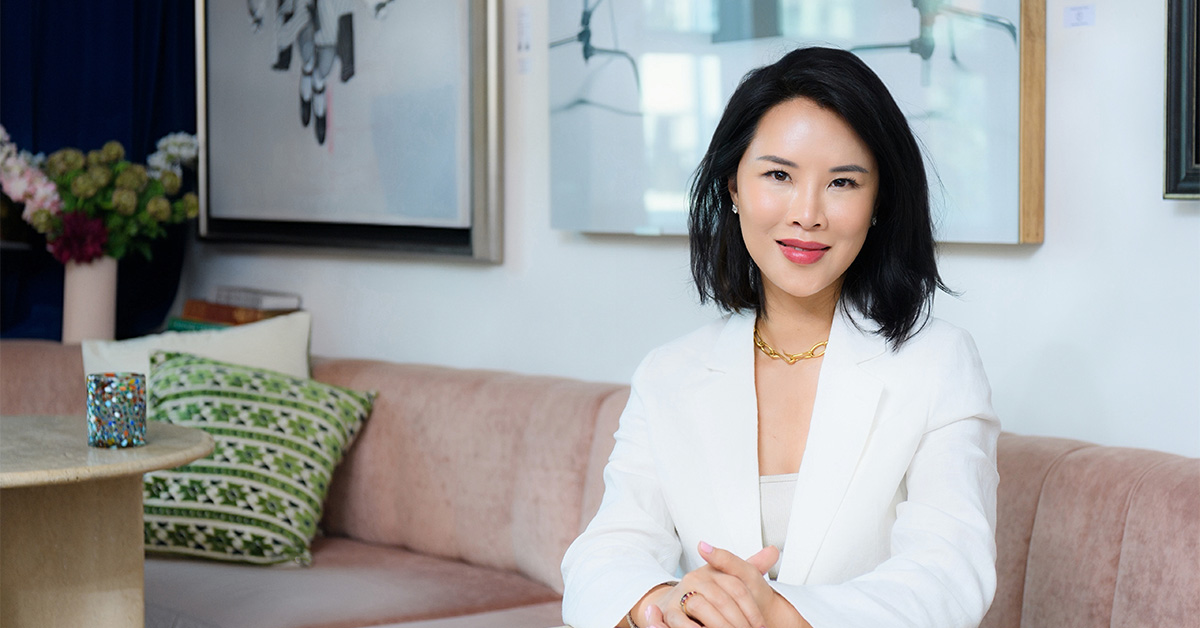
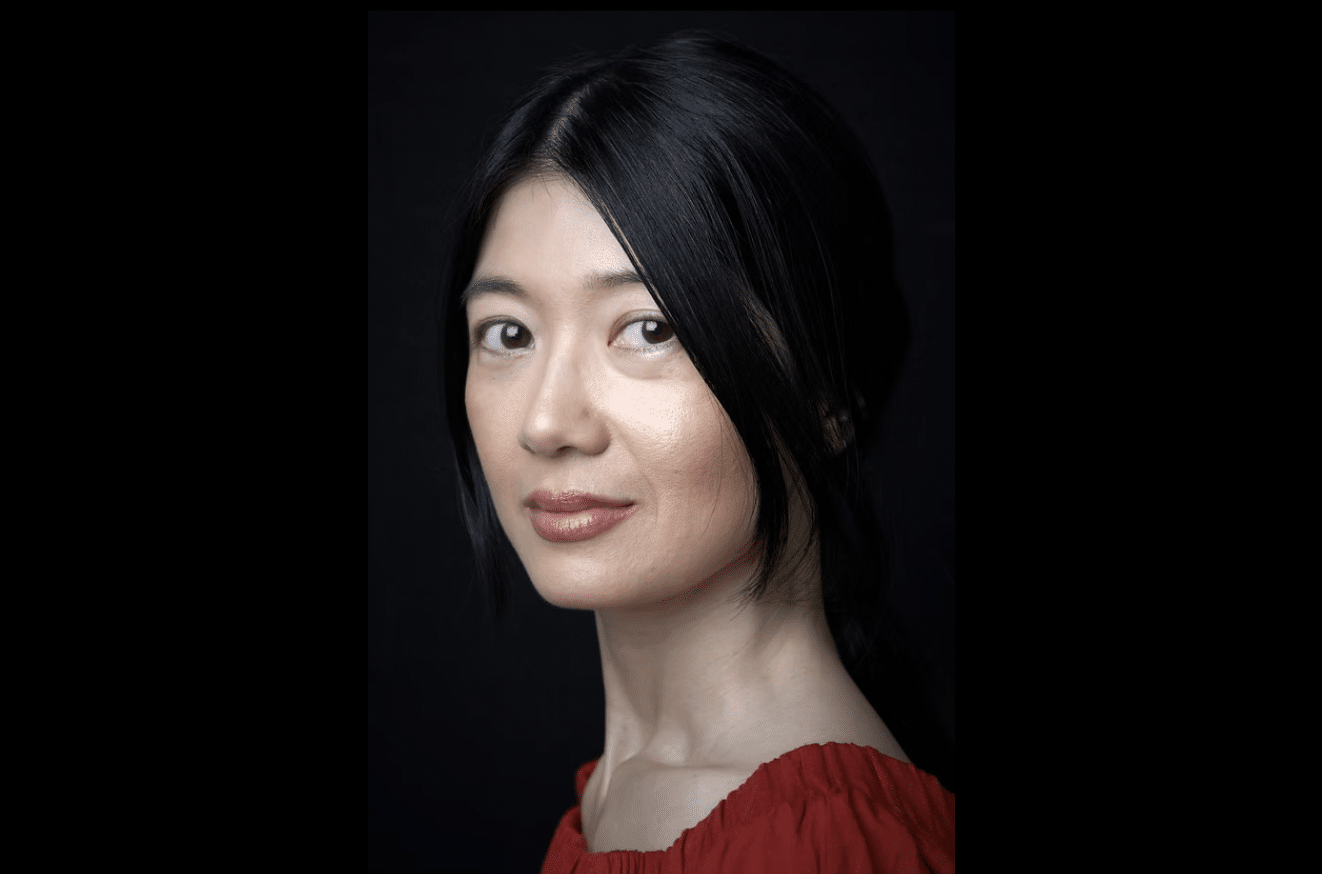
The mission of Cole and Grace’s startup DocDoc emerged from a family medical crisis.
In 2013, their 3-month-old daughter Rand was diagnosed with a rare liver defect. The doctors tried to rush her into surgery, but Cole and Grace wanted to ensure that the best surgeons were on the job. Because of Grace’s connections in healthcare, she was able to track down physicians in Japan who had pioneered live-donor liver transplants.
After two surgeries spaced six months apart and the donation of a portion of Cole’s liver, Rand was saved. What stunned her parents was that, not only was the team from Japan far more experienced, they were also 60% less expensive.
As Cole recovered in the ICU, the couple was shaken by the ordeal but also stirred by a desire to help others make better medical choices. Everyone, they thought, should not depend on luck but be able to choose the right doctor based on cost and objective data.
The journey from Idaho to Singapore
Cole grew up in rural Twin Falls, Idaho, surrounded by farms cultivating beets, potatoes and alfalfa. He met Grace, who has family roots in Hawaii, while pursuing a Master of Public Administration at Harvard’s Kennedy School of Government.
A series of surprising coincidences – from shared martial arts backgrounds to overlapping work experience in Hawaii’s economic department – brought the two together, and they’ve been inseparable ever since. “It’s kind of wild actually,” Cole says. “Destiny put Grace and I together.”
After a Fulbright Fellowship brought Grace to Singapore in 2004, a pharmaceutical company hired her and convinced her to stay on. “She called me and said, ‘If you love me, you’ll come to Singapore,’” Cole recalls. Despite being laden with student debt, he quit his new job in New York, repaid his signing bonus, and booked a one-way flight to Singapore.
For six years, Cole worked for Temasek, where he executed $500 million in investments. His goal was always to become a venture capitalist, but life took a series of other turns instead. He became a husband, then a father, and then a founder.

The trouble with healthcare
The fight for Rand’s life left Cole and Grace with a chilling realisation. As Cole puts it, “There’s often little correlation in medicine between what you pay and what you get. Without transparency or market forces, there’s no forcing function to align price with care quality.” The root of the problem, he says, lies in the fact that hospitals are paid by insurance firms and employers.
DocDoc aims to restore decision-making power to the patient, with an AI-powered doctor discovery engine that identifies “the right care at the right price”. The engine processes data on 7,000 specialists across Singapore, Malaysia, Hong Kong, and Indonesia. “We built a system that allows us to compare what a doctor costs for a given procedure versus how experienced they are, based on predictive analytics and experience data,” Cole says.
Pilots run with insurance companies were promising, with the cost of care cut by around 40%. The insurer and the employer save money, while the patient enjoys better health outcomes. Translating those results into industry-wide change, however, proved challenging. As it turned out, healthcare and insurance are complex, deeply regulated industries running on decades-old systems. They were never designed for a data-driven, proactive approach. “We realised the existing model simply wasn’t built for what we envisioned,” Cole says. “So instead of waiting for change, we decided to build the change ourselves.”

A bigger and bolder idea
Since they couldn’t partner with insurers, Cole and Grace set out to build their own. As a result, DocDoc today provides insurance that serves employers, equipped with the same AI engine for selecting experienced, cost-effective doctors. “We went from trying to enable the insurers to now directly competing with them,” Cole says.
Besides fundraising, the biggest challenge they face is expanding the client base. Cole quotes Alex Rampell of Andreessen Horowitz, who wrote: “The battle between every startup and incumbent comes down to whether the startup gets distribution before the incumbent gets innovation.” Still, the team has made steady progress, having launched in Singapore and Hong Kong. “We’re now trading with every major broker,” Cole says.
He describes DocDoc as a snowball poised at the tip of a giant hill, and he believes transformation is inevitable. “Medical inflation is already challenging everyone,” he says. “The entire insurance industry will eventually have no choice but to move into a proactive data-centric model.”

How the startup scene has evolved
During his time in Singapore, Cole has become familiar with local culture and connected with Chinese and Indian business communities. He praises the country’s efforts to build its startup ecosystem, efforts that have attracted venture capital firms and bolstered entrepreneurship education at institutions like Duke-NUS, SMU and INSEAD.
Though Singapore is a tiny market, Cole considers it an ideal test bed. “It’s a great market to launch something and begin to scale it,” he says. But he points out that the cost of manpower can be high. Whereas startup jobs elsewhere tend to offer more equity and less cash, Singapore firms need to offer higher salaries to qualify their staff for work passes.
On the upside, Cole has observed that the social stigma attached to ‘failure’ is diminishing. Another idea he believes founders should grasp is the importance of grit and a steady team in for the long haul. Industry giants like Figma or Epic Systems took many years to find the right product-market fit, he says, so it is unrealistic to expect “Forbes 100 breakout success in the first year or two.”
Striking a work-family balance
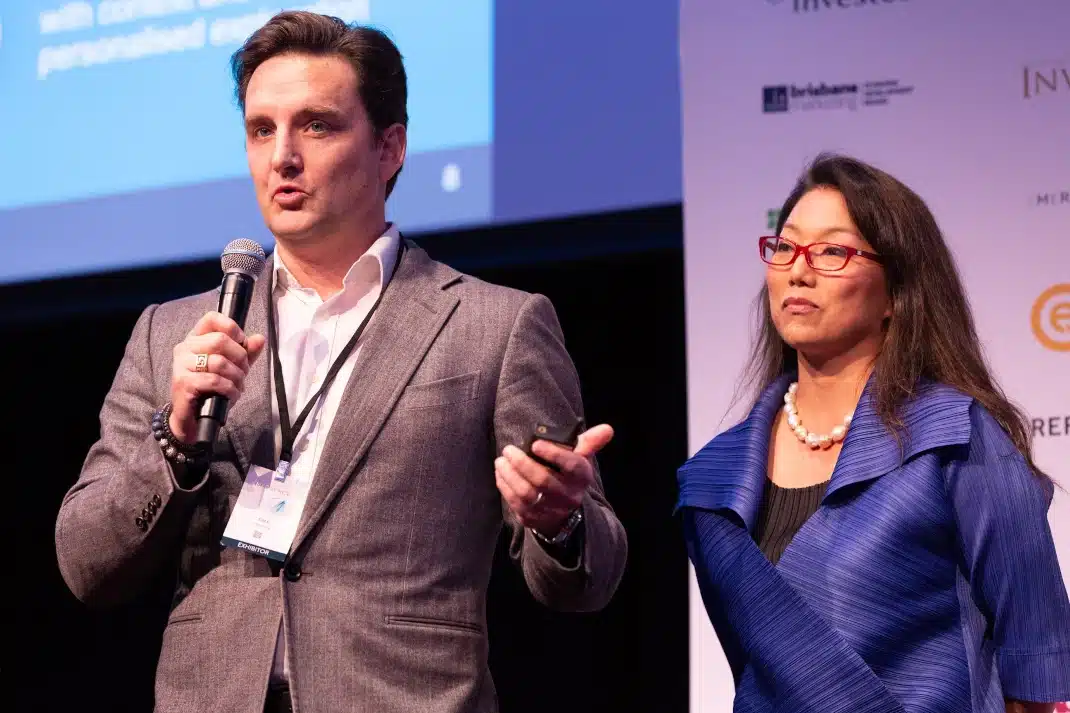
While some might advise spouses against running a business together, Cole says alignment in personal and professional priorities is key. “I love the fact that we are pouring our lives into a common goal together,” he says. “And we don’t have a lot of overlapping skill sets.” As CEO, Cole oversees fundraising and business strategy, while Grace as President takes care of doctor networks and meeting partners. “Everybody loves Grace,” Cole quips.
The couple, who are on Employment Passes, never expected to stay in Singapore this long, and they hope to return to the States at some point and become more politically involved there. Nonetheless, being in Singapore has been a boon for raising Rand, now a vibrant 12-year-old.

“From a family point of view, this is probably one of the best places in the world to move to,” Cole says. “It is multicultural. There’s very little crime. The schools are good. The systems work.” He doesn’t worry about Rand’s safety when she’s out with friends at night. “If she was living in almost any other major city in the world, it just wouldn’t be that way.”
For him, fostering Rand’s Korean-American identity is less important than building her self-esteem and ethical core. “I want her to have what I call the Bs: to be bold, brave, beautiful, bodacious, and brilliant.”
Despite the hustle of growing a startup, Cole always makes time for family, be it morning jujitsu with Grace or attending Rand’s school events. “As a founder, you own your time,” he says. “I can craft the hours that I work to allow myself to be fully present with my family when I need to be.”

About Cole
Cole Sirucek is cofounder and CEO of DocDoc, the world’s first insurance platform that allows users to select specialists based on cost and experience. He is a graduate of MIT’s Sloan School of Management and Harvard’s Kennedy School of Government, and was an investment professional with Temasek.
Connect with him here.